
Commercial roofing knowledge for Texas building owners
Commercial roofing guides kept at their original paths. Off-topic archive posts stay unlinked from the default hub view.
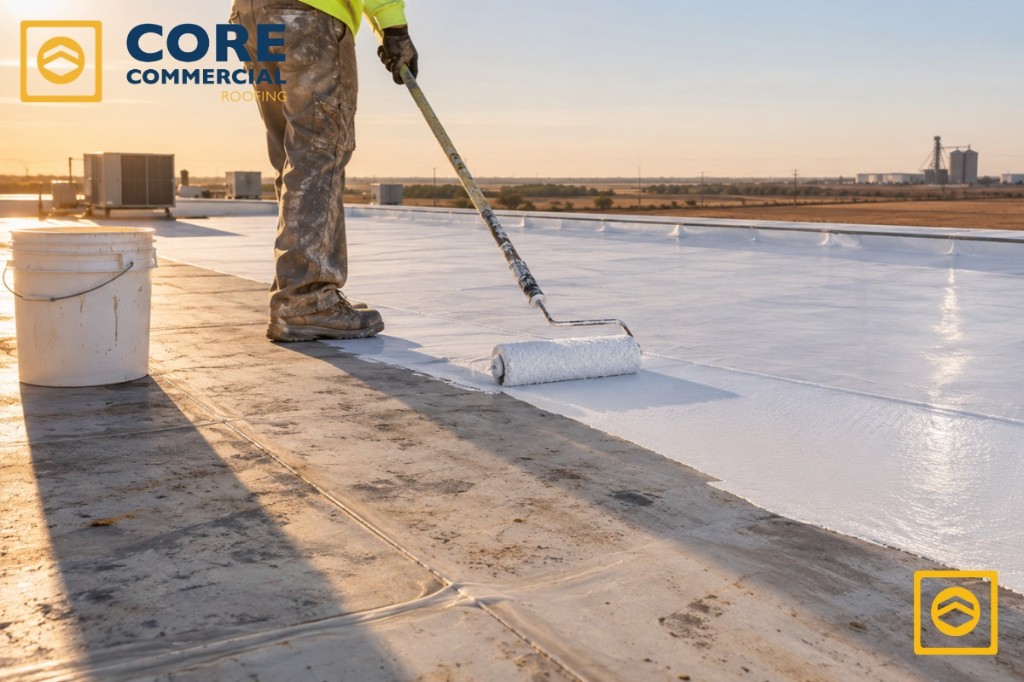
Can You Coat a TPO Roof in Texas? What to Check First
A TPO roof in Texas can be coated when the membrane is still flexible, insulation is dry, and hail damage is documented before anyone rolls coating. Heat, primer, and adhesion rules decide whether it lasts.
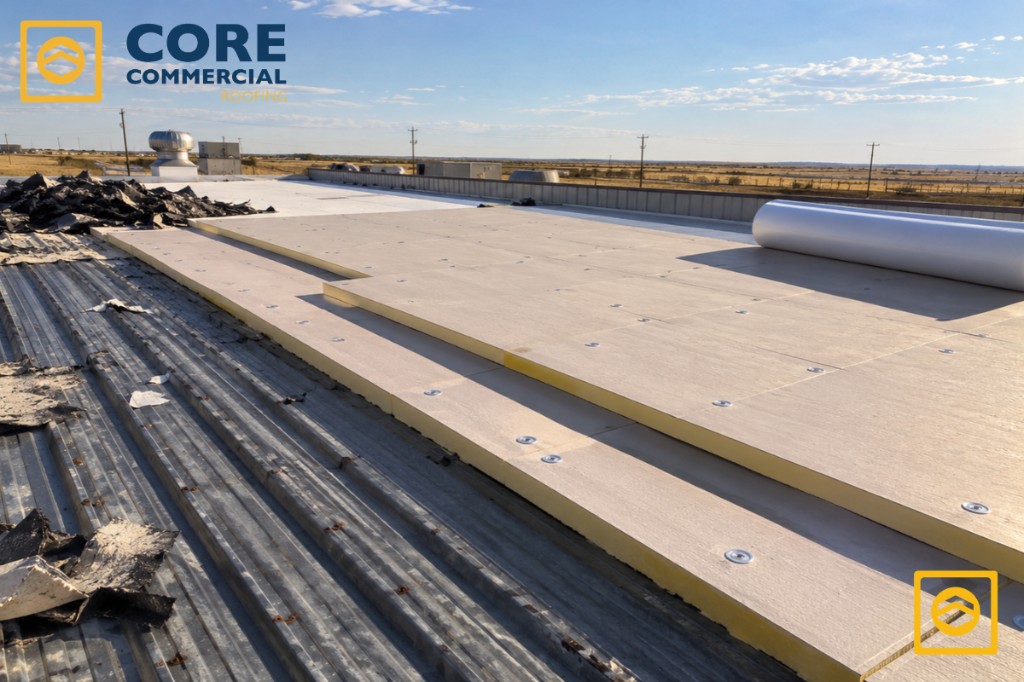
Commercial Roof Insulation R-Value: What Texas Code Requires by Climate Zone
Most Texas commercial roofs with insulation above the deck need R-25 continuous insulation. Roofs in Climate Zone 4 need R-30, and a full tear-off usually has to meet those values.
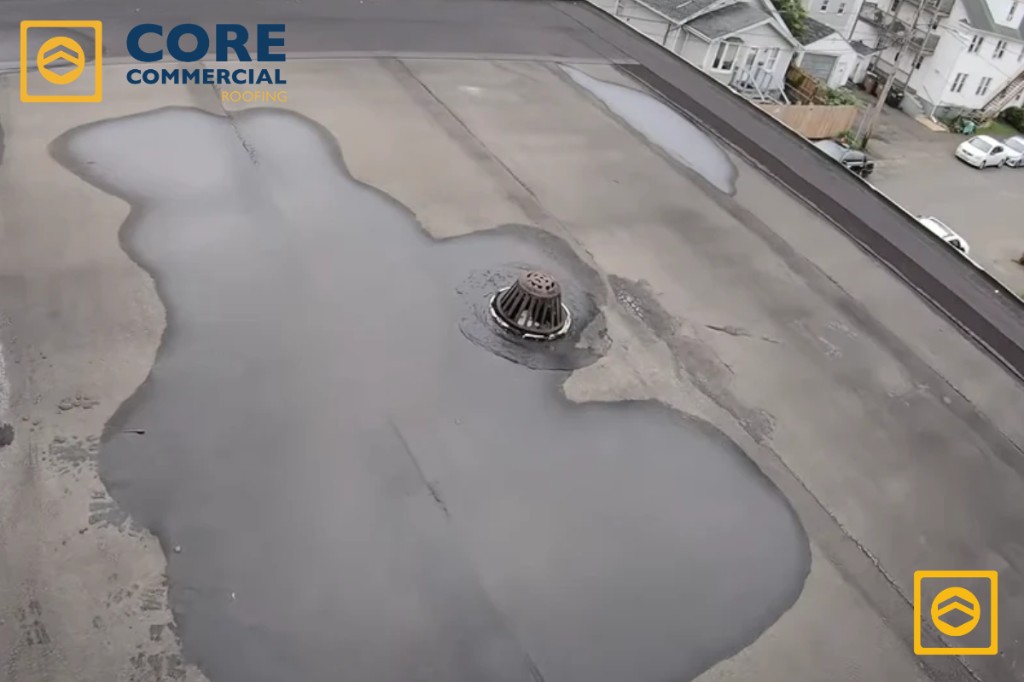
Flash Flooding and Commercial Roof Drainage Failures: What West Texas Owners Need to Know
Commercial roofs fail in flash floods when rain outruns the drains or debris blocks them. Water stacks behind parapets, and every inch of ponding adds about 5.2 pounds per square foot.
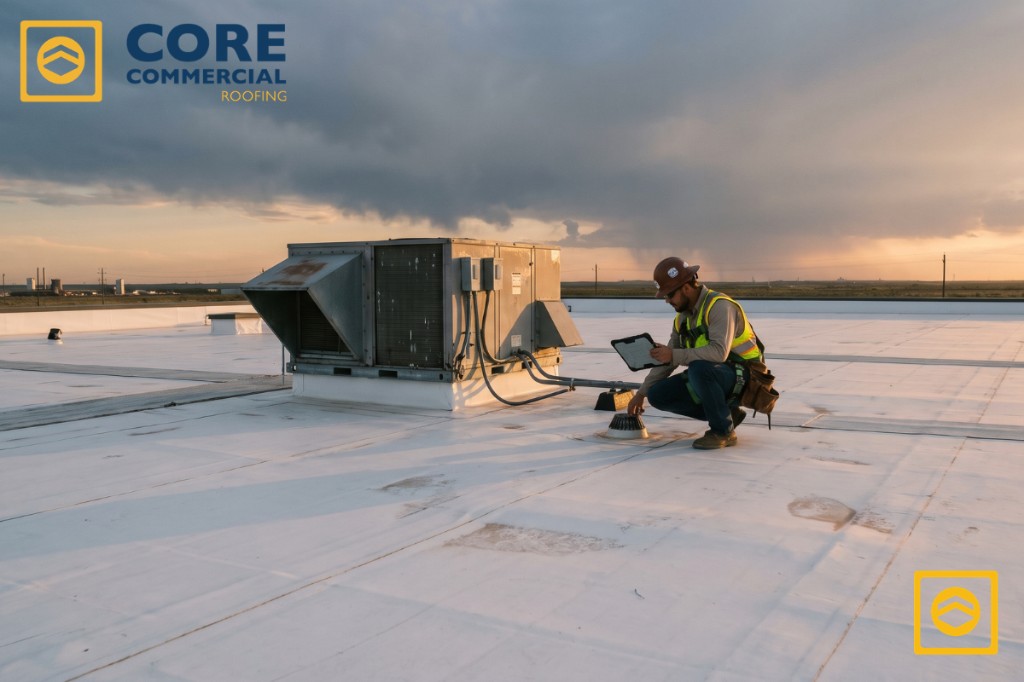
How to Budget for Commercial Roof Maintenance
Plan your commercial roof budget as three separate lines every year: a maintenance program fee, a repair allowance, and a replacement reserve. Below is a worked West Texas example you can swap your own numbers into.
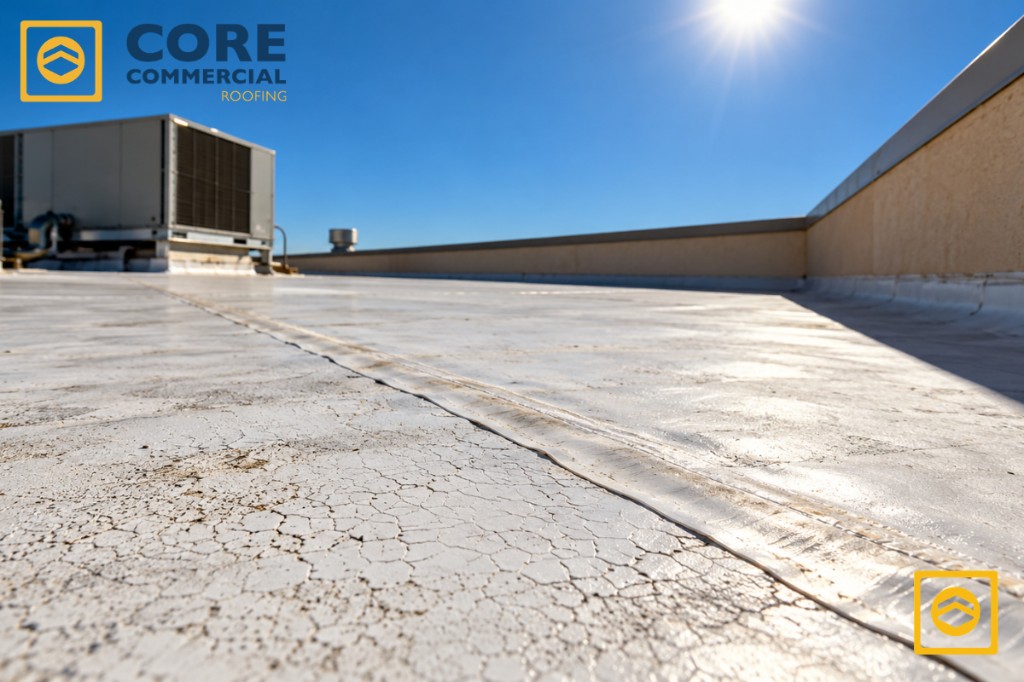
How Texas UV Exposure Degrades Commercial Roofing Materials Over Time
Sun damage is the slowest way a commercial roof fails in West Texas, and the easiest one to miss. UV works every day of the year, and by the time you see a leak, the membrane has usually been breaking down for years.
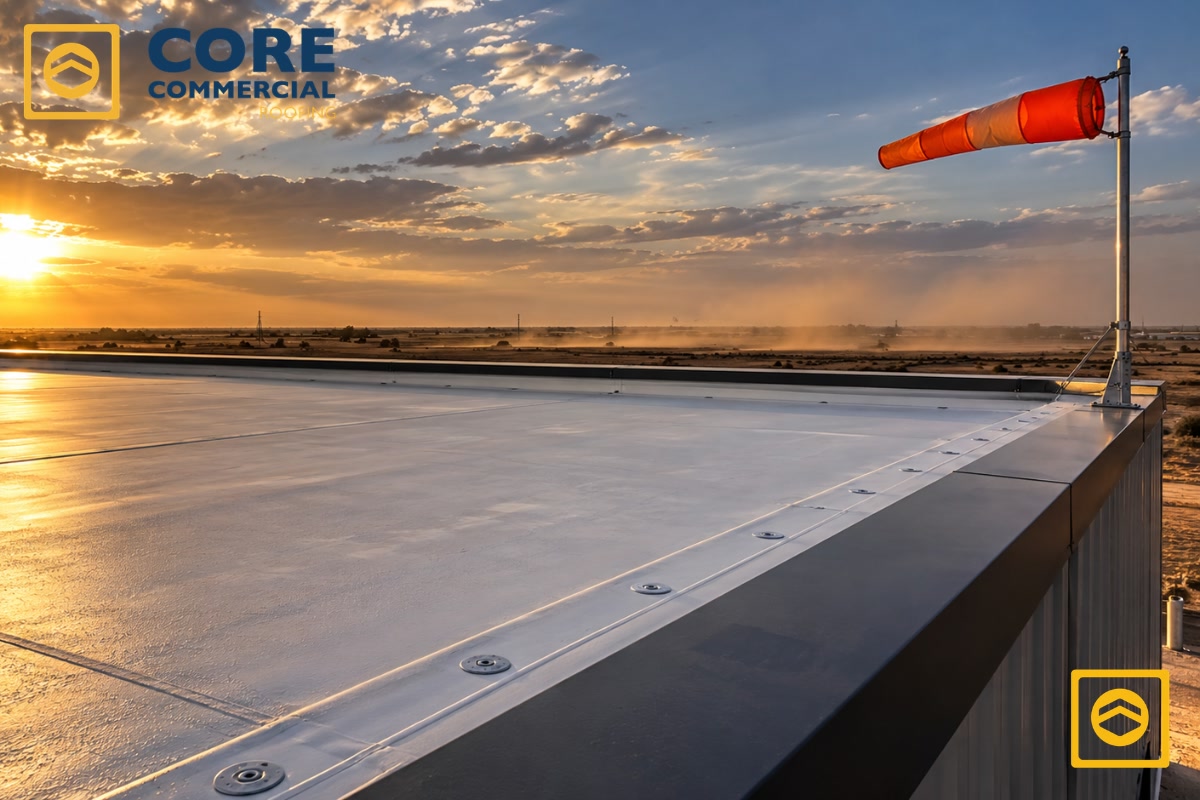
Wind Uplift Ratings Explained: What Every Texas Commercial Property Owner Needs to Know
FM 1-90 means 90 psf of uplift in the field of the roof, not 90 mph of wind. Texas code sets the design wind speed. An engineer turns that speed into pressures for the field, perimeter, and corners, and the tested assembly has to cover all three.
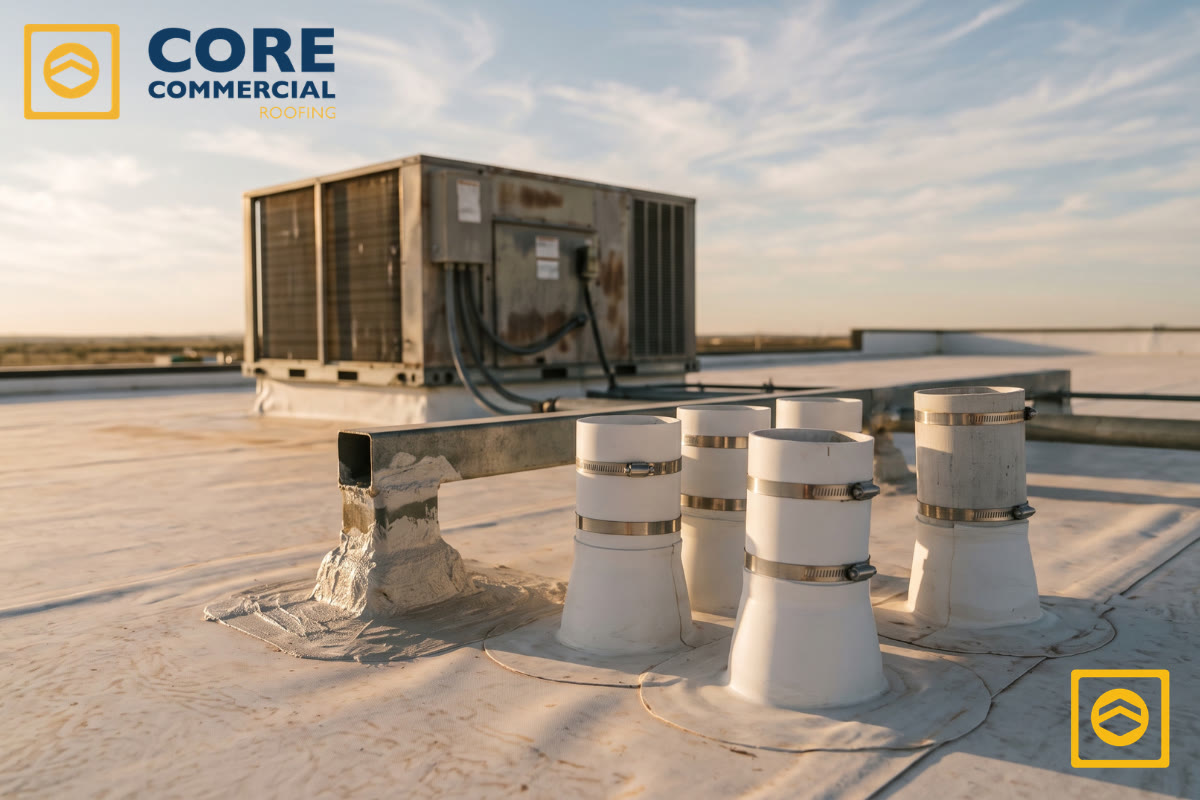
How to Properly Seal Roof Penetrations on Commercial Buildings in Texas
To properly seal a roof penetration on a commercial building in Texas, match the flashing method to the penetration, install it to the roof manufacturer's detail, and inspect it every spring and fall. Caulk alone is never the seal. It is the last layer on a detail that already works.
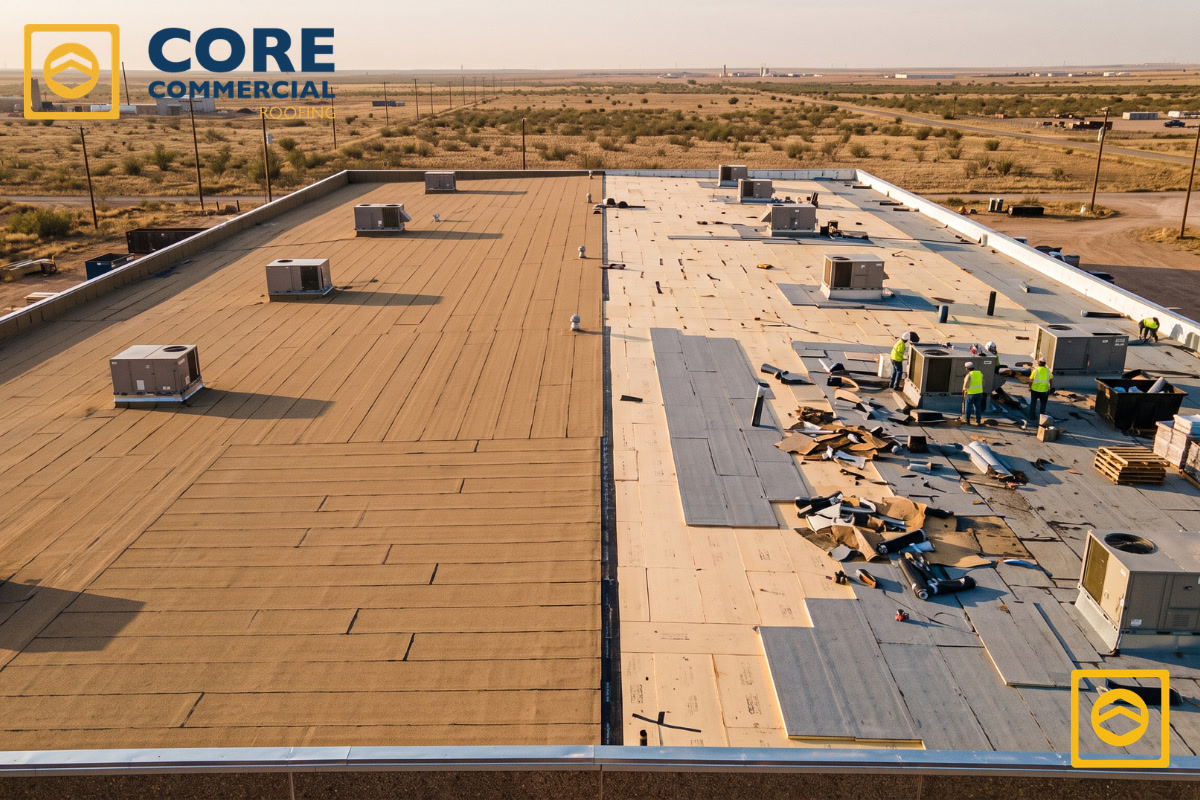
Modified Bitumen Roofing Cost in Texas (2026 Pricing): What Owners Pay
A modified bitumen roof on a Texas commercial building costs about $6 to $10 per square foot as a recover over a sound roof, and $12 to $18 per square foot as a full tear-off with code-required insulation, at 2026 pricing. Ply count, modifier, insulation, and sales tax decide where a building lands inside those bands.
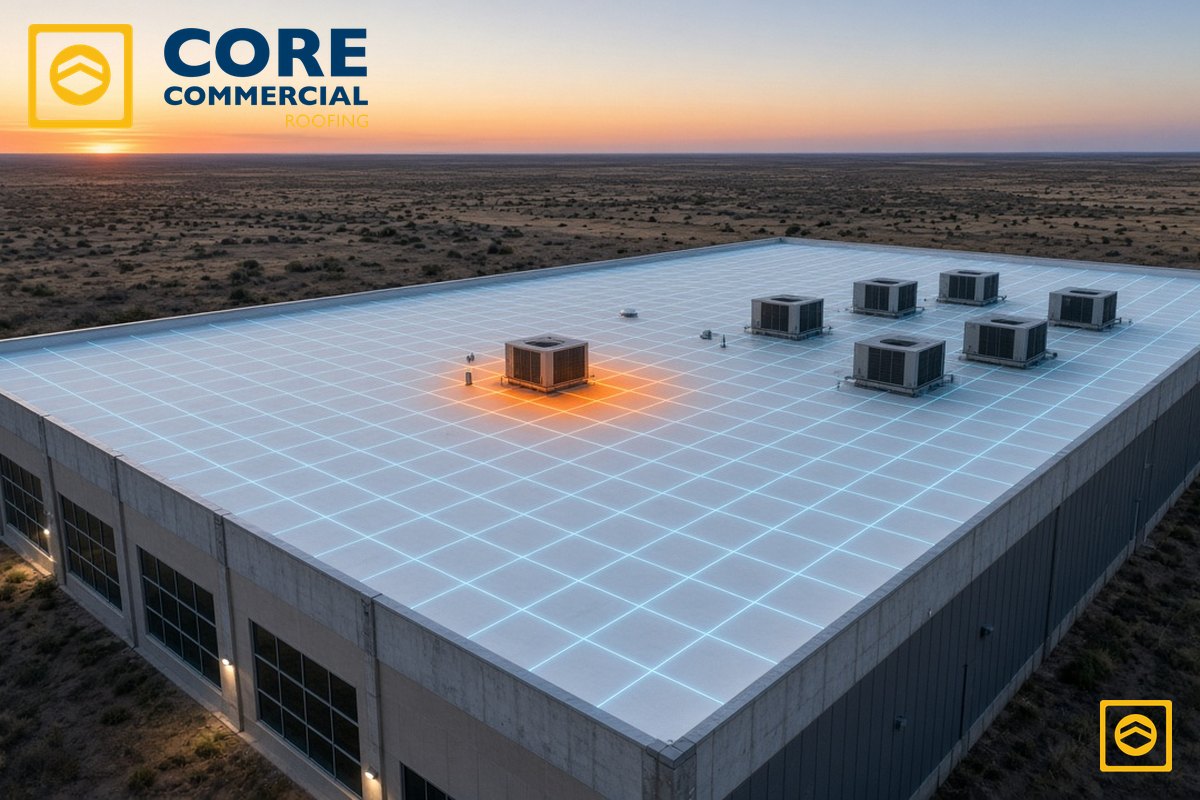
Smart Roof Monitoring Systems: Remote Leak Detection for Commercial Roofs
Most commercial roof leaks are found by a tenant. A ceiling tile stains, someone sends a photo, and by then the water has usually been inside the roof for weeks. Smart roof monitoring tries to flip that order. Sensors watch the roof and report to you first. The technology is real and it works. It also has limits that sales pages rarely mention. This guide covers how remote leak detection works, which type fits which roof, what it cannot see, and when it is worth the money on a West Texas building.
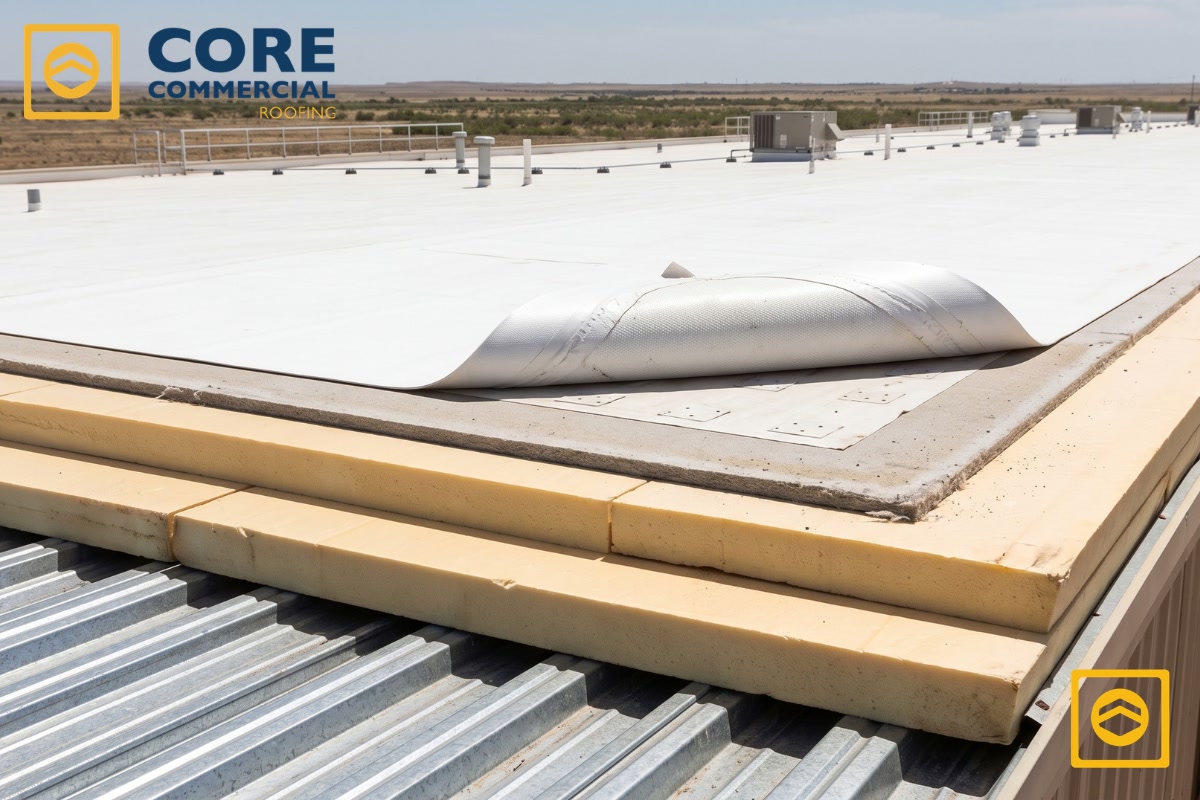
ISO vs Polyiso Insulation for Commercial Flat Roofs: Same Board, Different Decisions
ISO and polyiso are the same insulation. "ISO" is roofer shorthand for polyisocyanurate, the rigid foam board under most commercial flat roofs in Texas. So the real question on your bid is not ISO or polyiso. The real questions are how thick it should be, which facer to use, how many layers, and what goes on top of it.
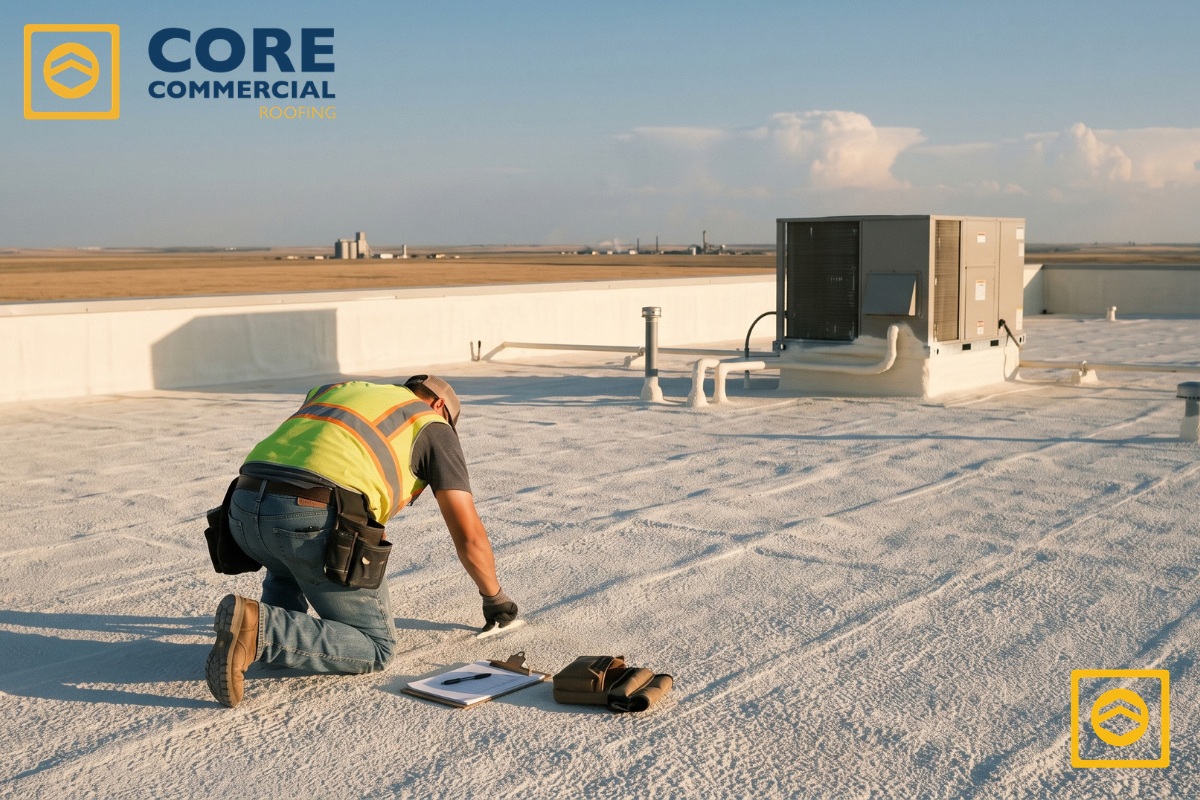
How Long Does Spray Foam Roofing Last? Real Lifespan Data for Texas Commercial Roofs
Most spray foam roofs that fail early in Texas do not fail because the foam wore out. They fail because the coating on top was never renewed. Here is how long an SPF roof really lasts, what the field research shows, and what decides whether yours makes it to 15 years or 40.
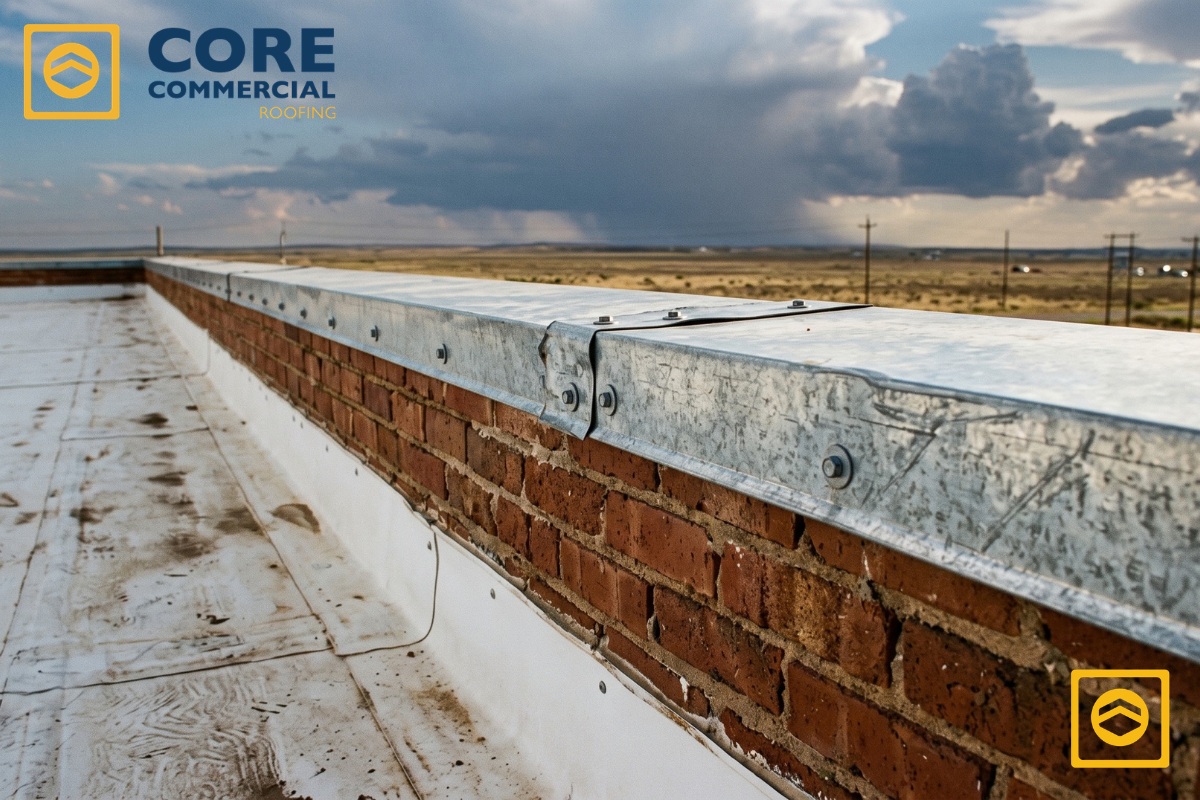
Parapet Wall Waterproofing for Texas Commercial Buildings: What Holds and What Leaks
On most flat commercial roofs in Texas, the parapet is the most exposed wall on the building. It takes wind on both faces, hail on top, and sun that bakes one side while the other sits in shade. When water gets past it, the stain rarely shows up where the water went in. Here is how parapet walls stay dry, where they fail first, and how to decide between a repair and a rebuild.