
Commercial TPO Roofing in West Texas
TPO is a heat-welded thermoplastic polyolefin single-ply membrane, the default low-slope system for West Texas warehouses, retail centers, and manufacturing plants. We install 60 mil and 80 mil reinforced TPO, mechanically fastened or adhered, probe-test every seam, and offer material, system, and NDL warranties. TPO is the right call when reflectivity and cost matter, and the wrong call where severe hail or chemical exposure dominate.
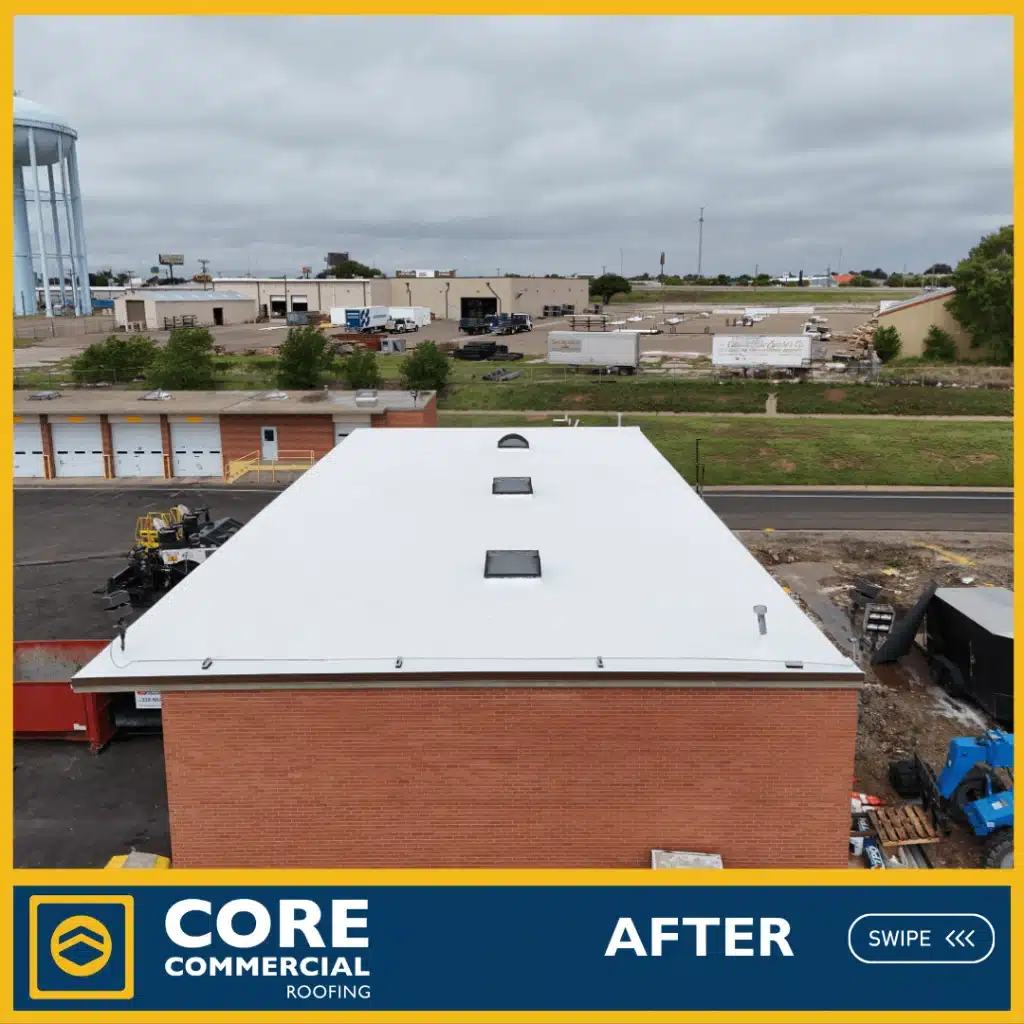
- 60 and 80 mil
- Heat welded, probe tested
- 15 to 25 years
- High, ENERGY STAR
- Material to NDL
- See cost guide
What TPO is, in plain terms
TPO is a single sheet of reinforced rubber-plastic membrane rolled across the roof and fused at the seams with a hot-air welder. There are no open flames on the roof, no mops of hot asphalt, and no gravel. The membrane is white by default, which reflects sunlight and earns ENERGY STAR and Cool Roof Rating Council listings.
Thickness is the number that matters most. A 45 mil sheet is residential-light and not what we install commercially. Sixty mil is our minimum for Lubbock, and 80 mil is specified where traffic, hail, or a longer service life justify the modest upgrade. Seam integrity is the second number, and we probe-test every weld on every job.
When TPO is and is not the right call
- +Dry, sound deck verified by core cuts
- +Budget sensitive and reflectivity desired
- +Low to moderate hail exposure
- +Weldable access with clear perimeters
- +ENERGY STAR or LEED reflectivity target
- -Severe hail exposure where a single-ply will fracture
- -Grease stacks or exhaust from a restaurant (use PVC)
- -Saturated deck found in core cuts (tear-off first)
- -Roof already at two layers per the IBC
- -Steep slope where standing seam metal fits better
How we install TPO
Substrate and insulation
Deck inspected, tapered insulation and cover board fitted to manage ponding and thermal loss.
Membrane layout
Rolls positioned with seam overlaps to ANSI/SPRI guidelines and perimeters and corners treated as higher-stress zones.
Heat-welded seams
Hot-air welder fuses the seam, every seam probe-tested, sampled with a destructive peel test per ASTM.
Flashing and penetrations
Pipe boots, scuppers, and curb flashing welded to manufacturer detail, the most common leak point done right.
Attachment verified
Mechanical fasteners or adhesive checked for wind uplift per ASCE 7, edge metal per ANSI/SPRI ES-1.
Final walk and warranty
Punch list closed with the owner, photographs filed, manufacturer warranty registered with exclusions listed up front.
TPO vs other single-ply systems
| System | TPO | PVC | EPDM |
|---|---|---|---|
| Reflectivity | High | High | Low, unless coated |
| Chemical resistance | Moderate | High | Moderate |
| Hail tolerance | Moderate at 60 mil | Moderate | Moderate, ballasted better |
| Typical life | 15 to 25 years | 20 to 25 years | 20 to 30 years |
| Relative cost | Low to mid | Mid to high | Mid |
For a full cost and life comparison across all systems, see our commercial roof cost guide.
Documented TPO scopes in West Texas
TPO roofing questions
What is TPO roofing and where is it used?
TPO is a thermoplastic polyolefin single-ply membrane, heat-welded at the seams, used on low-slope commercial roofs. It is the default choice for warehouses, retail centers, and manufacturing plants in Lubbock because it is reflective, relatively low cost, and tolerant of West Texas heat when the correct thickness is specified.
How long does a TPO roof last in West Texas?
A 60 mil or thicker TPO membrane installed to manufacturer specifications typically lasts 15 to 25 years in the Lubbock climate. UV, hail, and thermal cycling shorten life when an under-thickness membrane or poorly welded seams are specified. Service life is a function of thickness, attachment, and weld integrity, not brand.
Is TPO good for hail?
TPO is a single-ply membrane and will puncture under severe hail. A 60 mil or 80 mil reinforced membrane survives more hail events than a 45 mil sheet, but no single-ply is hail-proof. After a storm, impact fractures are documented by probe and photograph so an adjuster can act. For hail-prone exposures we discuss membrane thickness, coating, or a steeper metal alternative.
What TPO thickness should I use, 45, 60, or 80 mil?
We do not install 45 mil TPO on commercial roofs in Lubbock. 60 mil is the minimum we recommend for warranty and hail exposure, and 80 mil is specified for high-traffic roofs or hail-prone sites. Thickness is the single largest factor in service life and hail resistance, and the cost difference per square foot is modest.
How is TPO attached, mechanically fastened or adhered?
Mechanically fastened TPO uses plates and fasteners at the seams and is faster and lower cost. Adhered TPO bonds the membrane to insulation and gives a smoother, more hail-tolerant surface at higher cost. The choice depends on wind uplift requirements per ASCE 7, deck type, traffic, and budget.
What does TPO roofing cost per square foot in Lubbock?
As of August 2026, typical installed TPO ranges for sound South Plains commercial roofs are about $8 to $14 per square foot for an overlay and $12 to $22 for a tear-off and replace. Thickness, attachment, insulation, access, and wet insulation move the number. Exact pricing still requires a documented site survey.
Can a TPO roof be coated instead of replaced?
Yes, when core cuts show dry insulation and the membrane is aging but not hail-fractured, a silicone coating restores a TPO roof and adds 10 to 20 years of service life. Coating is the wrong answer when the membrane is fractured, the deck is saturated, or the roof is at its second layer per the International Building Code.
What warranty options come with TPO?
Manufacturer material warranties cover the membrane. Manufacturer system warranties cover the full assembly including installation by a certified contractor. NDL, or no dollar limit, warranties are the strongest and require full specification including insulation, cover board, and attachment. What voids each differs, and we list exclusions before you sign.
How do you test TPO seams during installation?
Every heat-welded seam is probe-tested with a seam probe and sampled with a destructive peel test per ASTM standards. Sheet is checked for fishmouths and the weld temperature is verified. Seam failure is the most common TPO leak source, so weld integrity is the quality control gate.
TPO vs PVC vs EPDM, which is best for Lubbock?
TPO is the general default for cost and reflectivity. PVC is specified where chemical exposure, grease from restaurants, or exhaust stacks make TPO unsuitable, because PVC is more chemical-resistant. EPDM is specified where thermal cycling and weathering dominate and reflectivity is less important. The right system is driven by exposure, not brand loyalty.
Get a condition report before you commit to a system.
Photographs, documented findings, and a written recommendation. Certificate of insurance available before contract.