
Standing Seam Metal Roofing in West Texas
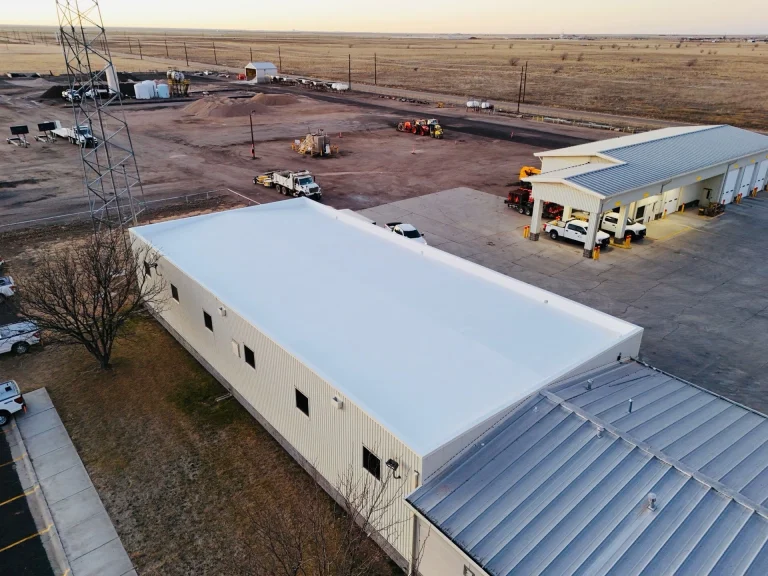
Standing seam metal is a system of interlocking panels with concealed fasteners and a mechanically seamed or snap-locked raised seam, the most durable system we install for a roof with slope. We install low-slope and steep metal with Class 4 hail-rated finishes for the longest service life available, often 30 years or more. Metal is the right call when hail tolerance and a long horizon justify the premium.
- 30 years plus
- Class 4 available
- 1:12 with proper seaming
- Mechanical or snap-lock
- Concealed
- Material to paint
What standing seam metal is, in plain terms
Standing seam metal is a series of metal panels laid parallel up the slope, each joined to the next by a raised rib that is folded and locked by a seaming tool or by hand. The fasteners that hold the panels to the deck are hidden under the seam, so water never touches a fastener, which is why the system lasts as long as it does.
What kills a metal roof in West Texas is fastener back-out from thermal cycling and panel red rust at scratches. A maintenance program catches fasteners before they leak, and a restoration coating renews and reflects a metal roof that is sound but aging.
When Standing seam metal is and is not the right call
- +Roof with slope of 1:12 or greater
- +Hail-prone exposure where a single-ply would fracture
- +Owner values a 30 year horizon over lowest first cost
- +Industrial or agricultural steel building
- +Sound aging metal roof ready for a restoration coating
- -Flat roof with no slope, use single-ply or coating
- -Budget sensitive first cost prioritized over life
- -Grease or chemical exposure, use PVC
- -Roof with complex penetrations that complicate panel runs, review first
How we install standing seam metal
Substrate and slope verification
Deck or battens inspected, slope confirmed adequate for the panel and seaming method selected.
Underlayment and clip layout
High-temperature underlayment installed, clips placed to wind uplift per ASCE 7 with perimeter and corner zones denser.
Panel forming and lay
Panels roll-formed to length or pre-cut, laid and engaged one to the next up the slope to the ridge.
Mechanical or snap-lock seaming
Seams field-seamed to 180 or 360 degrees, or snap-locked, with panel ends and eaves closed per manufacturer detail.
Ridge, flashing, and penetrations
Ridge closure, valley flashing, and penetration boots installed to the manufacturer high-wind detail.
Final walk and warranty
Punch list closed with the owner, photographs filed, material and paint warranties registered with exclusions listed up front.
Standing seam metal vs single-ply vs coating
| Factor | Standing seam metal | TPO | Silicone coating |
|---|---|---|---|
| Typical life | 30 plus years | 15 to 25 years | 10 to 20 years |
| Hail tolerance | Class 4 | Moderate | Low |
| Slope required | 1:12 or more | Low-slope | Low-slope |
| Relative cost | Highest | Low to mid | Lowest |
| Recoat option | Yes | Yes | Yes at end of life |
Metal needs slope. Flat roofs are not metal candidates.
Standing seam metal questions
What is standing seam metal roofing?
Standing seam metal roofing is a system of interlocking panels with raised seams that are mechanically seamed or snap-locked together, concealing the fasteners. It is installed over a solid substrate or battens on roofs with slope, and it is the most durable low-slope-to-sloped option for West Texas hail, wind, and UV.
How long does a standing seam metal roof last?
A standing seam metal roof installed to manufacturer specifications typically lasts 30 years or more in the Lubbock climate, with the longest service life of any roofing system we install. Painted finishes carry separate paint warranties, and recoating extends appearance and protection further.
Is standing seam metal good for hail?
Standing seam metal with a heavy-gauge panel and a Class 4 impact-rated finish is one of the most hail-tolerant roofing systems available for a roof with slope. Whereas a single-ply fractures, metal dents and keeps waterproofing, which is why metal is specified for hail-prone exposure with adequate slope.
What slope does a standing seam metal roof need?
Low-slope standing seam systems can run as low as 1:12 with the correct panel and seaming, but slope improves performance. We recommend 2:12 or greater where the building allows, because water sheds faster and the seams take less standing water load. Flat roofs are not metal candidates.
Mechanically seamed vs snap-lock?
Mechanically seamed panels are field-rolled with a seaming tool to a 180 or 360 degree lock, the strongest seam and the one we use on low-slope and high-wind exposure. Snap-lock panels click together by hand and are used on steeper roofs where wind uplift is lower. The choice is driven by slope and wind.
How is metal roof fastener back-out fixed?
Fastener back-out from thermal cycling is the signature West Texas metal roof failure. A maintenance program catches it early by re-torquing or replacing fasteners and renewing the washer seals. On restoration, exposed fasteners can be covered with a coating system that seals and reflects.
What does standing seam metal cost per square foot in Lubbock?
As of August 2026, typical installed standing seam metal ranges for sound South Plains commercial roofs are about $18 to $35 per square foot. Gauge, panel profile, slope, seaming method, and access move the number. Metal is the right call when a 30 year horizon and hail tolerance justify the premium.
Can a metal roof be coated?
Yes. After seam and fastener renewal, a sound metal roof accepts an acrylic or silicone coating for reflectivity and an added service layer. Coating a metal roof that has failing fasteners without first renewing the fasteners is the wrong order, which a survey identifies first.
Get a condition report before you commit to a system.
Photographs, documented findings, and a written recommendation. Certificate of insurance available before contract.