
Cold Storage & Refrigerated Roofing in West Texas
Cold storage roofs fail from vapor drive, not just rain. Lubbock and South Plains refrigerated boxes need a sealed continuous insulation envelope, usually fully adhered EPDM or TPO, or spray foam when a seamless insulating layer is the priority. We verify the vapor barrier with core cuts before any re-roof so the cold space stays closed and ice does not form at the deck.
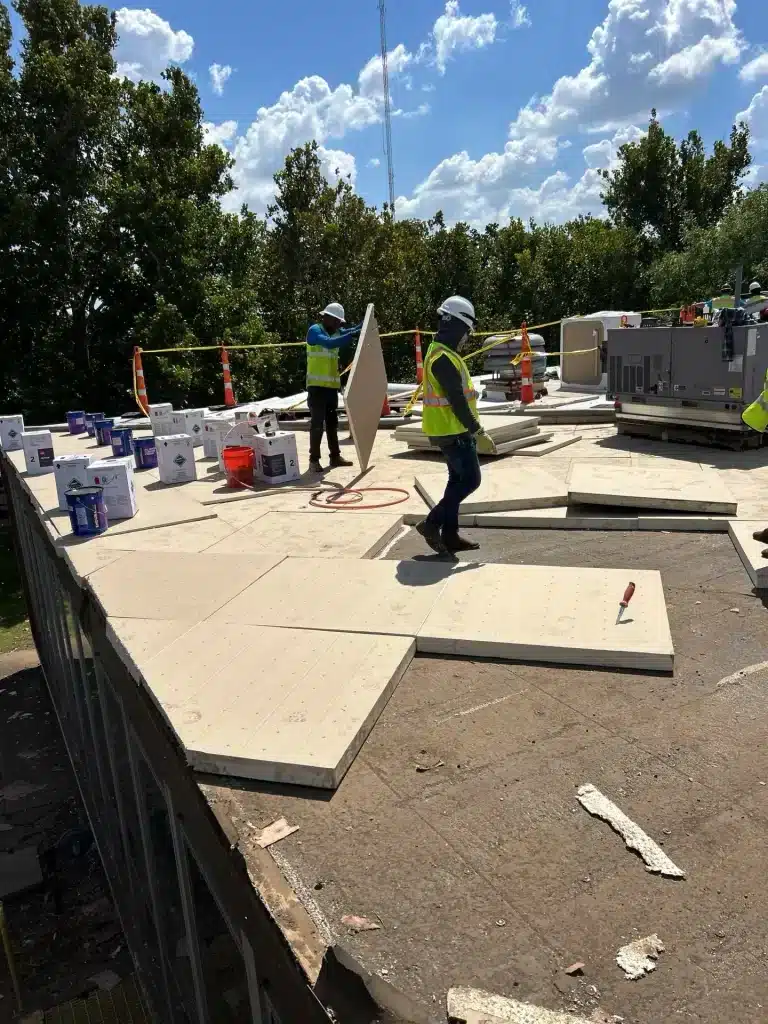
- Low-slope, insulated envelope
- EPDM, TPO, spray foam, IMP
- R-25 ci, often exceeded
- Vapor drive and condensation
- Sealed and minimal
- 20 to 30 years
What a cold storage roof has to handle
- +Refrigerated warehouse or processing facility above 35 deg F
- +Owner wants a seamless insulating envelope with spray foam
- +Re-roof where the deck and vapor barrier can be verified by core cuts
- -Ambient warehouse without refrigeration, see warehouse
- -Freezer space below 0 deg F without an engineered insulated panel assembly
- -Roof with unsealed penetrations and an undocumented vapor barrier
Roof systems for cold storage
Spray foam and coating
DetailSeamless insulating and waterproofing layer. Closes the thermal bridges that a board system leaves at joints and fasteners, with a protective coating and a recoat cycle.
EPDM
DetailFully adhered and flexible. Suits the wide spans and thermal movement of a refrigerated box, with a sealed vapor barrier beneath.
TPO
DetailFully adhered and reflective. Suits refrigerated roofs where a heat-welded seam is preferred and the deck and vapor barrier are verified sound.
Tapered insulation
DetailAdds slope to drain and meets the R-value at the same time. Designed to the refrigerated envelope and the box temperature, often above the R-25 minimum.
The code floor for a cold storage roof in Lubbock
Texas sits in IECC Climate Zone 3. The 2021 IECC sets a minimum R-25 of continuous insulation installed entirely above the deck for low-slope commercial roofs, in at least two staggered layers.
ASCE 7 splits a low-slope roof into field, perimeter, and corner zones. Corners and perimeters carry the highest uplift and get increased fastening. Edge and corner flashing is detailed to the manufacturer uplift rating.
IBC requires positive drainage of low-slope roofs. NRCA and most membrane manufacturers specify at least 1/4 inch per foot slope to the drain. The assembly is chosen for the traffic, the equipment, and the substrate. The spec comes from the survey, before any specification.
Code figures cited: 2021 IECC Table C402.1.3 (R-25 ci, Climate Zone 3, insulation entirely above deck); ASCE 7 field, perimeter, and corner roof zones; IBC positive drainage requirement and NRCA and manufacturer 1/4-inch-per-foot guidance. Reviewed August 16, 2026.
What fails on cold storage roofs in West Texas
Vapor drive moves moisture into a refrigerated envelope and condenses at the cold deck. A sealed vapor barrier and continuous insulation are the controls, and the survey checks the deck and the barrier before any work.
Thermal bridges at structural steel and fasteners leak heat into the cold space and grow ice. Spray foam and a sealed board system limit the bridges, and the specification cuts the bridge count.
Ice formation at the slab edge and at penetrations damages insulation and membrane. Sealed, minimal penetrations and a continuous envelope prevent it, and the survey maps the penetration list.
Refrigerated envelopes often exceed the IECC R-25 minimum. The design R-value follows the box temperature and the refrigeration load, set with the refrigeration engineer before any material is ordered.
Cold storage roofing questions
What roof system holds up on a refrigerated warehouse?
A fully adhered EPDM or TPO over a sealed continuous insulation envelope, or spray foam for a seamless insulating layer. The control is vapor drive. Without a sealed vapor barrier and continuous insulation, condensation and ice form at the cold deck.
Why does spray foam suit a cold storage roof?
Spray polyurethane foam is seamless and insulating, so it closes the thermal bridges that board insulation leaves at joints and fasteners. A protective coating is applied over it, and the assembly is inspected and recoated on a cycle.
How much insulation does a cold storage roof need?
The 2021 IECC sets a minimum R-25 of continuous insulation above the deck for low-slope commercial roofs in Climate Zone 3. Refrigerated envelopes usually exceed it. The design R-value follows the box temperature and refrigeration load, set with the refrigeration engineer.
Can you re-roof a refrigerated building without opening the cold space?
Often, when the deck and vapor barrier are sound and can be verified by core cuts. If the deck is wet or the vapor barrier is broken, the work sequence protects the cold envelope and is planned with the facility before any material is ordered.
Related steps for this building type
Get a condition report before you commit to a system.
Photographs, documented findings, and a written recommendation. Certificate of insurance available before contract.