
Self-Storage Roofing in West Texas
Self-storage roofs are wide low-slope spans over metal or masonry units, with minimal traffic and low insulation demand in unconditioned buildings. The right assembly is a single-ply like TPO or a standing seam metal roof, or a silicone coating over a sound metal deck, detailed to ASCE 7 zones after a survey.
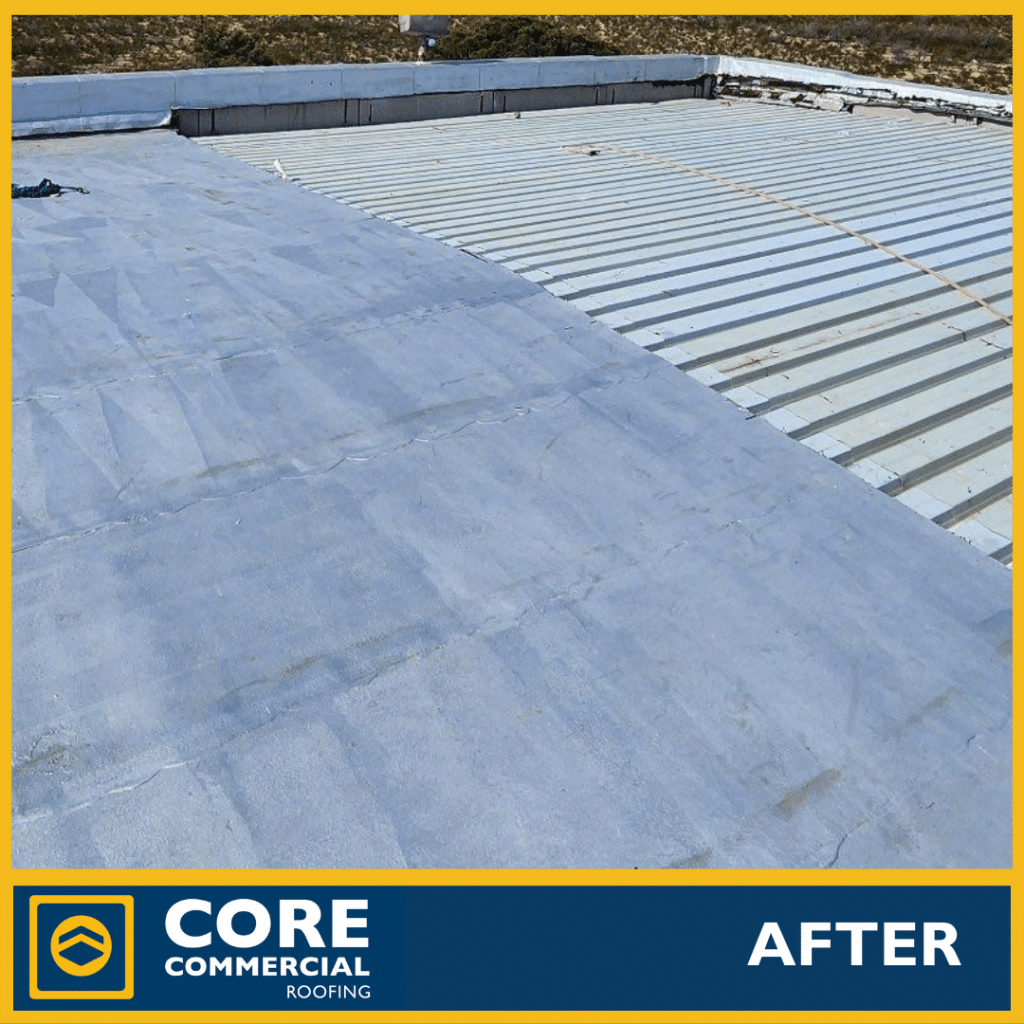
- Low-slope, wide spans over units
- TPO, metal, silicone coatings
- Required only if conditioned
- Field, perimeter, corner (ASCE 7)
- Minimal, unit doors at parapet
- 20 to 30-plus years
What a self-storage roof has to handle
- +Unconditioned self-storage over metal or masonry units
- +Sound metal deck that can be coated instead of replaced
- +Owner wants a low-maintenance long-horizon metal roof
- -Conditioned (climate-controlled) storage, follows full R-25 ci envelope
- -Refrigerated cold storage, see cold storage
- -Heavy roof traffic or equipment, see industrial
Roof systems for self-storage
Standing seam metal
DetailA 30-plus year horizon over wide low-slope spans, low maintenance, and sheds water. The standard for unconditioned self-storage.
TPO
DetailReflective and heat-welded. Suits both conditioned and unconditioned storage, with a 20 to 25 year NDL path.
Silicone coatings
DetailRestore a sound metal deck for 10 to 20 years without a tear-off, sealing lap seams and fasteners.
Metal roof restoration
DetailRenew fasteners, seam seals, and surface coating on a sound metal roof; replace only rusted-through panels.
The code floor for a self-storage roof in Lubbock
The IECC building thermal envelope applies to conditioned space. Unconditioned self-storage falls outside the envelope, so the 2021 IECC R-25 continuous insulation minimum does not apply. Conditioned (climate-controlled) storage follows the full Climate Zone 3 envelope, in at least two staggered layers.
ASCE 7 splits a low-slope roof into field, perimeter, and corner zones. Corners and perimeters carry the highest uplift and get increased fastening. Edge and corner flashing is detailed to the manufacturer uplift rating.
IBC requires positive drainage of low-slope roofs. NRCA and most membrane manufacturers specify at least 1/4 inch per foot slope to the drain. The assembly is chosen for the traffic, the equipment, and the substrate. The spec comes from the survey, before any specification.
Code figures cited: 2021 IECC Table C402.1.3 (R-25 ci, Climate Zone 3, insulation entirely above deck); ASCE 7 field, perimeter, and corner roof zones; IBC positive drainage requirement and NRCA and manufacturer 1/4-inch-per-foot guidance. Reviewed August 16, 2026.
What fails on self-storage roofs in West Texas
Wide, low-slope metal decks pond at lap seams and fasteners. Seal and slope, or a coating, move water off before any membrane decision.
Open West Texas wind drives fastener back-out on metal. Perimeter and corner flashing is detailed to the manufacturer uplift rating, with a re-torque on a maintenance cycle.
Hail dents metal and fractures coatings. The survey photographs and rates impact before any coating decision, and hail-rated systems are specified up front.
Self-storage roofing questions
Does an unconditioned self-storage roof need insulation?
No. The IECC building thermal envelope R-value requirements apply to conditioned spaces. Unconditioned self-storage falls outside the envelope, so the R-25 minimum does not apply. Conditioned (climate-controlled) storage follows the full Climate Zone 3 envelope.
Can you coat a self-storage metal roof instead of replacing it?
Yes, when panels are structurally sound and the failures are lap-seam and fastener leaks and surface rust. Silicone coating seals the seams and fasteners for 10 to 20 years. Rusted-through panels are replaced.
What roof system lasts longest on self-storage?
Standing seam metal, at 30-plus years with a maintenance cycle and a recoat. A silicone coating over a sound metal deck extends service life at a fraction of replacement.
How does hail affect a self-storage roof?
Hail dents metal, fractures single-ply, and disrupts coatings. Impact is photographed and rated before any repair or coating decision, and the survey settles whether restore or replace is the call.
Related steps for this building type
Get a condition report before you commit to a system.
Photographs, documented findings, and a written recommendation. Certificate of insurance available before contract.