
TPO vs EPDM vs PVC
TPO is the default for cost and reflectivity on West Texas low-slope roofs. PVC is specified where chemical or grease exposure would attack TPO. EPDM is specified where weathering and thermal cycling dominate and reflectivity matters less. The right membrane is driven by exposure, thickness, and budget, not brand, and hail may rule out any single-ply in favor of metal or a coating.
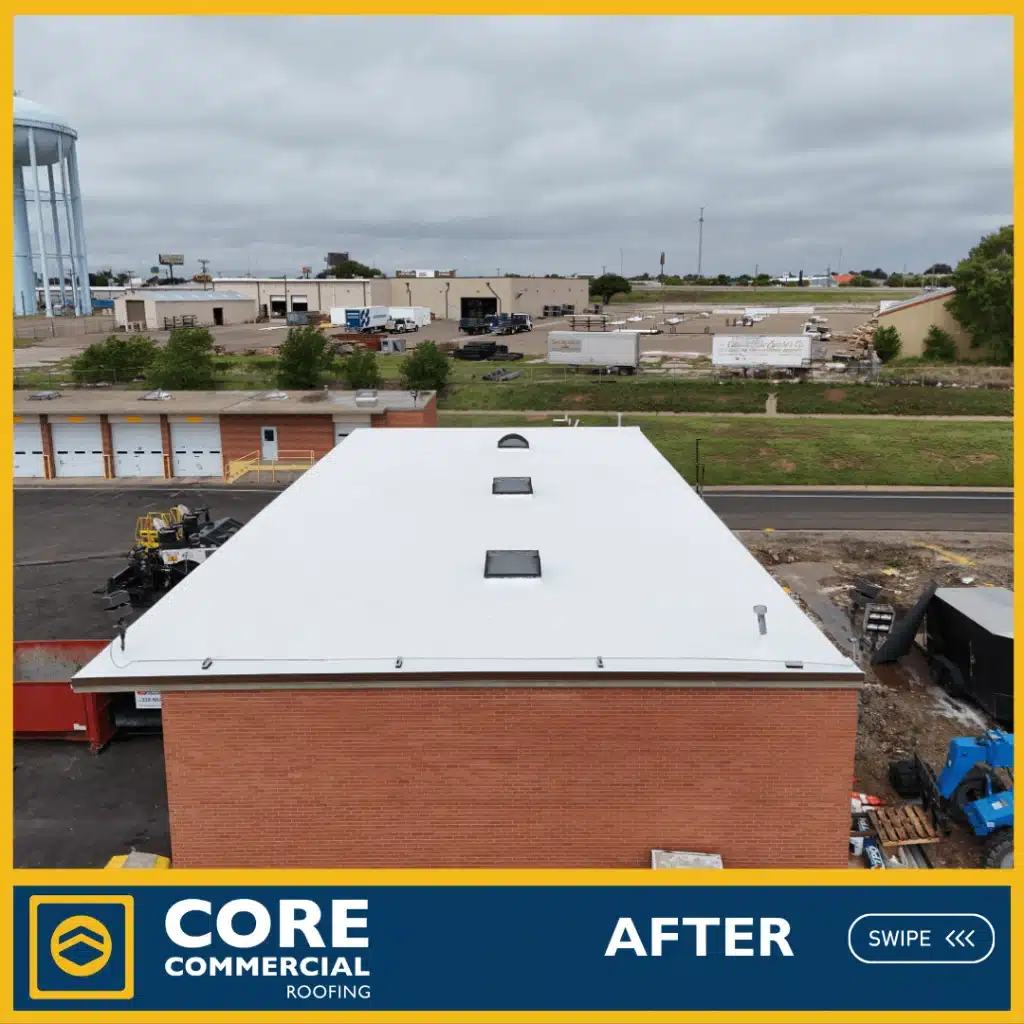
- Low cost, reflective
- Chemical resistant
- Weathering, thermal
- 60 mil
- Limits single-ply
- 10 to 20 years
The three membranes in plain terms
All three are single-ply membranes: one sheet rolled across the roof and joined at the seams. TPO and PVC are thermoplastics, fused at the seam with a hot-air welder. EPDM is a synthetic rubber, joined with seam tape or bonding adhesive. The chemistry difference shows up in reflectivity, chemical resistance, and how the seam is made, and those three things drive the choice.
Thickness matters more than chemistry for service life and hail. We do not install 45 mil single-ply commercially. Sixty mil is the minimum we recommend for warranty and hail exposure on the South Plains, and 80 mil is specified for high-traffic or hail-prone sites. The cost per square foot to step up is modest, and the life and hail difference is not, per manufacturer technical data.
When to choose each
Each membrane has an exposure it is right for and exposures it is wrong for.
TPO is the general default for cost and reflectivity. It is the right call for warehouses, retail centers, and manufacturing plants with no chemical exposure, where a reflective white surface earns ENERGY STAR and Cool Roof Rating Council listings and lowers cooling load. The wrong call for TPO is a roof under grease stacks or severe hail.
PVC is the right call where chemical exposure would attack TPO: restaurants with grease exhaust, process plants with chemical stacks, and occupancies that need a fire-rated assembly. PVC costs more and the chemistry is what justifies it. EPDM is the right call where long weathering and thermal cycling dominate and reflectivity is not the goal, common on older flat roofs in colder exposures.
- TPO: general low-slope, cost and reflectivity, no chemical exposure
- PVC: grease, chemical stacks, fire-rated occupancies
- EPDM: weathering and thermal cycling, reflectivity not required
Hail changes the math
On the South Plains, hail is the exposure that overrides the TPO versus PVC versus EPDM choice. Severe hail fractures any single-ply membrane, even a thick one, and dents thin metal. A 60 mil or 80 mil reinforced membrane survives more events than a 45 mil sheet, and an adhered surface tolerates impact better than a mechanically fastened one, but no single-ply is hail-proof, per NOAA hail frequency records, 2024.
For hail-prone exposures, the honest answer may not be a single-ply at all. A coating over a sound membrane restores impact resistance and adds 10 to 20 years. A standing seam metal roof, at 40 plus years of life and a re-coatable finish, is the longest-lived option we install. The membrane choice is only the first decision, and hail can send it in a different direction.
TPO vs EPDM vs PVC side by side
| Attribute | TPO | PVC | EPDM |
|---|---|---|---|
| Reflectivity | High (white default) | High (white default) | Low (black), can coat |
| Chemical resistance | Moderate | High | Moderate |
| Hail tolerance | Moderate at 60 mil+ | Moderate | Moderate, ballasted better |
| Typical life | 15 to 25 years | 20 to 25 years | 20 to 30 years |
| Seam method | Heat welded | Heat welded | Taped or bonded |
| Relative cost | Low to mid | Mid to high | Mid |
| Best for | General low-slope | Chemical or fire exposure | Weathering, thermal cycling |
Reflectivity values reflect Cool Roof Rating Council listings. Service life is for correctly specified and installed systems in the West Texas climate and is a function of thickness, attachment, and maintenance. For per-system detail see the TPO, PVC, and EPDM service pages and the cost guide.
Common questions
Which is cheapest, TPO, EPDM, or PVC?
TPO is generally the lowest cost per square foot of the three, which is why it is the default for budget-sensitive low-slope roofs. EPDM is mid-range. PVC is the most expensive because of its chemical resistance and heat-welded seams. Cost differences are modest compared with the cost of choosing the wrong membrane for the exposure.
Which membrane is best for hail?
None of the three single-ply membranes is hail-proof. A 60 mil or 80 mil reinforced membrane survives more events than a 45 mil sheet, and an adhered surface tolerates impact better than a mechanically fastened one. For severe hail exposure on the South Plains, a coating over a sound membrane or a standing seam metal roof is often the better call.
Why choose PVC over TPO?
PVC is more chemical-resistant, so it is the right call where grease stacks, restaurant exhaust, or process chemicals would attack TPO. PVC also carries fire ratings that matter for some occupancies. For a plain warehouse or retail roof with no chemical exposure, TPO is the match for the need at lower cost.
Why choose EPDM over TPO?
EPDM handles thermal cycling and long weathering better than TPO and is a fit where reflectivity is less important. EPDM is black by default, so it does not give the cool-roof benefit of a white TPO or PVC. EPDM seams are taped or bonded rather than heat-welded, which changes the installation and the leak risk profile.
What thickness do I need?
We do not install 45 mil single-ply on commercial roofs in Lubbock. Sixty mil is our minimum for warranty and hail exposure, and 80 mil is specified for high-traffic or hail-prone sites. Thickness is the single largest factor in service life and hail resistance, and the cost per square foot to upgrade is modest, per manufacturer technical data.
Can any of these be coated instead of replaced?
Yes, when core cuts show dry insulation and the membrane is aging but not hail-fractured. A silicone or acrylic coating restores any of the three and adds 10 to 20 years for a fraction of a tear-off. Coating is the wrong answer when the membrane is fractured, the deck is saturated, or the roof is at its second layer per the IBC, 2021.
Related steps from this guide
Get a condition report before you commit to a system.
Photographs, documented findings, and a written recommendation. Certificate of insurance available before contract.
Written and reviewed by Zac Ammons, Core Commercial Roofing & Coatings.
Commercial roofing field experience across West Texas. Content is reviewed against current NRCA guidance and manufacturer technical data.