
Built-Up Roofing (BUR) in West Texas
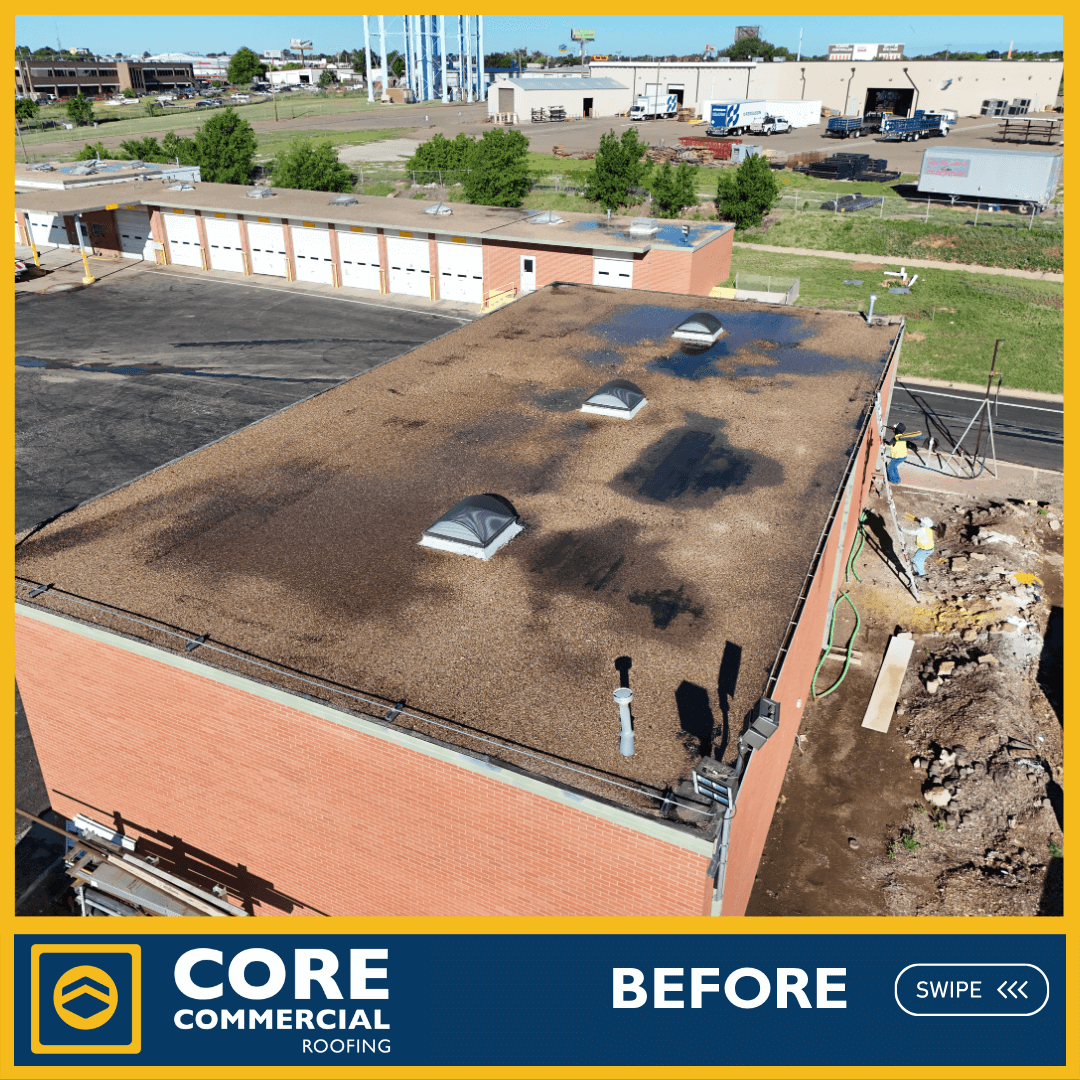
Built-up roofing is the original multi-ply asphalt roof, built three to four plies deep with alternating felt and bitumen, finished with a gravel or smooth surface. The gravel surface shields the asphalt from UV and hail, which is why gravel-surfaced BUR delivers some of the longest service life available, often 20 to 30 years. BUR is the right call when redundancy, hail tolerance, and a long horizon justify the deck weight and the install time.
- Three to four
- Gravel or smooth
- High when gravel-surfaced
- 20 to 30 years
- Requires structural review
- Material to system
What built-up roofing is, in plain terms
Built-up roofing is the oldest multi-ply low-slope system still in service. Layers of reinforcing felt and bitumen are alternated on the roof, three to four plies deep, until the assembly is watertight through redundancy rather than a single sheet. The surface is finished with gravel embedded in bitumen or a smooth reflective coating.
The gravel surface is the life driver. It shields the asphalt from the UV that breaks down exposed membranes and it absorbs hail impact that would fracture a single-ply. That protection costs deck weight and install time, which is why BUR is specified for buildings that can carry it and that value a long horizon.
When Built-up roofing is and is not the right call
- +Deck structurally reviewed for BUR and gravel weight
- +Redundancy and long life valued over install speed
- +Hail-prone exposure where gravel protection helps
- +Heavy-traffic roof with regular service activity
- +Building where hot-work and bitumen access is feasible
- -Deck cannot carry BUR and gravel weight
- -Budget and schedule sensitive, use single-ply or coating
- -Open-flame or hot-bitumen work restricted by insurer
- -Cooling load priority without coating, use reflective system
How we install built-up roofing
Deck and structural review
Deck reviewed for the weight of a multi-ply BUR and gravel surfacing before specification.
Insulation and substrate
Tapered insulation fitted for drainage, substrate prepared per the bitumen or adhesive system.
Base and reinforcing plies
Felt and bitumen layered three to four plies deep with staggered seams for full assembly redundancy.
Surfacing
Gravel embedded in a flood coat of bitumen, or a smooth reflective coating applied per specification.
Penetration and flashing
Pipe boots, metal edge, and curb flashing detailed to manufacturer spec, the most common leak point done right.
Walk and warranty
Punch list closed with the owner, photographs filed, manufacturer warranty registered with exclusions listed up front.
Built-up vs modified bitumen vs TPO
| Factor | Built-up | Modified bitumen | TPO |
|---|---|---|---|
| Plies | 3 to 4 | 2 to 3 | 1 |
| Hail tolerance | High with gravel | High | Moderate at 60 mil |
| Deck weight | High | Mid | Low |
| Install speed | Slowest | Mid | Fast |
| Typical life | 20 to 30 years | 15 to 25 years | 15 to 25 years |
Gravel-surfaced BUR requires a deck that can carry the weight.
Built-up roofing questions
What is built-up roofing?
Built-up roofing, or BUR, is the original multi-ply asphalt roof, built by alternating layers of reinforcing felt and bitumen, topped with a gravel surfacing or a smooth cap. Three to four plies give redundancy, and the gravel surface protects the asphalt from UV and hail, which is why BUR delivers some of the longest service life available.
How long does a built-up roof last in Lubbock?
A three to four ply built-up roof with gravel surfacing installed to specifications typically lasts 20 to 30 years in the West Texas climate, at the high end of low-slope service life. The gravel surface shields the asphalt from UV, which is the main life driver and why gravel-surfaced BUR outlasts smooth-surfaced.
Is built-up roofing good for hail?
A gravel-surfaced BUR is one of the most hail-tolerant low-slope systems, because the gravel absorbs impact that would fracture a single-ply. Smooth-surfaced BUR is hail-tolerant but less protected than gravel. For a Lubbock building in hail-prone exposure with a deck that can carry the weight, gravel BUR is a serious option.
How is built-up roofing installed?
BUR is built on the roof in alternating layers of reinforcing felt and hot bitumen or cold adhesive, three to four plies deep, then surfaced with gravel embedded in bitumen or a reflective coating. It is installed only on roofs with a deck that can support the weight and where hot-work access is feasible.
Built-up vs modified bitumen, what is the difference?
BUR layers felt and bitumen on the roof, three to four plies, with a gravel or smooth surface. Modified bitumen uses factory-made polymer-modified sheets installed in two to three plies, faster and less hot-work heavy. Both are multi-ply asphaltic and traffic-tolerant. BUR delivers more redundancy at higher weight and slower install.
Can a built-up roof be coated?
Yes. A sound BUR accepts an aluminum, acrylic, or silicone coating for reflectivity, or silicone where ponding is present. The gravel surface must be swept clean, and the substrate verified dry and sound by core cuts before coating. Coating a wet or blistered BUR traps the problem, which the survey identifies first.
What does built-up roofing cost per square foot in Lubbock?
As of August 2026, typical installed built-up roofing ranges for sound South Plains commercial roofs are about $12 to $22 per square foot. Ply count, gravel or smooth surfacing, insulation, access, and tear-off move the number. BUR is the right call when redundancy, hail tolerance, and a long horizon justify the weight and install time.
What warranty comes with built-up roofing?
Manufacturer material warranties cover the bitumen and felt plies, and system warranties cover the full assembly installed to specifications. Gravel-surfaced BUR often carries stronger terms than smooth-surfaced, because the gravel protects the membrane. Exclusions are listed before you sign.
Get a condition report before you commit to a system.
Photographs, documented findings, and a written recommendation. Certificate of insurance available before contract.