
Warehouse & Distribution Roofing in West Texas
Warehouse and distribution roofs on the South Plains are wide, low-slope, and crowded with HVAC and service traffic. From our Lubbock offices we specify heat-welded TPO or PVC over R-25 continuous insulation for most boxes, standing seam metal when a 30-year horizon wins the cost-per-year math, and we correct ponding with tapered insulation before any coating shortcut.
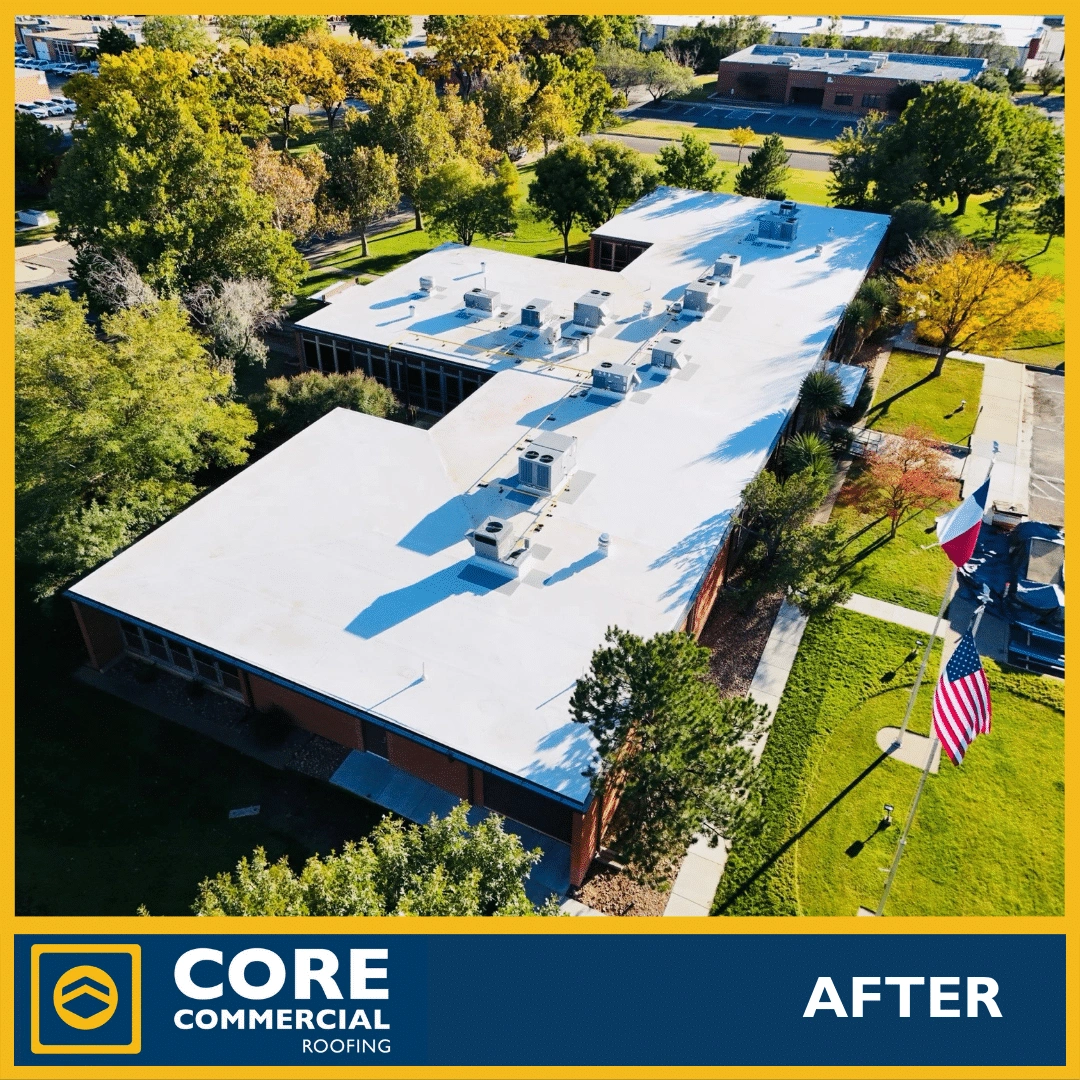
- Low-slope, wide clear span
- TPO, PVC, metal, spray foam
- R-25 ci above deck
- Field, perimeter, corner (ASCE 7)
- HVAC and service traffic
- 20 to 30-plus years by system
What a warehouse roof has to handle
- +Wide open roof with simple geometry and few internal drains
- +Owner wants a 20-plus year horizon with a single-ply or metal
- +Re-roofing within the IBC two-layer roof limit, overlay possible
- -Factory setting with chemical or grease exhaust, see industrial
- -Refrigerated or cold storage envelope, see cold storage
- -Roof already at two membrane layers, full tear-off required
Roof systems for warehouse
TPO
DetailReflective, heat-welded seams, common on distribution roofs. 20 to 25 year system to NDL when fully specified.
PVC
DetailResists grease and chemical exhaust that some warehouse uses vent. Heat-welded seams and a 20 to 25 year NDL path.
Standing seam metal
DetailA 30-plus year horizon over clear-span shops, sheds water, and carries the lowest lifetime maintenance.
Spray foam and coating
DetailSeamless insulation and waterproofing over a sound deck, with a recoat cycle instead of a tear-off.
The code floor for a warehouse roof in Lubbock
Warehouse roofs in Climate Zone 3 need at least R-25 continuous insulation above the deck in staggered layers. Wide clear spans also need tapered packs so drains stay positive without creating soft spots under HVAC curbs.
Distribution buildings catch open South Plains wind. ASCE 7 perimeter and corner zones get denser fastening and heavier edge metal than the field. Uplift ratings come from the manufacturer table for the chosen membrane and deck.
Service traffic and RTUs drive walk-pad layouts. Ponding at drains is fixed with taper and crickets before coating or recover. A coating alone over standing water is not a warehouse repair.
Code figures cited: 2021 IECC Table C402.1.3 (R-25 ci, Climate Zone 3, insulation entirely above deck); ASCE 7 field, perimeter, and corner roof zones; IBC positive drainage requirement and NRCA and manufacturer 1/4-inch-per-foot guidance. Reviewed August 16, 2026.
What fails on warehouse roofs in West Texas
Large flat roof areas pond water at drains and low spots. Tapered insulation and positive drainage per NRCA 1/4 inch per foot guidance move water to the drain before any coating or membrane decision.
Tall clear-span buildings on the South Plains catch open wind, which drives higher uplift at the ASCE 7 perimeter and corner zones. Edge and corner fastening carries the load, detailed to the manufacturer uplift rating.
Rooftop HVAC and service traffic puncture membranes. Walk pads and protected paths limit the damage, and the survey documents the traffic pattern before any work is specified.
Warehouse roofing questions
What commercial roof system lasts longest on a warehouse?
Standing seam metal, at 30 plus years with a maintenance cycle, followed by a fully adhered single-ply NDL system at 20 to 25 years. The trade-off is upfront cost against service life, which we compare by cost per year of service life.
Can you overlay an old warehouse roof instead of tearing it off?
Yes, when the existing roof is within the IBC two-layer limit and the deck is dry and sound. If the roof is already at two layers, or core cuts show saturated insulation, a full tear-off is required before a new system goes down.
How much insulation does a new warehouse roof need in Lubbock?
The 2021 IECC sets a minimum R-25 of continuous insulation installed entirely above the deck for low-slope commercial roofs in Climate Zone 3, in at least two staggered layers. We design to that floor and above it when energy or condensation performance requires.
How do you handle ponding water on a flat warehouse roof?
Tapered insulation adds slope to the drain, and we detail crickets and overflow scuppers to IBC and NRCA drainage guidance. A coating alone over standing water accelerates failure, so we correct drainage before any coating or membrane decision.
Related steps for this building type
Get a condition report before you commit to a system.
Photographs, documented findings, and a written recommendation. Certificate of insurance available before contract.