
Manufacturing & Industrial Roofing in West Texas
Industrial roofs take chemical exhaust, heat, and forklift or foot traffic that a default warehouse TPO may not survive. For Lubbock shops we check the exhaust chemistry first, then specify PVC for solvent or grease stacks, modified bitumen for impact traffic, or standing seam metal when a 30-year horizon is the capital plan.
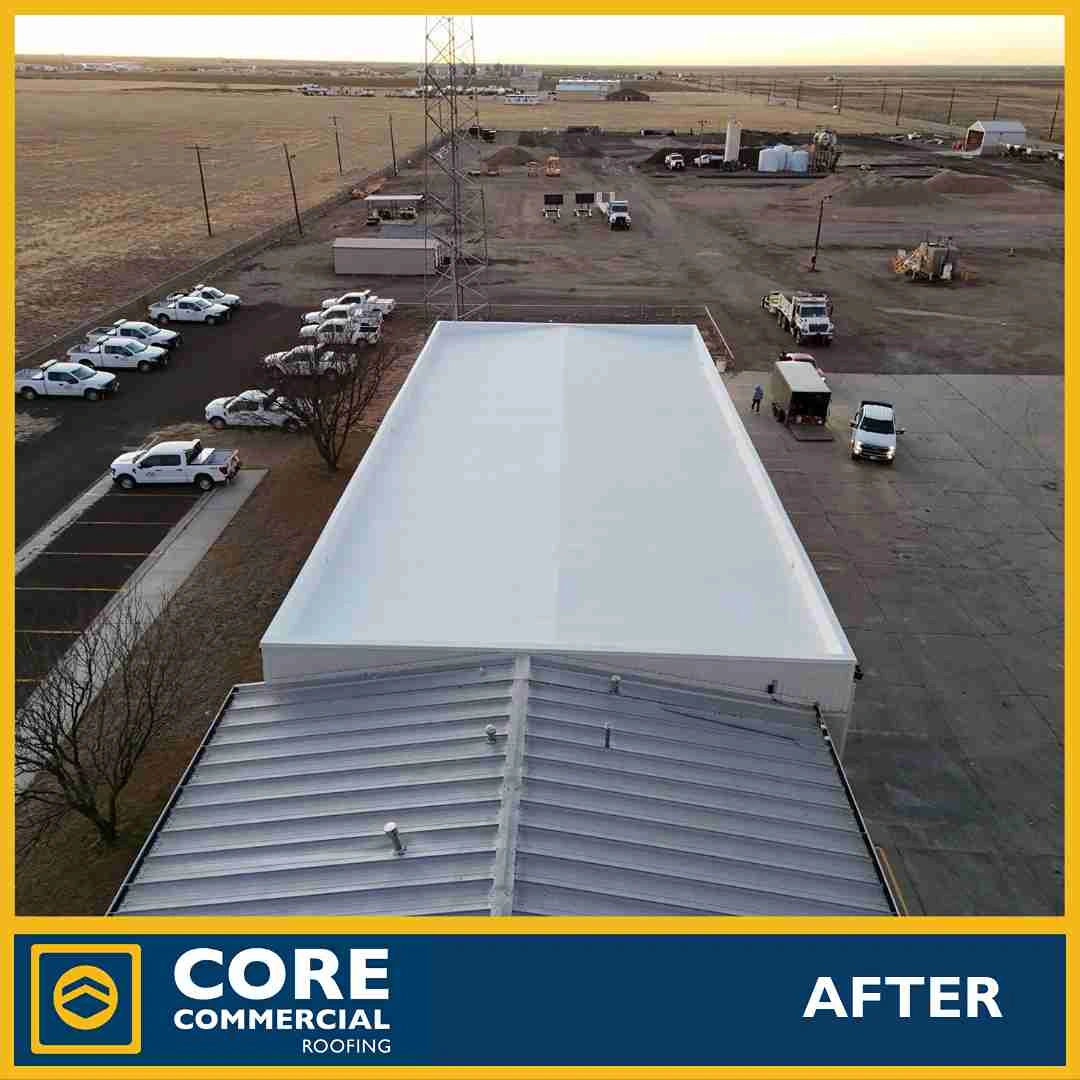
- Low-slope, wide spans
- PVC, modified bitumen, EPDM, metal
- R-25 ci above deck
- Chemical, grease, heat, impact
- Foot and forklift
- 20 to 30-plus years
What a industrial roof has to handle
- +Manufacturing with chemical or solvent exhaust
- +Shops with forklift and equipment traffic
- +Owner wanting a 30-plus year horizon on a metal roof
- -Office or dry retail with no exhaust, single-ply suffices
- -Refrigerated processing envelope, see cold storage
- -Roof saturated or at two membrane layers
Roof systems for industrial
PVC
DetailResists chemical, solvent, and grease exhaust that break down TPO and EPDM. Confirmed against the manufacturer chemical resistance chart before specifying.
Modified bitumen
DetailMulti-ply and impact-tolerant. Suits shops with foot and equipment traffic where a redundant, repairable membrane is preferred.
EPDM
DetailHeat-stable and flexible. Suits high-temperature exhaust and roof areas away from grease and solvent exposure.
Standing seam metal
DetailA 30-plus year horizon over clear-span shops, with metal roof restoration when panels are sound rather than a full panel replacement.
The code floor for a industrial roof in Lubbock
Texas sits in IECC Climate Zone 3. The 2021 IECC sets a minimum R-25 of continuous insulation installed entirely above the deck for low-slope commercial roofs, in at least two staggered layers.
ASCE 7 splits a low-slope roof into field, perimeter, and corner zones. Corners and perimeters carry the highest uplift and get increased fastening. Edge and corner flashing is detailed to the manufacturer uplift rating.
IBC requires positive drainage of low-slope roofs. NRCA and most membrane manufacturers specify at least 1/4 inch per foot slope to the drain. The assembly is chosen for the traffic, the equipment, and the substrate. The spec comes from the survey, before any specification.
Code figures cited: 2021 IECC Table C402.1.3 (R-25 ci, Climate Zone 3, insulation entirely above deck); ASCE 7 field, perimeter, and corner roof zones; IBC positive drainage requirement and NRCA and manufacturer 1/4-inch-per-foot guidance. Reviewed August 16, 2026.
What fails on industrial roofs in West Texas
Chemical and solvent exhaust attack single-ply membranes. We specify PVC and confirm the exposure list against the manufacturer chemical resistance chart before any specification.
Foot and forklift traffic on roofs and mezzanines puncture membranes. Cover board, protected traffic paths, and load-rated curbs limit the damage, documented in the survey.
Hot exhaust stacks and process heat age membranes and insulation. High-temperature flashings and heat-stable membranes like EPDM handle the source at the stack.
Open West Texas wind drives fastener back-out and edge flashing failure. Perimeter and corner flashing is detailed to the manufacturer uplift rating, with a re-torque on a maintenance cycle.
Industrial roofing questions
What roof system is best for a shop with chemical exhaust?
PVC, checked against the membrane manufacturer chemical resistance chart for the specific chemicals vented. TPO and EPDM break down faster under solvent and grease exposure. The survey collects the exhaust list before any specification.
How do you handle forklift and foot traffic on an industrial roof?
Cover board under the membrane, protected walk and traffic paths, and load-rated curbs for equipment. The survey documents traffic routes and equipment so the assembly is specified for the load, not applied as a default.
Can you restore an aging metal shop roof instead of replacing it?
Yes, when panels are structurally sound and failures are fastener back-out, surface rust, and aging seam seals. Metal roof restoration treats rust, renews fasteners and seals, and applies a protective coating. Rusted through panels are replaced.
What insulation does an industrial roof need in Lubbock?
The 2021 IECC sets a minimum R-25 of continuous insulation above the deck for low-slope commercial roofs in Climate Zone 3. High-temperature processes may need more or a different insulation type, which the survey and the manufacturer data settle.
Related steps for this building type
Get a condition report before you commit to a system.
Photographs, documented findings, and a written recommendation. Certificate of insurance available before contract.