
Restore or replace your commercial roof
A core cut and roof condition survey determine whether restoration, overlay, or replacement fits. Dry insulation and a sound aging membrane may qualify for a coating. Saturation, fractures, and a roof already at two layers can rule some options out. The documented site condition, not a generic rule, decides the recommendation.
- Core cut
- 10 to 20 years
- Saturation, fractures, layer limit
- Two membrane layers
- Restoration far lower
- Coating or system
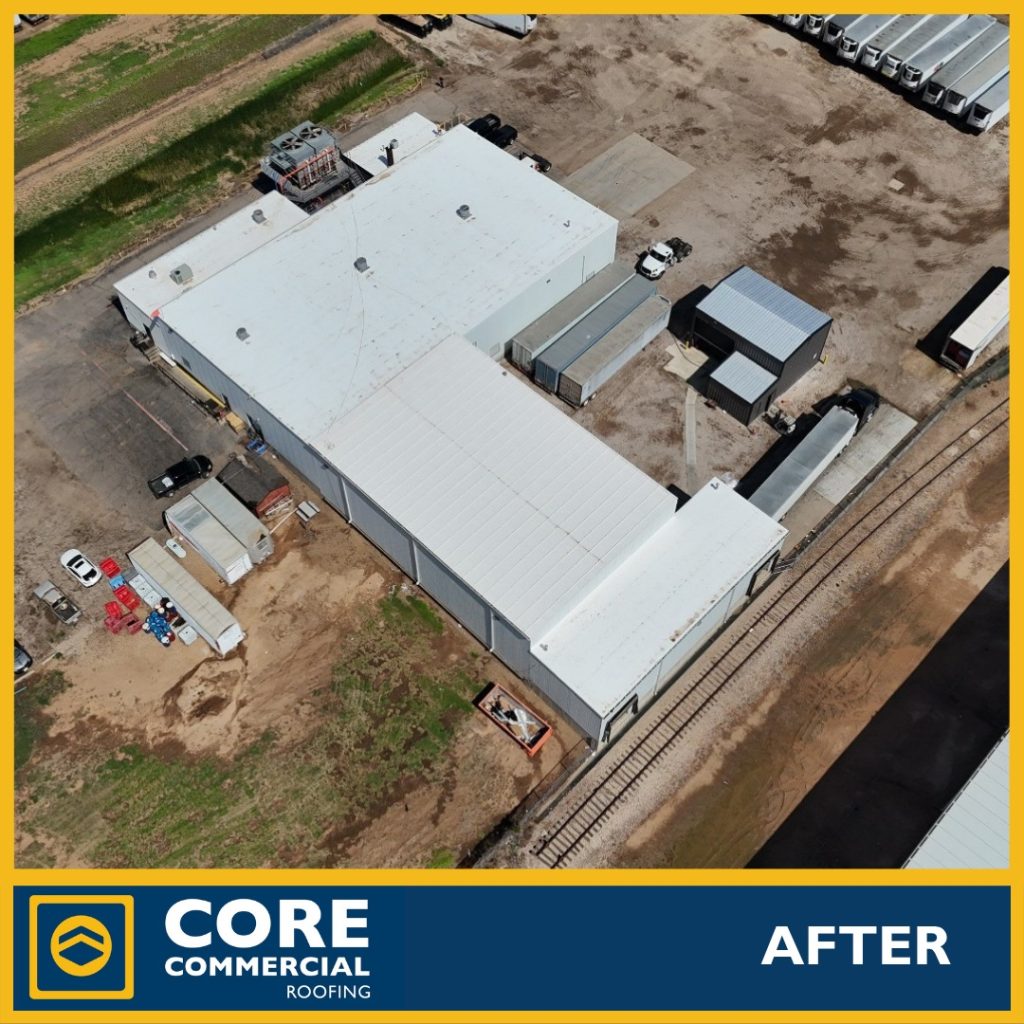
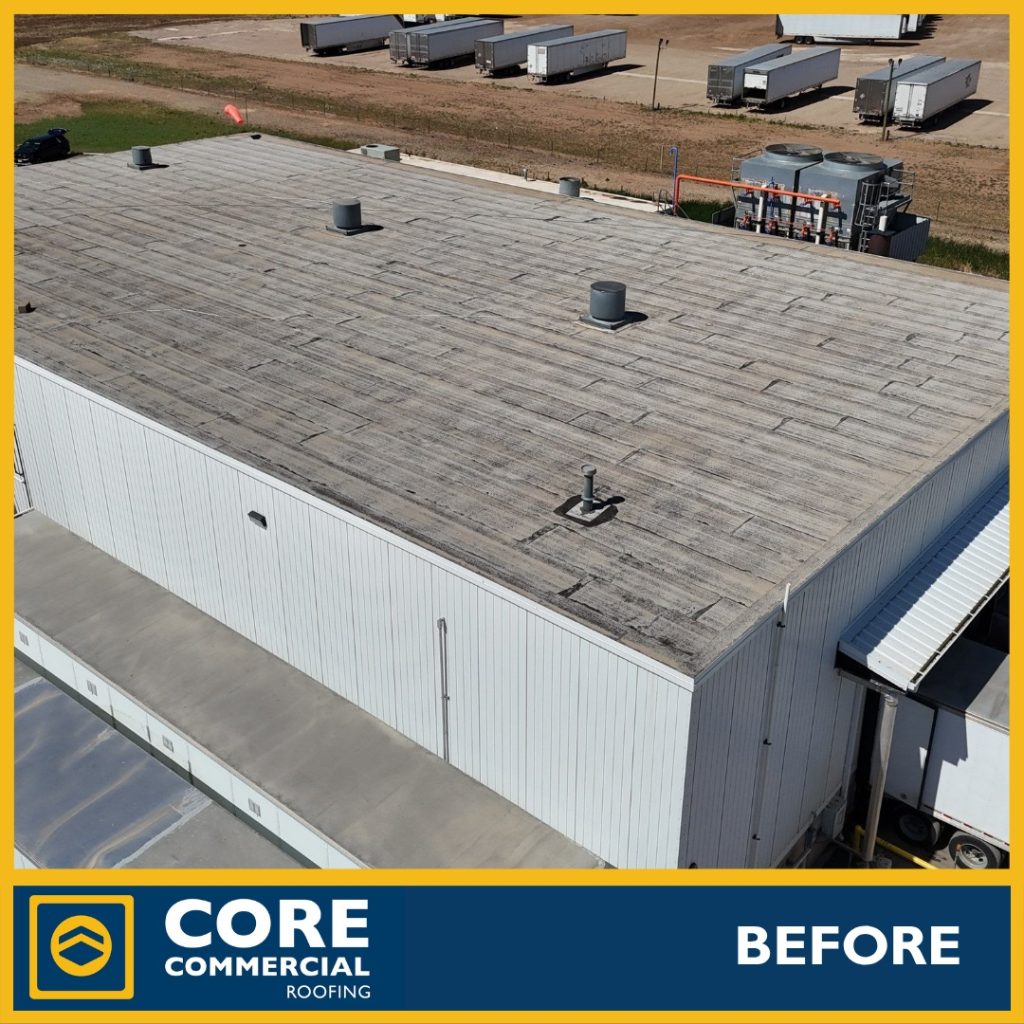
A documented restoration in Amarillo
The decision in one test: core cuts
A core cut is one important input in the restoration decision. It removes a small sample through the membrane and insulation to inspect the assembly for moisture. Dry insulation can support a restoration option when the substrate is otherwise sound. Wet insulation means coating can trap moisture, so the inspection must determine whether targeted repair, replacement, or another scope is appropriate.
Everything else, the age of the roof, the leak history, the visual weathering, is context. The core cut is the evidence. We take core cuts wherever ponding, a moisture reading, or a leak history suggests saturation, patch each one to manufacturer detail, and let the deck condition drive the recommendation. That is why a coating job and a tear-off are never decided from the ground with binoculars.
When restoration works
Restoration is the first choice whenever the substrate allows it, because it costs a fraction of a tear-off.
A silicone or acrylic coating is the right call when the membrane is aging but not fractured, the insulation is dry by core cut, and the roof is at its first layer. The coating restores the waterproof surface, adds 10 to 20 years of life, improves reflectivity, and avoids the disposal of a tear-off. For an occupied building, restoration also means a fraction of the downtime and noise.
Restoration is not a patch for a failing roof. It is a planned extension of a roof that still has a sound substrate. The coating manufacturer offers material warranties, and some offer longer term warranties when the coating is applied by a certified contractor over a qualifying substrate. The warranty covers the film, and it is distinct from a membrane warranty.
- Core cuts show dry insulation
- Membrane aging but not hail-fractured
- Roof at its first layer, not second
- Drainage adequate or correctable
- Owner wants reflectivity and a longer surface life
When replacement is the better path
Saturation and hail fractures can make restoration unsuitable because coating does not correct wet insulation or damaged membrane. The scope depends on the extent of damage, deck condition, and whether a repair or replacement can resolve the failure. The International Building Code limits membrane overlays: a third overlay is not allowed when two layers are already present.
Replacement can also be the better path when the existing system does not fit the exposure, such as severe hail or grease exhaust. The site survey determines whether a new system solves the failure more reliably than restoration.
What restoration actually costs
Restoration can avoid tear-off, disposal, new insulation, and new membrane when the assembly qualifies. As of August 2026, typical installed ranges for sound South Plains roofs run about $4 to $9 per square foot for coating and $12 to $22 for a TPO tear-off and replace. Exact cost still depends on access, existing layers, drainage, and deck condition after a documented site survey.
The cost of waiting also matters. A roof that may qualify for restoration can need a broader scope if moisture spreads. A condition report with core cuts gives a facility manager the information to plan work before a leak forces a more urgent decision.
Restoration vs replacement side by side
| Factor | Restoration (coating) | Replacement (tear-off and new) |
|---|---|---|
| When it applies | Dry insulation, sound membrane | Saturation, fractures, or no overlay allowed |
| Service life added | 10 to 20 years | 15 to 30 plus years, system dependent |
| Downtime | Low, day or two | Higher, multi-day tear-off |
| Relative cost | Far lower | Higher, includes disposal |
| Warranty | Coating material warranty | Membrane and system warranty |
| Building code | Possible when the assembly qualifies | Third overlay not allowed at two layers |
Service life is for correctly specified and installed systems in the West Texas climate, per manufacturer technical data and NRCA guidance, 2024.
Common questions
How do I know if I can restore my roof instead of replacing it?
A core cut and roof condition survey guide the decision. When insulation is dry and the membrane is aging but sound, a silicone or acrylic coating may restore the roof. Saturated insulation or fractured membrane can rule restoration out, while a roof already at two layers cannot receive a third membrane overlay under the IBC.
How much longer does a coating add to my roof?
A correctly applied silicone coating adds 10 to 20 years of service life to a sound membrane, per manufacturer technical data. Acrylic adds a similar range on surfaces that do not pond. The coating is re-coatable, so a second coating can extend life again without a tear-off when the substrate stays dry.
Is roof restoration cheaper than replacement?
A coating restoration often costs less because it can avoid tear-off, disposal, and a new membrane. The right comparison is cost per year of service life after a documented site survey. See the cost guide for the scope factors that change that comparison.
When is replacement required by code?
The International Building Code does not allow a third membrane overlay on a roof already at two layers. Saturation, hail fractures, and system compatibility are condition findings that guide the repair, restoration, overlay, or replacement recommendation after inspection.
Does a restored roof carry a warranty?
Yes. Silicone and acrylic coating manufacturers offer material warranties, and some offer longer term warranties when the coating is applied by a certified contractor over a qualifying substrate. The warranty covers the coating film and is distinct from a membrane manufacturer warranty. We list the exclusions before you sign.
How long does a restoration take compared with replacement?
A coating restoration is far faster, with less downtime, noise, and disruption than a tear-off, because the existing membrane stays in place and the coating is applied in a day or two depending on roof size. A replacement adds tear-off, disposal, insulation, and new membrane days. For an occupied building, the disruption difference matters as much as the cost.
Related steps from this guide
Get a condition report before you commit to a system.
Photographs, documented findings, and a written recommendation. Certificate of insurance available before contract.
Written and reviewed by Zac Ammons, Core Commercial Roofing & Coatings.
Commercial roofing field experience across West Texas. Content is reviewed against current NRCA guidance and manufacturer technical data.