
Restaurant Roofing in West Texas
Restaurant roofs carry grease exhaust, hood stacks, and rooftop HVAC over occupied dining, and they leak first at the hood penetration. The right assembly is PVC over R-25 continuous insulation, detailed to ASCE 7 zones and flashed tight at the hood stack and exhaust, after a survey.
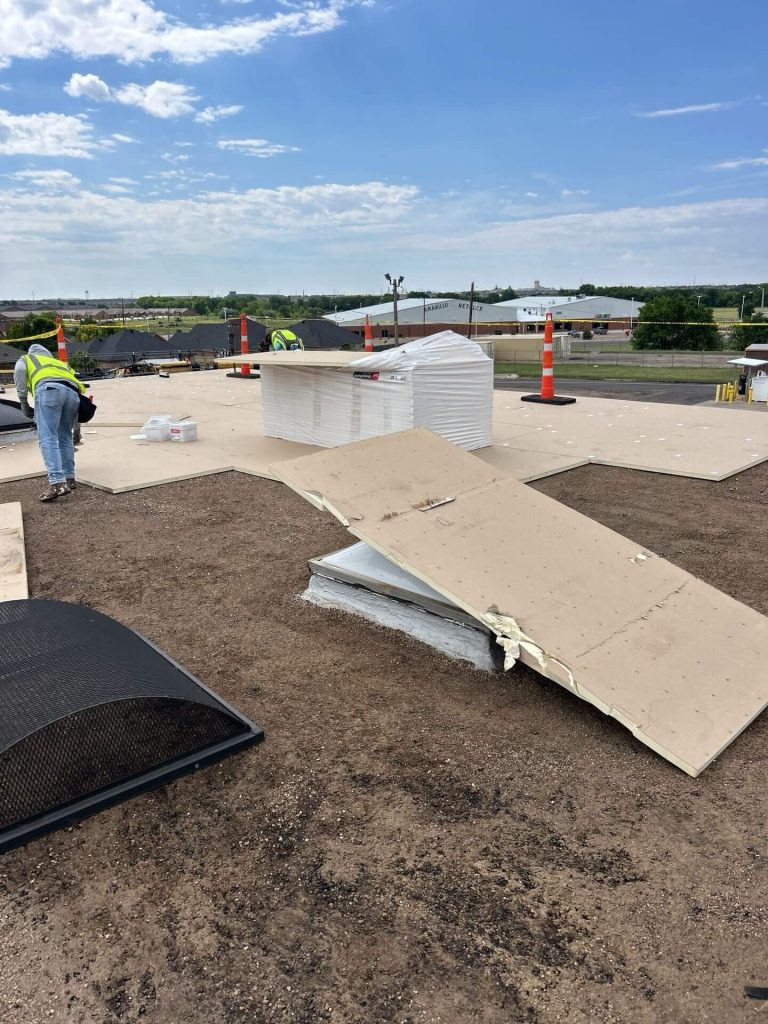
- Low-slope over dining and kitchen
- PVC, modified bitumen, coatings
- R-25 ci above deck
- PVC preferred
- Primary leak source
- 20 to 25 years
What a restaurant roof has to handle
- +Quick-service or full-service with hood and grease exhaust
- +Owner wants PVC where kitchen grease vents
- +Re-cover within the IBC two-layer limit
- -Dry retail with no exhaust, see retail
- -Refrigerated walk-in cold storage, see cold storage
- -Roof already at two membrane layers
Roof systems for restaurant
PVC
DetailResists kitchen grease and hood exhaust that break down TPO and EPDM. The standard where a hood vents grease.
Modified bitumen
DetailRedundant and repairable. Suits older restaurants and high-traffic roofs where a multi-ply membrane is preferred.
Silicone coatings
DetailRestore a sound, grease-free substrate for 10 to 20 years around operating hours. Not applied over grease-saturated membrane.
Flat roof repair
DetailFlash the hood stack and exhaust to the membrane warranty before any coating, with the boot and counterflashing checked at the survey.
The code floor for a restaurant roof in Lubbock
Texas sits in IECC Climate Zone 3. The 2021 IECC sets a minimum R-25 of continuous insulation installed entirely above the deck for low-slope commercial roofs, in at least two staggered layers.
ASCE 7 splits a low-slope roof into field, perimeter, and corner zones. Corners and perimeters carry the highest uplift and get increased fastening. Edge and corner flashing is detailed to the manufacturer uplift rating.
IBC requires positive drainage of low-slope roofs. NRCA and most membrane manufacturers specify at least 1/4 inch per foot slope to the drain. The assembly is chosen for the traffic, the equipment, and the substrate. The spec comes from the survey, before any specification.
Code figures cited: 2021 IECC Table C402.1.3 (R-25 ci, Climate Zone 3, insulation entirely above deck); ASCE 7 field, perimeter, and corner roof zones; IBC positive drainage requirement and NRCA and manufacturer 1/4-inch-per-foot guidance. Reviewed August 16, 2026.
What fails on restaurant roofs in West Texas
Grease and hood exhaust degrade TPO and EPDM. PVC is specified where kitchen exhaust vents grease, and the survey identifies the hood and the exhaust before any specification.
The hood stack and exhaust penetration is the primary leak source. Flashing is detailed to the hood and the membrane warranty, checked at the survey before any roof work.
Hot exhaust ages the membrane at the stack. High-temperature flashings and heat-stable membranes handle the source at the stack.
Ponding at HVAC and drains holds water over occupied dining. Tapered insulation and clean drains move water off, and drainage is corrected before any coating decision.
Restaurant roofing questions
What roof system is best for a restaurant?
PVC. Kitchen grease and hood exhaust break down TPO and EPDM faster than PVC. The hood stack flashings are the primary leak source, and the survey checks the hood penetration before any specification.
Can you coat a restaurant roof?
Only over a sound, grease-free substrate. Silicone coating restores a dry, sound membrane for 10 to 20 years, but a grease-saturated membrane must be cut out and replaced before any coating is applied.
What insulation does a restaurant roof need in Lubbock?
The 2021 IECC sets a minimum R-25 of continuous insulation above the deck for low-slope commercial roofs in Climate Zone 3, in at least two staggered layers. The hood exhaust and rooftop units are flashed through the assembly.
Why do restaurant roofs leak at the hood?
Hood stack and exhaust penetrations move with thermal expansion and grease, and a flashed-to-warranty seal fails when the boot and counterflashing age. The survey checks the hood boot and counterflashing before any roof work.
Related steps for this building type
Get a condition report before you commit to a system.
Photographs, documented findings, and a written recommendation. Certificate of insurance available before contract.