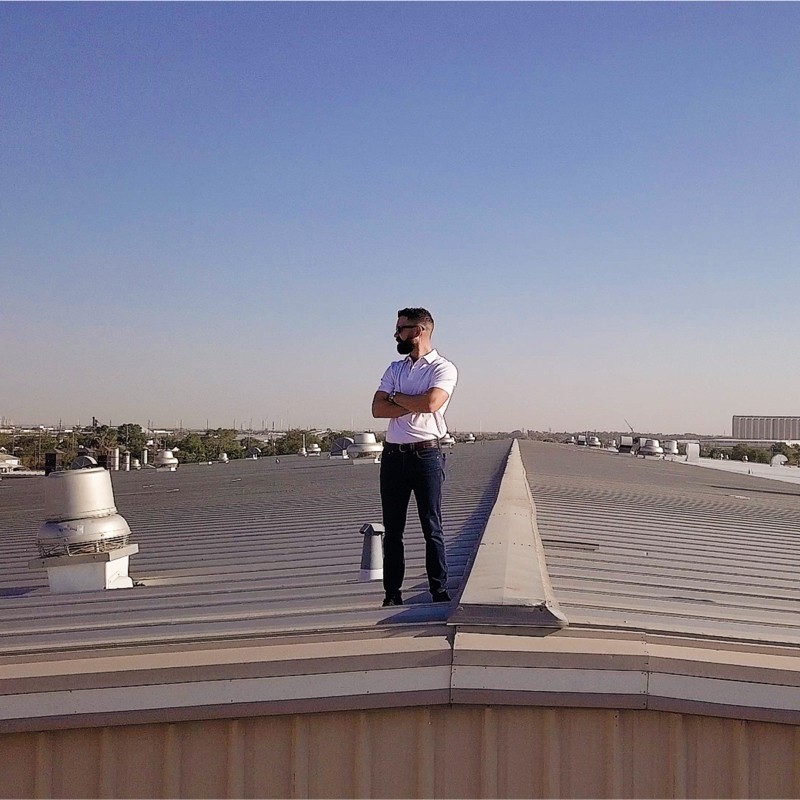

After a storm rolls through Lubbock, your building might look completely fine from the parking lot. That sense of relief is the most expensive thing on the property. Hail bruising, split seams, and lifted flashing rarely announce themselves from ground level, and on a low-slope commercial roof there is no attic to catch the first drip. You find out when a ceiling tile stains over the sales floor or a tenant calls about water on the server room carpet.
A storm damage roof inspection in Lubbock is not paperwork. It is the difference between a repair and a re-roof, and it is the difference between an insurance claim that pays and one that gets argued.
This guide walks through what a professional post-storm inspection covers on a commercial building, what inspectors are actually looking for, how to file the claim in Texas, and why the clock matters more than most owners think.
Table of Contents
- When is storm season in Lubbock, TX?
- Why does a commercial roof need an inspection if it looks fine?
- What storm damage shows up on a Lubbock commercial roof?
- When should you schedule a storm damage roof inspection?
- What does a professional commercial roof inspection include?
- What do inspectors look for after a storm?
- What does waiting actually cost you?
- How do you file a storm damage roof claim in Texas?
- How do you choose the right roof inspector in Lubbock?
- What happens after the inspection?
- How do you get ahead of the next storm?
- Final Thoughts
- FAQs
When is storm season in Lubbock, TX?
Lubbock’s severe weather runs hardest from March through June, peaking in the spring when Gulf moisture collides with dry High Plains air. That is the window when hail and straight-line winds do their damage, and it is the window your building has to be ready for.
This is not an abstract risk. The National Weather Service in Lubbock documented tennis ball size hail and widespread roof and window damage across western and southwestern Lubbock during the June 5, 2025 supercell, with survey teams estimating downburst winds up to 115 mph across a swath seven miles long. The storm reports from that evening are specific in a way that should get your attention: roofs stripped off buildings near 19th Street, the roof blown off an old service station, and the west Carlisle fire station losing the roof over its meeting room.
Those are commercial buildings. Not one of them looked like that from the street the hour before.
Why does a commercial roof need an inspection if it looks fine?
Because low-slope commercial roofs hide damage by design. There is no attic and no daylight test, so wind and hail damage sits on the membrane doing nothing visible until water has already worked its way into the insulation.
A post-storm inspection catches:
- Hail bruising and fractures in the membrane that have not opened up yet
- Seams and laps that lifted under wind uplift and resealed imperfectly
- Flashing pulled loose at curbs, parapets, and penetrations
- Saturated insulation under an intact-looking surface
- Drains and scuppers clogged with debris, setting up ponding
By the time you can see the problem from inside the building, the insulation is usually already wet, and wet insulation turns a repair into a replacement. Our guide to hail damage hiding on Lubbock roofs covers what that looks like in practice.
What storm damage shows up on a Lubbock commercial roof?
Hail, wind, and water each leave a different signature, and each one is graded differently by an adjuster. Knowing which you are dealing with changes both the repair scope and the claim.
Hail damage
Hail on a single-ply membrane leaves bruises and fractures rather than the dents you would see on a metal panel. Large stones crush the insulation board underneath, which is the damage that actually shortens the roof’s life. On modified bitumen you get granule loss and softened spots. On a coated roof, the surface may look cosmetic while the substrate below has taken the real hit. Where the system already sits at the end of its service life, hail is often what pushes a building from coating into full replacement territory.
Wind damage
Straight-line winds work on edges and terminations first. Perimeter flashing lifts, seams peel, and once wind gets under a membrane it will keep pulling. Rooftop equipment is the other weak point: HVAC units shift, curbs rack, and the flashing around them opens up. Those HVAC curb flashing leaks are one of the most common post-storm findings on West Texas buildings.
Water damage
Water does not need a hole. Blocked drains after a hail event back water up over the flashing line, ponding sits in low spots and finds every compromised seam, and wind-driven rain pushes sideways into details that handle vertical rain fine. Interior stains are the last symptom, not the first.
When should you schedule a storm damage roof inspection?
Schedule it within days of the storm, not weeks. A good rule of thumb still applies: if the storm was strong enough to scare you, it was strong enough to damage your roof.
Call for an inspection when:
- Hail of any size fell on the property, whatever it looked like
- You have debris, gravel, or membrane fragments on the ground or in the parking lot
- Neighboring buildings are getting inspected, tarped, or re-roofed
- Rooftop equipment shifted or a unit is running differently
- Any interior staining, however small, has appeared since the storm
- It has been a year since your last inspection, storm or no storm
Waiting to see whether a leak develops is the most expensive way to find out.
What does a professional commercial roof inspection include?
A real inspection is a walk of the entire roof surface plus a documented report, not a look from the truck. On a commercial building it should cover the field of the roof, every penetration and termination, the drainage system, and the condition of what is underneath the membrane.
A thorough inspection covers:
- Membrane condition: bruising, fractures, punctures, shrinkage, and granule loss across the full field
- Seams and laps: lifted, split, or separating edges where wind uplift did its work
- Flashing and penetrations: curbs, pipe boots, pitch pockets, skylights, and parapet coping
- Drainage: internal drains, scuppers, and downspouts, plus any new ponding since the storm
- Moisture assessment: whether water has reached the insulation and how far it has spread
- Structural check: decking condition and fastener backout
- Photo documentation: dated images of every finding, tied to a roof plan
Drone imagery is common in Lubbock for large or steep-access roofs, but it supplements a physical walk rather than replacing it. Aerial images will not tell you whether insulation is saturated. A comprehensive roof report combines both and gives you something you can hand to an adjuster.
What do inspectors look for after a storm?
Inspectors are building a case, not just a punch list. Every finding has to be tied to the storm, dated, and photographed, because that is what determines whether your carrier treats it as storm damage or as wear and tear.
Membrane: impact marks, fractures, and crushed insulation underneath. On a coated system, whether the substrate took damage the surface is hiding.
Terminations: perimeter edge metal, coping, and anywhere the membrane turns up a wall. This is where wind starts.
Equipment and curbs: whether HVAC units moved, whether curb flashing opened, and whether the units themselves show hail strikes that corroborate the date of loss.
Drainage: new ponding, debris-blocked drains, and evidence that water backed up during the event.
Interior: deck underside, insulation moisture, and any staining that has appeared since the storm.
The hail strikes on your rooftop HVAC units matter more than most owners realize. They are often the cleanest evidence an adjuster has that hail of a given size hit this specific building on this specific date.
What does waiting actually cost you?
Waiting turns a covered claim into an uncovered maintenance problem. The damage does not stay still, and neither does your carrier’s willingness to attribute it to the storm.
Here is what happens when a storm-damaged commercial roof sits:
- Water spreads laterally. One compromised seam saturates insulation boards well beyond the entry point, so the repair area grows every month.
- Repairs become replacements. Once saturation crosses a meaningful share of the roof, coating and patching are off the table and you are pricing a full commercial roof replacement.
- Attribution gets harder. The longer the gap between the storm and the inspection, the easier it is for an adjuster to call it deterioration.
- Business disruption compounds. Interior damage means closed areas, displaced tenants, and ruined inventory on top of the roof cost.
- Deadlines pass. Your policy has a reporting window, and missing it is grounds for denial on its own.
How do you file a storm damage roof claim in Texas?
Report the damage to your carrier as soon as you find it, then document everything before anyone touches the roof. In Texas, the reporting deadline is set by your policy rather than by state law, which is exactly why waiting is a gamble with no upside.
The Texas Department of Insurance lays out the sequence for documenting storm damage and getting a claim paid: call your insurer right away, photograph and video the damage, keep a record of everyone you speak to, make temporary repairs to stop further damage while saving the receipts, and hold off on permanent repairs until the adjuster has seen it. TDI also advises getting multiple contractor bids and comparing them against the adjuster’s report before you settle.
One Texas rule worth knowing before a stranger knocks on your door: state law makes it illegal for a roofer to offer to waive your deductible or promise you a rebate on it, and your insurer can ask you to prove you actually paid it. Anyone selling you a “free roof” is proposing something illegal and putting your claim at risk.
Where a documented inspection changes the outcome:
| What your adjuster needs | Ground-level look | Documented roof inspection |
|---|---|---|
| Dated photo evidence tied to the storm | No | Yes, timestamped and mapped to the roof plan |
| Membrane impact points and fractures | Not visible | Documented across the full field |
| Moisture in the insulation | Not detectable | Assessed and mapped |
| Flashing and penetration condition | Not visible | Inspected detail by detail |
| Repair scope and cost basis | Guesswork | Itemized and priced |
| A report you can attach to the claim | None | Written report ready to submit |
How do you choose the right roof inspector in Lubbock?
Choose a contractor who works on commercial roofs year-round in this market, not one who appeared after the storm. Storm chasers are built to move volume and leave; you need the company that will still be answering the phone when the warranty question comes up in year six.
What to look for:
- Commercial and low-slope experience: membrane systems, not shingles. Ask what they have installed across West Texas.
- Storm damage specifics: can they tell hail bruising from mechanical damage and explain the difference to your adjuster?
- Moisture assessment capability: a visual walk alone cannot tell you whether the insulation is wet.
- Written, photo-backed reports: if it is not documented, it does not exist as far as a claim is concerned.
- Manufacturer certification: it determines what warranty you can actually get on the repair or commercial re-roof.
- A permanent local address. Not a truck with an out-of-state plate.
Anyone pressuring you to sign before the adjuster has seen the roof is solving their problem, not yours.
What happens after the inspection?
You get a written report with photos, findings, and a recommended scope, and from there the path is one of three. What you do not get is a guess.
No storm damage found. You have documentation on file establishing the roof’s condition on that date, which is worth having the next time a storm hits.
Isolated damage. Targeted commercial roof repairs at the affected seams, flashings, or membrane sections, often well inside what a claim will cover.
Widespread damage. The report becomes the backbone of your claim, and the conversation moves to whether the roof is a candidate for restoration with a coating system or needs a full replacement. That decision turns on whether the insulation is dry, which is why the moisture assessment is not optional.
How do you get ahead of the next storm?
Inspect twice a year and after every significant weather event, and fix the small things while they are still small. On a commercial roof, preventive maintenance is the cheapest line item you will ever approve.
Practical steps for West Texas building owners:
- Keep drains and scuppers clear. Ponding after a storm is usually a drainage problem, not a membrane problem.
- Walk the roof after every hail event. Even the ones that did not seem like much.
- Document the roof’s condition annually. A baseline report makes the next claim far easier to prove.
- Watch the equipment. Most leaks start at a curb or a penetration, not in the open field.
- Know your system. Maintenance on a TPO roof is not the same as maintenance on modified bitumen or metal.
If you manage apartments or mixed-use property, the same logic applies across the portfolio through multi-family and residential roofing maintenance.
Final Thoughts
Storms in Lubbock are sudden. Roof failures are not. They build quietly through every week the damage goes undocumented, and by the time the evidence reaches your ceiling it has usually cost you both the repair and the claim.
A storm damage roof inspection is a small, fast step that protects the building, the budget, and the claim at the same time. Whether the roof looks untouched or you already suspect trouble, get it documented while the storm date is still recent and the evidence is still fresh.
Your roof took the hit. Now find out where.

Core Commercial Roofing & Coatings inspects commercial and multi-family roofs across Lubbock and West Texas, including moisture assessment and documented reporting you can submit with your claim. Call (806) 404-1250 to schedule your inspection.
FAQs
How do I know if my commercial roof was damaged in a storm?
You usually cannot tell from the ground, because hail bruising, lifted seams, and crushed insulation leave no visible signal at street level. The reliable indicators are hail strikes on rooftop equipment, debris in the parking lot, and any new interior staining, but a documented roof walk is the only way to know.
How soon after a storm should I schedule an inspection?
Within days, not weeks. The longer the gap between the storm and the documentation, the easier it is for an insurer to attribute the damage to age or wear rather than to the event.
Does insurance pay for a storm damage roof inspection?
Insurers generally do not pay for the inspection itself, though many commercial roofing contractors provide post-storm inspections at no charge. The report is what earns its value, because it becomes the evidence your claim is built on.
Can hail damage a commercial roof that shows no leaks?
Yes, and this is the most common scenario on low-slope roofs. Hail crushes the insulation board beneath an intact membrane, shortening the roof’s service life and setting up a failure that may not surface as a leak for months.
What should a post-storm roof inspection report include?
It should include dated photos mapped to a roof plan, condition notes for the membrane, seams, flashings, and drainage, a moisture assessment, and an itemized repair scope with pricing. That combination is what an adjuster can act on without sending someone back out.