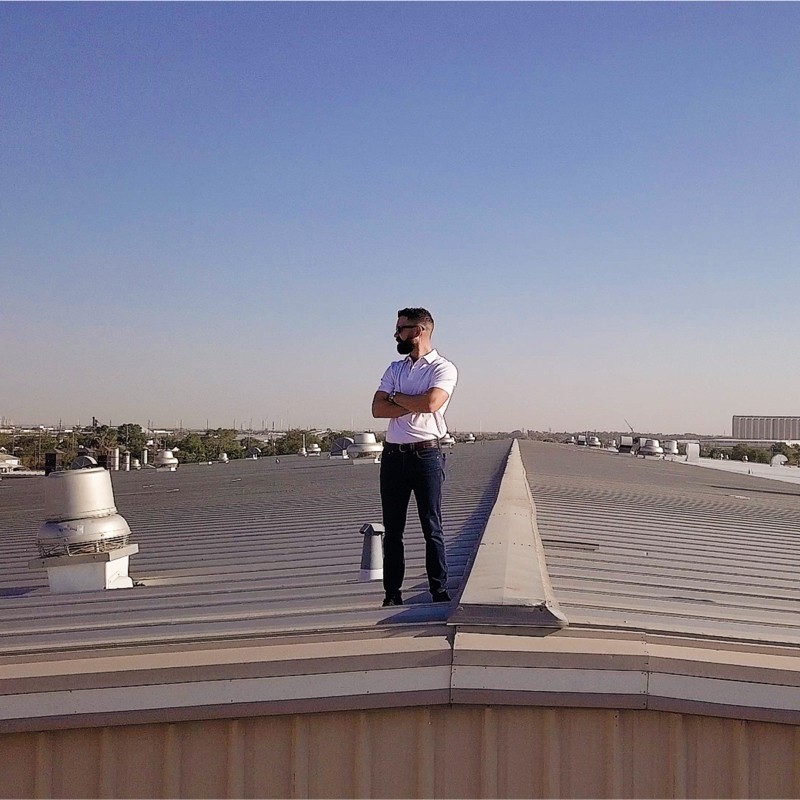
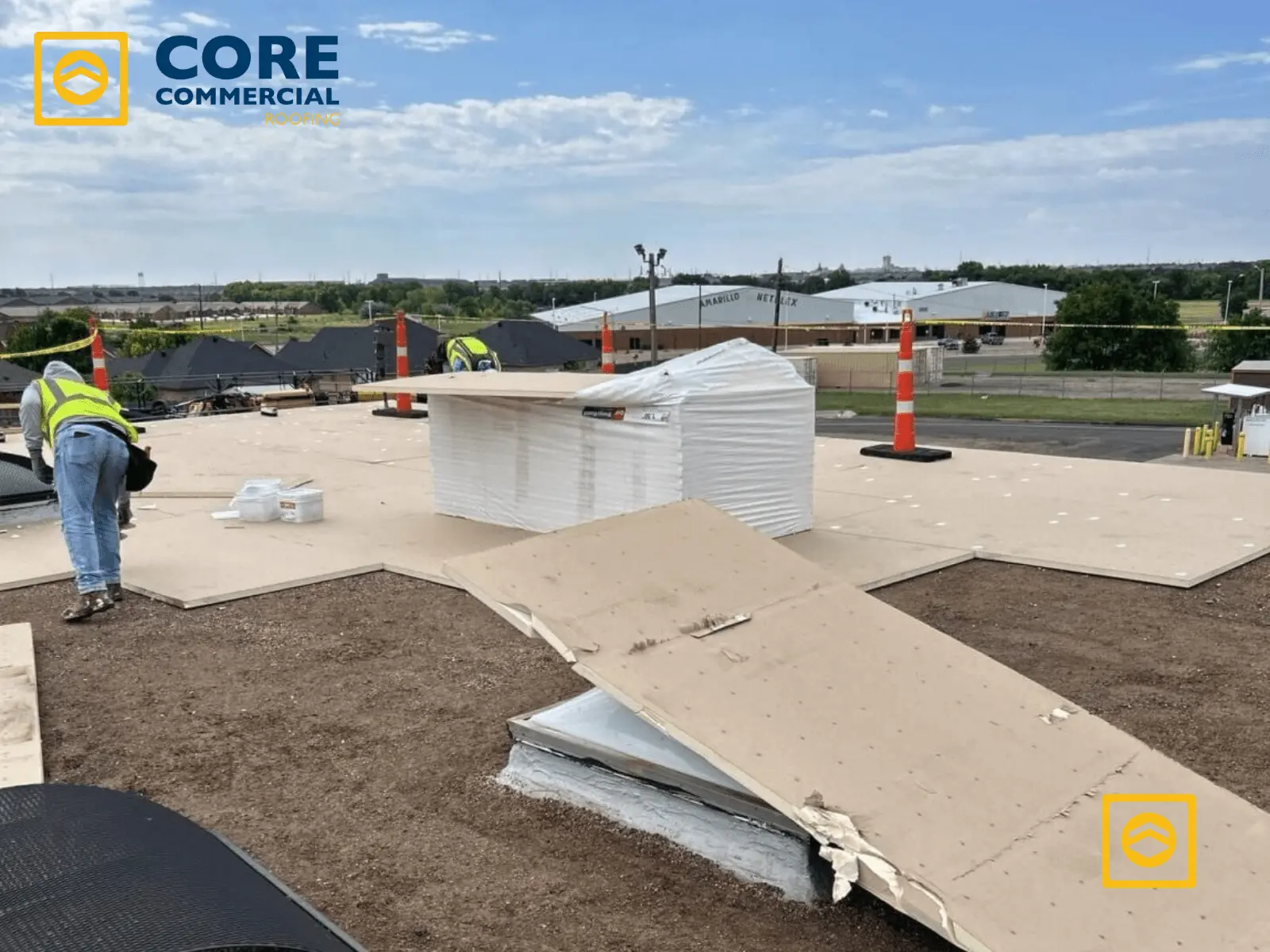
Texas has one of the most unforgiving roofing environments in North America: UV index of 10–11 in summer, 140+ mph design wind speeds along the coast, and annual rainfall that swings from 18 inches in El Paso to 55 inches in Beaumont. Most flat-roof commercial buildings in this state are running on borrowed time with the wrong membrane. This guide explains how Thermoplastic Polyolefin (TPO) roofing works, when it’s the right choice for Texas commercial properties, how installation should proceed, and what separates a 20-year performing asset from a 7-year capital drain.
This guide does not cover residential TPO applications, built-up roofing (BUR) systems, or metal roof retrofits those are different systems with different decision trees.
Table of Contents
Who This Is For
This is written for commercial property owners, asset managers, and real estate investors managing flat or low-slope roofs on Texas buildings warehouses, retail strips, office buildings, industrial facilities. If you’re evaluating a capital improvement, preparing for a 1031 exchange, or inheriting a portfolio with aging roofs, this is your resource.
You should have a working understanding of commercial leases (who bears responsibility for roof maintenance affects your decision calculus), general construction budgets, and the distinction between a repair and a capital replacement.
Stop reading if you’re managing a steep-slope residential roof, a roof under 2,000 square feet, or a historic building with an existing metal or tile system. TPO on a 6:12 pitch is a waste of everyone’s time, and historic structures have thermal and moisture dynamics that require a specialist, not a membrane roof.
What TPO Roofing Actually Is
TPO is a single-ply membrane roofing system made from a blend of polypropylene and ethylene-propylene rubber. It comes in rolls typically 10, 12, or 20 feet wide and is heat-welded at seams using hot-air guns calibrated between 700°F and 1,000°F. The result is a monolithic, watertight surface with no adhesives at the seams, which is why properly installed TPO outperforms EPDM in wet-seam scenarios.
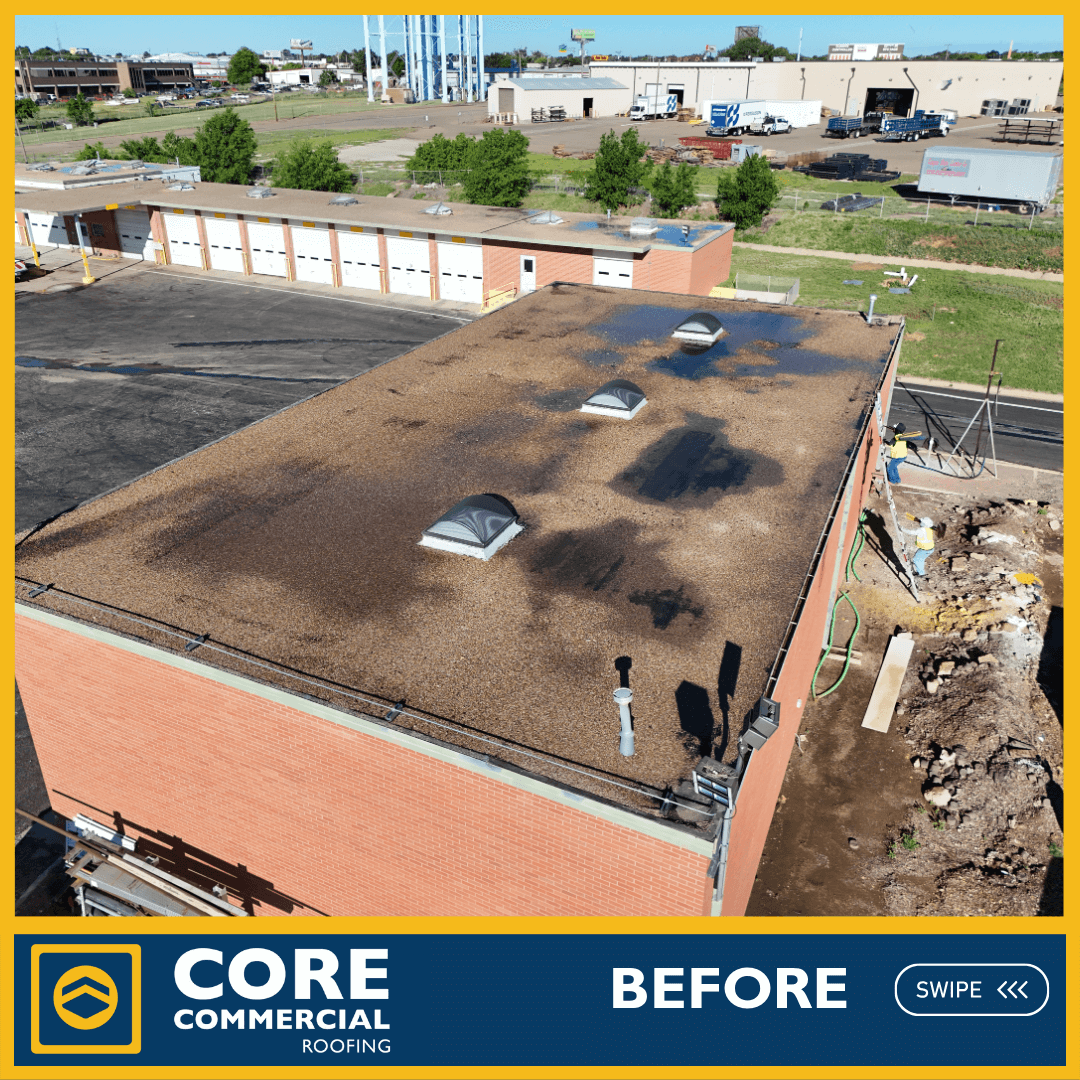
Standard membrane thickness runs 45 mil, 60 mil, or 80 mil. In Texas, specify nothing under 60 mil for any commercial project. The UV index in Dallas, Houston, and San Antonio runs 10–11 in summer that 45 mil membrane your contractor quotes as “standard” will begin surface chalking within three years under those conditions. Specify membrane thickness in writing before anyone picks up a pen.
Why Texas Commercial Buildings Lean Toward TPO
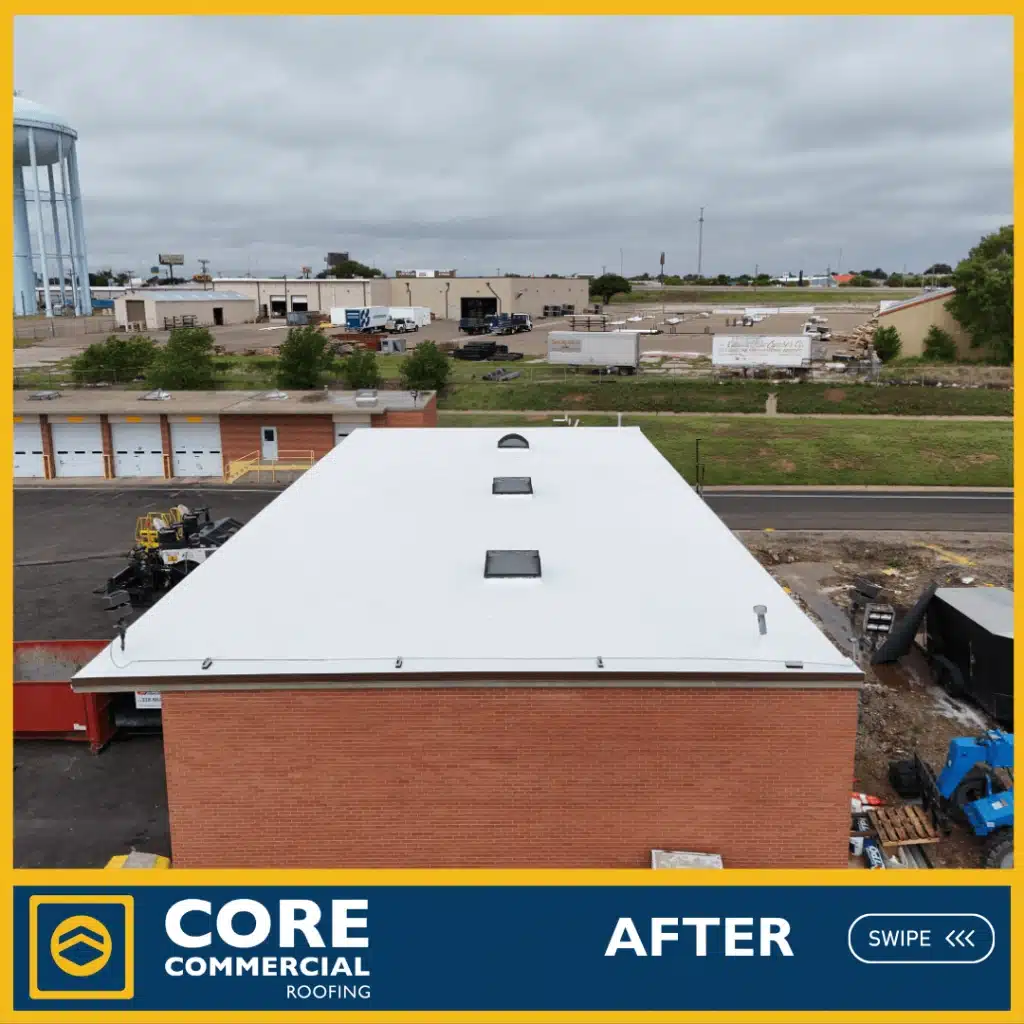
White TPO membrane carries a solar reflectance of 0.79 to 0.87 and a thermal emittance of 0.92 figures that satisfy ENERGY STAR requirements and qualify for Texas Property Code cool roof credits. On a 10,000 square foot warehouse in Houston, that reflectivity can reduce cooling load by 10–15% compared to dark EPDM or modified bitumen. At commercial electricity rates of $0.12/kWh, that reduction moves your NOI.
TPO is also the most cost-competitive single-ply option available. Installed cost in the Dallas-Fort Worth market runs $4.50 to $7.50 per square foot depending on insulation requirements, deck condition, and site access compared to $6.00 to $10.00 for a two-ply modified bitumen system. For most flat-roof commercial applications, TPO wins on both performance and economics.
What surprises most owners when they actually run the numbers: the energy savings case for white TPO is stronger in Houston than in Phoenix. Houston’s combination of high humidity, elevated UV, and long cooling seasons means the reflectivity pays off more aggressively than in a dry desert climate where nights cool significantly. A well-specified TPO roof in the Houston metro can reach simple payback on the cool-roof premium within four years through utility savings alone.
Step-by-Step TPO Installation Protocol for Texas
Step 1: Roof Deck Assessment
Pull core samples at a minimum of three locations per 10,000 square feet of roof area before any material is ordered. You’re measuring moisture content in the existing insulation and evaluating deck substrate condition. Use a Tramex CME5 or a nuclear gauge reader for accuracy. Wet insulation doesn’t compress uniformly, creates soft spots under foot traffic, and must be removed before new membrane goes down.
Step 2: Insulation Specification
Texas energy code (IECC 2021, adopted by most municipalities) requires minimum R-25 for commercial roofs in Climate Zone 2 Houston, Corpus Christi and R-30 in Climate Zone 3, which covers Dallas, Lubbock, and Amarillo. Two-layer polyisocyanurate (polyiso) is the standard approach: a 3-inch base layer plus a 1-inch cover board with joints staggered a minimum of 6 inches. Do not allow a contractor to omit the cover board. Polyiso alone is too compressible under membrane and foot traffic, and the thermal bridging at fastener points becomes a warranty issue within five years.
Step 3: Membrane Attachment Method
Three methods exist: fully adhered, mechanically attached, or ballasted. Ballasted systems are rare in Texas due to wind uplift requirements. For buildings in ASCE 7 Wind Zone D – coastal areas with 130+ mph design wind speeds fully adhered installation is non-negotiable. For inland projects, mechanically attached with 6-inch fastener spacing at seams meets FM Approvals 1-90 uplift requirements. Confirm FM Approval or UL listing appears on your specification sheet before signing anything insurers check this during claims.
Step 4: Seam Welding
Machine welding using a Leister Varimat V2 or equivalent is required for all field seams. Hand welders are for detail work and terminations only. Minimum seam width is 1.5 inches, tested at every 10 linear feet using a probe. Any seam that opens under probe pressure gets cut out and rewelded not patched. This step is where most contractors find ways to save time, and where most roofs fail prematurely.
Step 5: Flashing and Terminations
All penetrations HVAC curbs, roof drains, parapet walls require TPO-coated metal flashing bonded with TPO bonding adhesive and heat-welded to the field membrane. Pre-fabricated pipe boots are acceptable for penetrations under 4 inches in diameter; anything larger requires a custom fabricated collar. Membrane must run up parapet walls a minimum of 8 inches 12 inches where local code requires it.
Step 6: Drainage Verification
Positive drainage meaning water exits the roof within 48 hours of a rain event is required under NRCA standards and most local codes. Houston receives roughly 50 inches of annual rainfall; Dallas receives approximately 35 inches. Standing water accelerates membrane degradation and voids most manufacturer warranties. Install tapered insulation at low points if existing drainage slope is under 1/4 inch per foot.
Step 7: Manufacturer Warranty Registration
Register with Firestone Building Products (UltraPly TPO), Carlisle SynTec (Sure-Weld TPO), or Johns Manville TPO within 30 days of project completion. Standard NDL (No Dollar Limit) warranties run 15–20 years. These three manufacturers maintain the deepest warranty infrastructure and the widest certified contractor networks in Texas. Off-brand TPO from a regional distributor may save 8% upfront and cost you the warranty when you actually need it. You will not receive an NDL warranty unless a manufacturer-certified contractor performs the installation verify that certification before executing any contract.
Contraindications: When Not to Use TPO
Active structural movement. Cracked parapet walls or doors that won’t close properly are symptoms of differential settlement. A membrane roof will fail at seams as the deck shifts beneath it. Resolve the structural problem first.
Recovering over wet insulation. A recover over existing modified bitumen is acceptable only if moisture readings in the existing insulation are below 5% by weight. Anything above that threshold and you’re sealing in a rot environment, not fixing a roof.
Heavy rooftop traffic. A fulfillment center with HVAC technicians on the roof monthly needs 80 mil membrane and dedicated walkway pads. A 60 mil membrane under weekly service traffic without protection pads won’t reach eight years in Texas heat.
Uncorrectable ponding water. If the structure physically can’t be re-sloped and drainage can’t be improved, TPO is the wrong system. A fluid-applied coating or tapered SPF (spray polyurethane foam) system handles chronic ponding far better.
How This Is Typically Done Wrong
Underspecifying membrane thickness to hit a price point. A contractor bids 45 mil TPO and wins on price. In DFW’s 100°F summers, 45 mil membrane experiences thermal fatigue at the seams within five years. The client gets seam separation, interior water damage, and a warranty dispute because the product spec didn’t match the environment. The $0.80 per square foot savings costs $3.00 per square foot in repairs. Specify 60 mil minimum in writing before the bid goes out.
Skipping the core cut moisture survey. Contractors who skip pre-installation moisture testing are gambling with your capital budget. In Houston, a “quick recover” that skips this step can open up to reveal 40% of existing insulation saturated from a slow drain failure. That discovery mid-project adds $25,000–$35,000 in tear-off costs the owner never budgeted for. The core samples take half a day and cost a few hundred dollars.
Relying on hand-welded seams for field joints. Hand welding is for details and terminations only. Field seams welded by hand are inconsistent in width and heat penetration — they look acceptable at inspection and open within 18 months. Machine welding is not optional on any project over 2,000 square feet. If a contractor tells you hand welding is “just as good for smaller field areas,” that contractor is wrong.
Edge Cases That Require Deviation from Standard Protocol
Coastal Texas properties — Galveston, Corpus Christi, Brownsville. Design wind speeds of 140+ mph under ASCE 7-22 require fully adhered systems, enhanced seam widths of 2 inches minimum, and a Windstorm Inspection Certificate issued by a licensed Texas Department of Insurance (TDI) inspector. Mechanically attached TPO is insufficient for any property within the Texas Windstorm Insurance Association (TWIA) coverage zone. File with TWIA before construction begins, not after.
Buildings on the National Register of Historic Places. Houston’s Warehouse District and the Dallas Arts District both include buildings where a standard TPO install could violate State Historic Preservation Office (SHPO) review requirements or alter protected historic character. In these cases, fluid-applied waterproofing or a fully concealed system may be required. Get an SHPO consultation before specifying any roofing system.
Buildings with solar PV planned within five years. If solar is in your capital plan, specify 80 mil TPO now and discuss ballasted rail systems with your installer during the roofing project — not after. Penetrating a roof you just replaced is expensive and voids sections of the warranty. Plan conduit penetrations and equipment structural loads during roofing construction, even if the panels come two years later. This is the single most overlooked coordination failure in Texas commercial construction: roofing and electrical contractors almost never communicate before work starts, and the building owner pays for that gap twice.
When to Escalate to a Professional
Escalate to a licensed roofing engineer (PE) when core samples show moisture in more than 20% of your test locations. That’s a structural evaluation problem, not a specification problem.
Escalate to a TDI-licensed windstorm inspector when the building sits in a TWIA-eligible county – all 14 Texas coastal counties and the insurance policy requires Windstorm certification. Without that certificate, a claim will be denied regardless of installation quality.
Escalate to an attorney when a contractor presents a warranty that excludes consequential damages on a building with high-value contents. Standard roofing warranties don’t cover business interruption, inventory loss, or equipment damage. If your building houses cold storage or medical equipment, have that warranty reviewed before signing.
Escalate to a commissioning agent when the project exceeds $500,000 in total roofing scope. A third-party inspector running seam probes, moisture meters, and thermal imaging before final pay release is worth every dollar at that project size.
Key Standards and References
NRCA Roofing Manual: Membrane Roof Systems – The field standard for TPO specification and installation tolerances. Any contractor who hasn’t read it has no business bidding on your project.
FM Approvals FM 4470 – Governs single-ply roof system testing. FM 1-90 and 1-60 wind uplift ratings are the minimum acceptable standards for Texas commercial properties.
ASTM D6878 – The standard specification for TPO membrane. It should appear on every product spec sheet. If it doesn’t, ask why before accepting the bid.
Texas Administrative Code Title 28, Part 2 (TDI Windstorm Rules) – Governs all roofing in TWIA-eligible counties. Non-compliance means no windstorm coverage, full stop.
IECC 2021 – Adopted by Texas with amendments. Governs minimum R-values and cool roof requirements by climate zone.
TPO is the right answer for most Texas commercial flat roofs. The difference between a 20-year performing asset and a recurring capital drain comes down to three things: membrane thickness specification, installation method, and contractor certification. Get those three locked into the contract before anyone breaks ground.