Your commercial roof is showing its age, and now you are staring at two very different quotes: one for a coating and one for a full replacement. The right answer depends on what is happening under the surface of your roof, how the IRS treats each option, and what West Texas weather is going to throw at it next. Here is how to make the call.
Table of Contents
Can a commercial roof be coated instead of replaced?
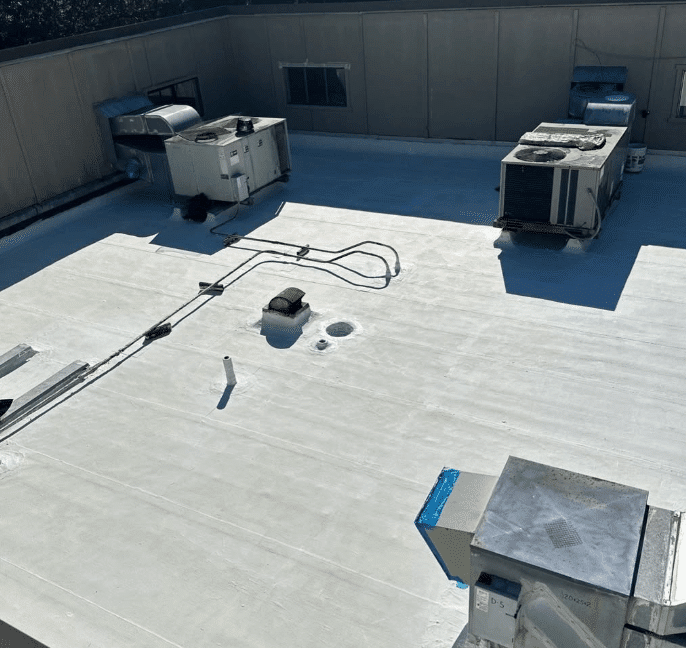
Yes, a structurally sound, dry commercial roof can usually be coated instead of replaced. A coating restores the existing system with a seamless protective layer, while a replacement tears the old assembly off and rebuilds it from the deck up.
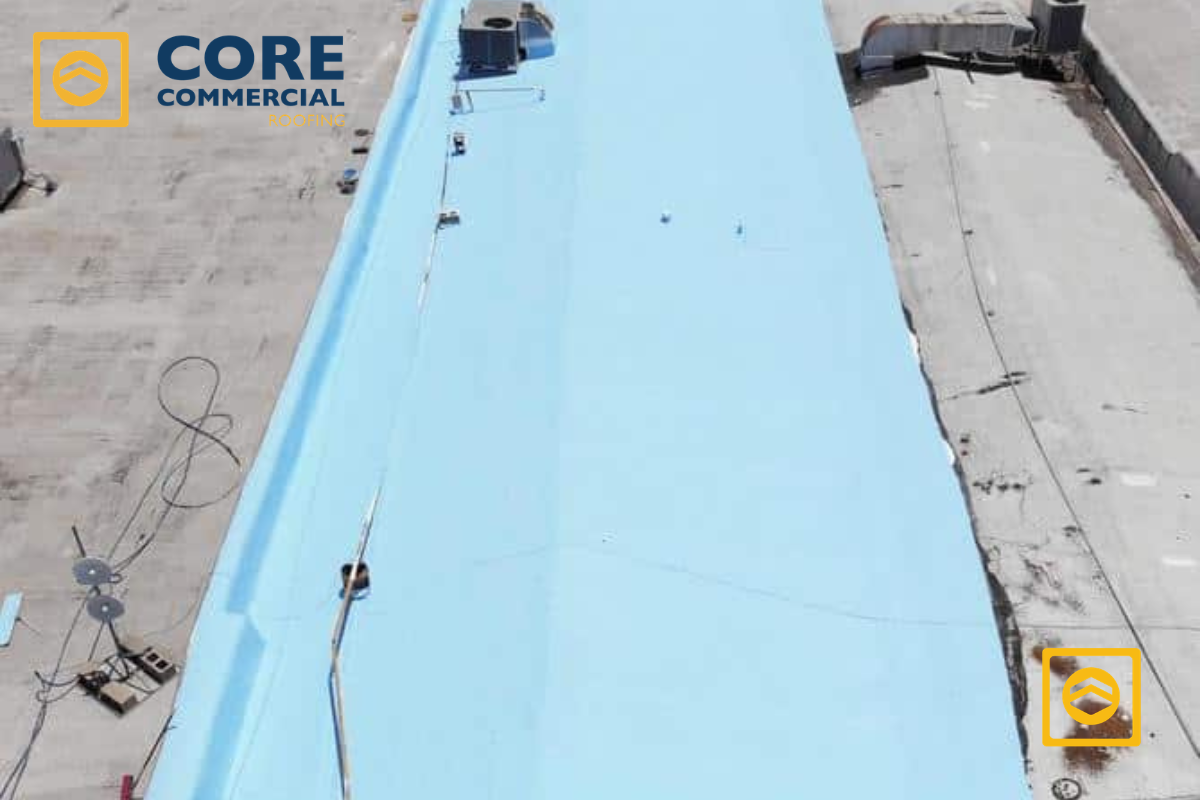
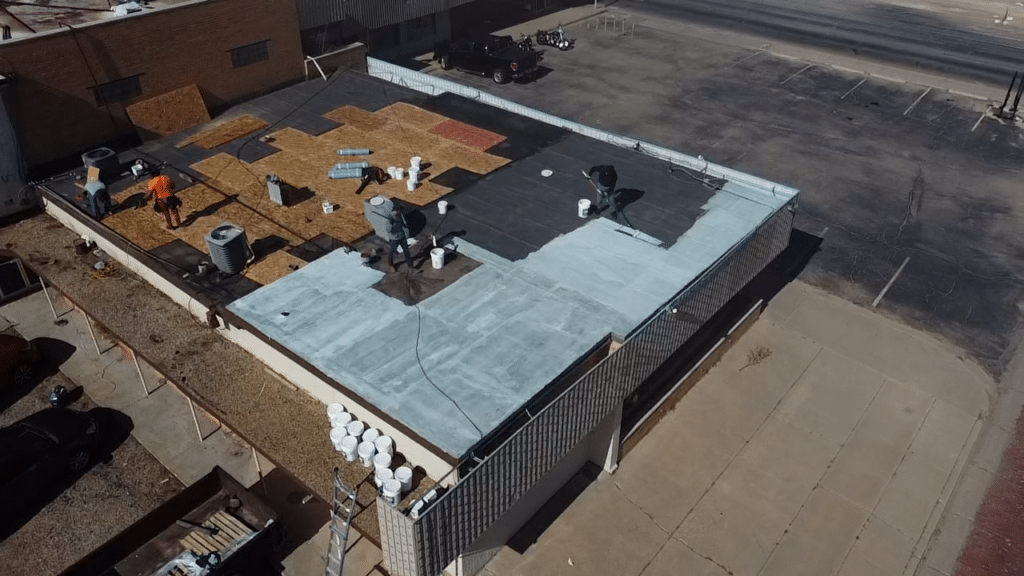
The U.S. Department of Energy describes roof coatings as thick, protective layers that shield the roof surface from ultraviolet light and chemical damage, with some products offering water protection and restorative features as well. In practice, a coating project on a commercial building involves repairing damaged areas, replacing any wet substrate, reinforcing seams and penetrations, cleaning the surface, and then applying the fluid system at the manufacturer’s specified thickness.
Candidacy is the whole game. Single-ply membranes such as TPO and EPDM, metal panels, and modified bitumen are all common substrates for coatings when they are still in good working order. If you are not sure what system is on your building, start with our complete guide to TPO roofing, since TPO is the most common membrane we see on West Texas commercial buildings.
A coating is a restoration, not a resurrection. It extends the life of a roof that still has life left. It cannot rescue a roof that has already failed underneath.
When should a commercial roof be replaced instead of coated?
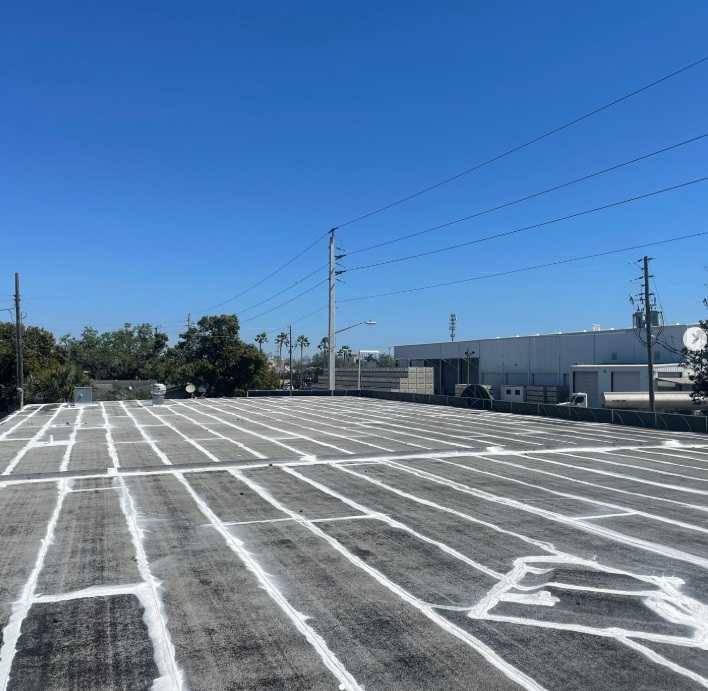
Replace the roof when moisture has saturated the insulation, the deck is compromised, or leaks and failures are spread across the whole system. Coating over trapped moisture seals the problem in, and the coating fails along with the roof beneath it.
Moisture is the disqualifier that matters most. Most low-slope assemblies have absorbent insulation boards between the membrane and the deck. Once those boards are wet across a significant portion of the roof, no coating on top will fix it, because the water keeps degrading the assembly from inside and eventually pushes back through the new surface.
Age and detail failures are the other triggers. A membrane at the end of its service life that has gone brittle, shrunk at the seams, or pulled away at terminations will keep moving underneath a coating. Repeated leaks at penetrations are a warning sign too, and many of those trace back to failed flashings rather than the field of the roof. Our guide to HVAC curb flashing leaks covers why those details fail and how to catch them early.
I will put it plainly: the most expensive coating job in West Texas is the one that should have been a replacement. Walking roofs across Lubbock and the South Plains, my rule is simple. If a moisture scan shows widespread saturation, the honest recommendation is tear-off, even when the coating quote would be easier for the owner to swallow. Sealing water inside a roof just means paying twice, once for the coating and again for the replacement it delayed.
The decision also is not always binary. Some buildings do best with a hybrid approach, replacing the worst sections and restoring the rest. Understanding what commercial roof replacement costs per square foot in Texas helps you weigh that split honestly.
How much does a roof coating cost compared to replacement?
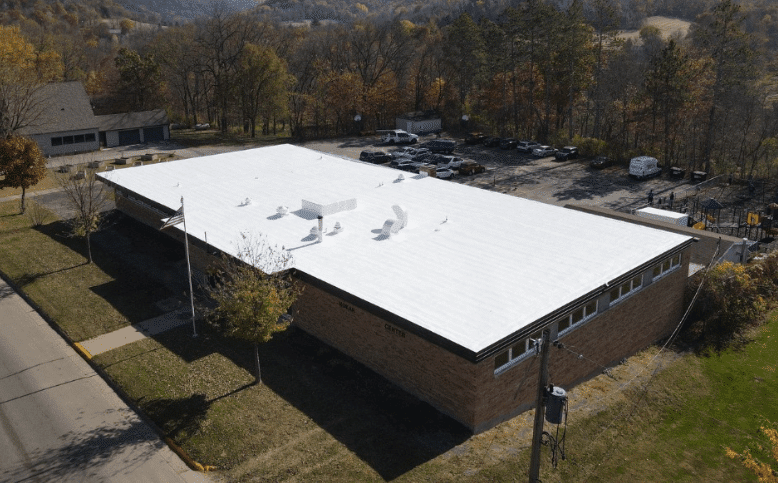
A coating typically costs a fraction of a full replacement because there is no tear-off, no disposal, and no new roof assembly to purchase and install. Replacement carries higher upfront cost but delivers a brand-new system with a fresh service life and full warranty.
The gap comes from scope. A replacement includes labor to remove the old roof, landfill fees, new insulation, cover boards, membrane, and flashing accessories, plus the disruption of heavy equipment on an occupied building. A coating skips all of that and concentrates spend on prep, repairs, and the fluid system itself.
Here is how the two options compare on the factors West Texas owners actually decide on:
| Factor | Roof Coating | Full Replacement |
| Upfront cost | Lower, no tear-off or disposal | Higher, full new assembly |
| Business disruption | Minimal, building stays open | Moderate to high, staged tear-off |
| Service life | Roughly 10 to 20 years, renewable by recoating | 20 to 30+ years for a new system |
| Typical tax treatment | Often deductible as maintenance in year one, confirm with your CPA | Capitalized and depreciated over decades |
| Requirement | Sound, dry existing roof | Works regardless of existing roof condition |
| Best fit | Aging but healthy roof, budget-conscious owner | Saturated, damaged, or end-of-life roof |
Watch out for quotes that treat coatings like commodity paint. Two coating bids can differ enormously in prep work, repair scope, and applied thickness, and those differences decide whether the system lasts 8 years or 18.
Is a roof coating tax deductible as maintenance?
A roof coating is often treated as a deductible repair and maintenance expense in the year it is paid, while a full roof replacement is generally a capital improvement that must be depreciated over decades. Classification depends on facts and circumstances, so confirm your project with a CPA.
The framework comes from the IRS tangible property regulations, which draw the line between amounts paid to keep property in ordinary operating condition, generally deductible as repairs and maintenance, and amounts paid to improve property, which must be capitalized. Replacing an entire roof is a restoration of a major building component, which lands on the capitalize-and-depreciate side. For most nonresidential buildings that means recovering the cost over a 39-year schedule.
That timing difference is real money. A deductible maintenance expense reduces taxable income now. A capitalized replacement returns the same dollars slowly, a small slice per year for decades.
Do not let the tax tail wag the roofing dog, though. If your roof needs replacement, deferring it for a deduction usually costs more in interior damage, emergency repairs, and lost coating money than the tax benefit is worth. Get the roof decision right first, then let your CPA optimize the treatment.
Does a reflective coating actually lower energy bills in West Texas?
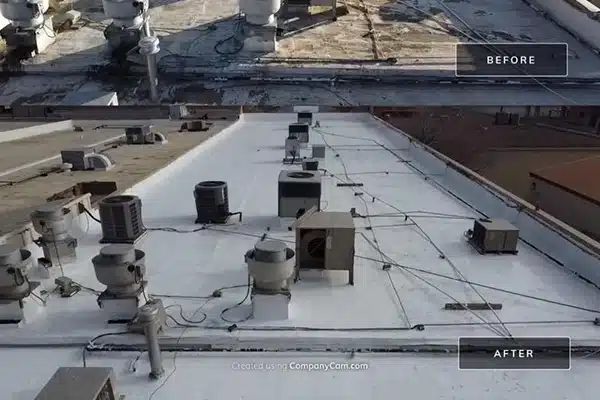
Yes, and West Texas is close to the ideal climate for it. The Department of Energy reports that conventional dark roofs can reach 150°F or more on a sunny summer afternoon, while a reflective roof under the same sun can stay more than 50°F cooler.
That temperature gap translates directly into less heat driving down into the conditioned space, which means less air conditioning runtime through a Lubbock summer. The EPA notes that buildings with cool, reflective roofs use less air conditioning, save energy, and hold more comfortable indoor temperatures. DOE adds that cool surfaces deliver the most savings in hot, sunny climates and on buildings with modest roof insulation, which describes a large share of the commercial stock on the South Plains.
There is a bonus beyond the utility bill. Lower surface temperatures reduce the daily expansion and contraction cycle that ages roofing materials, which is part of why DOE lists extended roof service life among the benefits of a cooler roof. In a region with 100°F summer afternoons and sharp overnight drops, calming that thermal cycling matters.
One honest caveat: reflective roofs give back a little in winter, since they also reflect sun you would otherwise welcome in January. Across the long West Texas cooling season, the summer savings typically outweigh that winter penalty, but it belongs in the math.
Can a roof coating survive West Texas hail?
A coating adds weathering protection, but hail survival depends on the roof underneath it. A coating over a solid, well-supported substrate handles typical hail far better than the same coating over an aged, brittle membrane.
The threat here is not hypothetical. The National Weather Service in Lubbock documented tennis-ball-size hail and widespread damage to homes and businesses across western and southwestern Lubbock during the June 5, 2025 supercell, one of several giant-hail events to hit the South Plains in recent seasons. Any coat-or-replace decision in this market has to assume the roof will take hail hits during its service life.
In years of post-storm inspections across Lubbock, I have watched the same pattern repeat: after a major hail event, coated roofs over sound substrates typically show cosmetic surface marks, while old, brittle membranes fracture at every impact point whether they were coated or not. The coating did not fail in those cases. The roof under it did. That is why I insist on evaluating substrate condition and hail exposure together before recommending either option, and why a post-hailstorm damage check belongs on your calendar after every significant storm, coated or not.
If your existing membrane is already hail-scarred with fractures or crushed insulation below, that damage pushes the decision toward replacement, and it may also be an insurance conversation rather than a maintenance budget item.
How long does a coating last compared to a new roof?
A properly applied commercial roof coating generally protects for 10 to 20 years and can be recoated to extend that further. A new single-ply or modified bitumen system starts a fresh service life of 20 to 30 years or more.
Coating longevity tracks applied thickness, prep quality, and climate. Manufacturers tie warranty length to dry film thickness, which is why a thorough bid specifies mils, not just gallons. The renewability is the underrated advantage: when a coating reaches the end of its cycle over a still-healthy roof, a recoat resets the clock at a fraction of replacement cost.
Replacement resets everything, including the substrate questions. How long the new system lasts depends on what you install; our breakdowns of how long a TPO roof lasts in Texas and TPO versus EPDM performance cover the single-ply options, while modified bitumen in West Texas remains a strong choice for buildings that see roof traffic and hail.
The honest comparison is lifecycle cost, not sticker price. An owner planning to hold a building for 25 years and an owner selling in 5 should not necessarily make the same choice.
FAQ
Can you apply a new coating over an old coating? Yes, most coating systems can be recoated once the surface is cleaned, repaired, and adhesion-tested. Recoating an aging but intact system is one of the most cost-effective moves in commercial roofing.
Does ponding water rule out a roof coating? Standing water shortens the life of most coatings and voids some warranties, though silicone tolerates ponding better than acrylic. Fix the drainage problem first, because a coating is not a substitute for proper slope and working drains.
Will my business have to close during a coating project? Usually not, since coating work involves no tear-off, minimal equipment, and far less noise than replacement. Odor-sensitive operations like food service should discuss product selection and scheduling with the contractor in advance.
Does coating my roof void the existing warranty? It can if the coating is applied without the original manufacturer’s approval, so check your warranty terms before any work begins. Many coating systems carry their own 10 to 20 year warranties tied to applied thickness.
Should I get an inspection before deciding between coating and replacement? Yes, and it should include a moisture assessment, not just a visual walk. The entire coat-or-replace decision hinges on whether water is trapped in the assembly, and you cannot see that from the surface.
Conclusion
The coating versus replacement decision comes down to one question: is your existing roof a sound foundation or a failing one? A dry, structurally healthy roof is a strong coating candidate, and the reward is lower upfront cost, minimal disruption, likely year-one tax treatment as maintenance, and real cooling savings under the West Texas sun. A saturated or end-of-life roof needs replacement, and no coating quote changes that, no matter how attractive the number looks.
Get the condition verified before you spend a dime either way. Core Commercial Roofing & Coatings inspects commercial roofs across Lubbock and West Texas, including moisture assessment, and gives you a straight recommendation either direction. Call (806) 404-1250 to schedule your inspection.