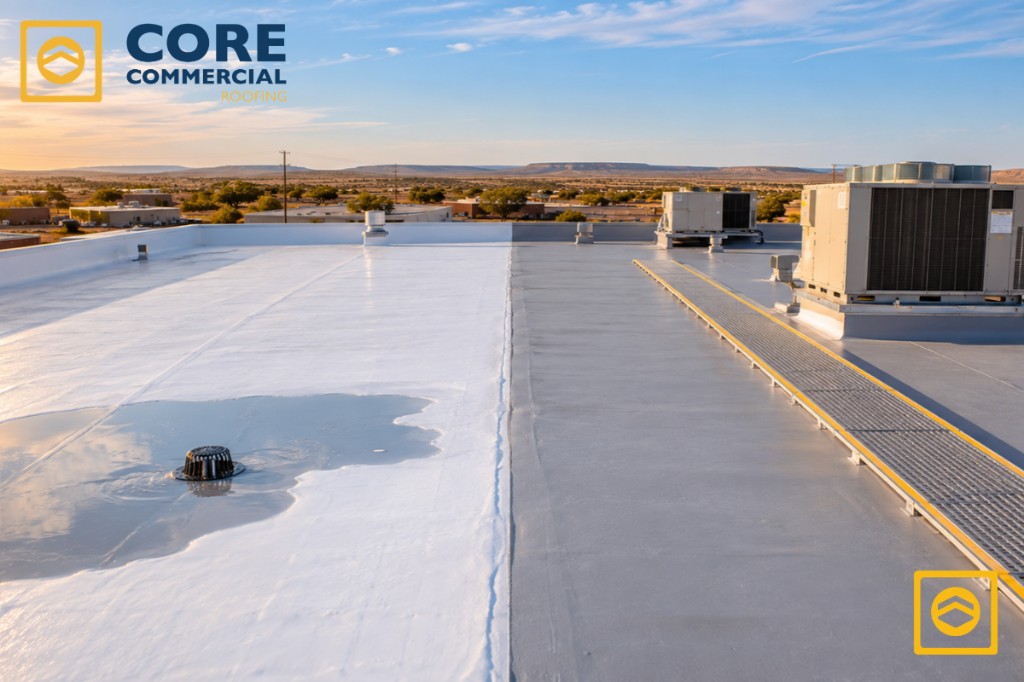
If your roof holds water after a storm, silicone is usually the right coating. If your roof takes hail, foot traffic and regular equipment service, polyurethane usually is. Most West Texas roofs deal with some of all three, so the real decision comes down to which problem hurts your building the most.
Below I break down how each chemistry behaves on a South Plains roof, where each one fails, and the one decision that can lock you in for the next two decades.
Quick answer
Choose silicone for flat roofs with standing water that cannot be fixed with better drainage. Choose polyurethane for roofs exposed to hail, heavy foot traffic, or crowded rooftop equipment. If you have both problems, a hybrid system or targeted drainage repairs may beat either coating on its own.
What is the difference between polyurethane and silicone roof coatings?
Polyurethane is a tough, abrasion-resistant coating built to take impact and wear. Silicone is a highly UV-stable coating that handles standing water well but is softer and easier to tear.
Both are elastomeric, which means they stretch and recover as your roof expands in July heat and contracts on a cold January night. The difference is in what they are built to resist. According to the Roof Coatings Manufacturers Association's overview of coating types, polyurethanes have good mechanical properties and high abrasion resistance, while silicone performs well in high-UV environments and on roofs that stay wet or hold ponded water.
Silicone is an inorganic material, so the sun has very little to break down. It weathers slowly and stays flexible for years. The tradeoff is physical strength. A dropped tool, a dragged dolly, or a sharp hailstone can cut a silicone film more easily than a urethane one.
What is the difference between aromatic and aliphatic polyurethane?
Aromatic polyurethane is the tough, lower-cost base coat. Aliphatic polyurethane is the UV-stable topcoat that protects it from the sun.
The RCMA describes the two polyurethane types as aromatic (less UV stable) and aliphatic (very UV stable). A proper urethane system pairs them: aromatic underneath for body, aliphatic on top for weathering and color retention. An aromatic coat left exposed to West Texas sun will chalk and degrade early, so ask any contractor quoting polyurethane which product goes on top.
Which roof coating handles hail better, polyurethane or silicone?
Polyurethane handles hail better. It is the chemistry the coatings industry points to for hail-prone regions, and the Lubbock area sees damaging hail almost every spring.
The RCMA also recommends polyurethane coatings for hail-prone regions and for roofs with heavy foot traffic. That recommendation matters here. During the June 2025 storms, the National Weather Service in Lubbock recorded hail as large as 3.25 inches west of Wilson, with large hail falling from nearly every storm that crossed West Texas that evening.
No coating makes a roof hail-proof. Hailstones that size can bruise or crack the membrane and insulation underneath regardless of what is on top. What a harder coating does is resist the smaller, more frequent stones that would otherwise puncture or scuff a softer film and let UV and water reach the roof below. On spray foam roofing in Texas, hail usually leaves divots in the coating rather than a full breach, and those divots need to be repaired before a summer of sun erodes the exposed foam.
After any significant hail event, get the roof checked. A coating can look intact from the ground while hiding punctures that will leak by fall.
Which coating is better for ponding water on a flat roof?
Silicone is better for ponding water. It holds up under standing water, and many manufacturers will warranty silicone over ponding areas where other chemistries are excluded.
The industry treats water still standing 48 hours after rain as ponding. Silicone is the chemistry the RCMA associates with roofs that are often wet and see excessive ponded water. Polyurethane tolerates brief standing water better than acrylic, but long, repeated wet contact is not where it performs best.
Lubbock is dry most of the year, but our rain tends to come hard and fast. A flat roof with sagging decks or clogged scuppers can hold water for days after one storm. Before you pick a coating to live with that water, find out why it is there. Many commercial roof drainage failures can be corrected with tapered insulation, crickets, or cleared drains, which opens up more coating options and takes weight off the structure.
Which coating holds up better to foot traffic and rooftop equipment?
Polyurethane holds up better. Its abrasion and tear resistance make it the safer choice for roofs crowded with HVAC units that service crews walk to every month.
Think about how your roof actually gets used. Rooftop units, exhaust fans, and solar arrays all bring technicians, ladders, tool bags, and replacement parts across the same paths. Polyurethane shrugs off that kind of wear. Silicone does not like it, and smooth silicone surfaces can also be slick when wet, which is a real safety concern for crews working after a rain.
If the rest of the roof needs silicone for drainage reasons, walkway pads along the service routes can protect the coating where traffic concentrates. Pay attention to the equipment itself as well. Traffic damage tends to concentrate right next to units, where it often shows up as HVAC curb flashing leaks rather than damage out in the open field of the roof.
Do ASTM standards prove which coating is stronger?
Not on their own. ASTM D6694 and ASTM D6947 set minimum performance values for silicone and polyurethane coatings over spray foam, and many urethane products used on commercial roofs fall outside those standards entirely.
You will see comparison charts online that line up tensile strength figures from the two standards as if they prove polyurethane is ten times stronger. Be careful with that. ASTM D6694 covers silicone coatings whose principal polymer is more than 95 percent silicone. ASTM D6947 covers a single-component, moisture-cured urethane used as a protective coating over spray polyurethane foam. Both numbers are minimum floors, not what a specific product delivers on your roof.
Many aromatic and aliphatic urethane systems have no consensus ASTM standard at all. For those, the only real evidence is the manufacturer's technical data sheet. Ask for it, and compare tensile strength, elongation, and tear resistance for the actual products being quoted.
Can you put polyurethane over silicone, or switch later?
No. Almost nothing bonds reliably to cured silicone, so a silicone roof gets recoated with silicone or the old coating has to be removed. Polyurethane leaves you more options down the road.
Most owners hear about this part of the decision too late. Once silicone goes on, every future recoat is silicone, unless you pay to strip it, which is slow and expensive. If your building's use might change, say adding solar or more rooftop equipment, that lock-in deserves real weight.
Polyurethane is more forgiving. It can be recoated with polyurethane, and some manufacturers build systems that use a urethane base coat under a silicone topcoat to combine impact resistance with ponding performance. Every combination should start with an adhesion test on your roof, because compatibility depends on the specific products. I cover the same lock-in issue in more detail in my comparison of silicone vs acrylic roof coating.
Which coating stays more reflective in dusty West Texas conditions?
A white aliphatic polyurethane topcoat usually stays cleaner. Silicone starts out highly reflective, but its surface holds dirt, and dust can cut that reflectivity over time.
On the South Plains, wind carries a steady load of field dust and caliche onto every roof. Silicone's surface grabs that dust, which dulls the white finish and reduces how much heat it bounces back. A periodic gentle wash brings much of it back. Aliphatic urethanes resist dirt pickup better and hold their color longer, though they are not immune either.
Reflectivity matters here because of how hard the sun works on a Lubbock roof. If cooling costs are a major reason you are coating, read more about Texas UV exposure and roof degradation and plan for cleaning in your maintenance budget.
How do polyurethane and silicone compare side by side?
| Factor | Polyurethane | Silicone |
|---|---|---|
| Hail and impact | Strong. Preferred for hail-prone regions | Weaker. Softer film can puncture |
| Ponding water | Handles brief standing water | Strong. Often warrantied over ponding |
| Foot traffic | Strong abrasion and tear resistance | Poor. Can be slick when wet |
| UV stability | Good with an aliphatic topcoat | Excellent |
| Dirt pickup | Aliphatic topcoat stays cleaner | Holds dust, loses reflectivity |
| Future recoats | More flexible options | Silicone only, or full removal |
| Application | Usually solvent-based with strong odor | Moisture cure, needs a dry roof |
| Typical lifespan | 12 to 18 years | 15 to 20 years |
| Best fit | Hail exposure, busy rooftops, foam roofs | Flat roofs with unfixable ponding |
Lifespans assume full system thickness on a dry, sound roof with routine maintenance.
So which roof coating should a Lubbock building owner choose?
Start with your roof's biggest threat. Unfixable ponding points to silicone. Hail exposure and regular foot traffic point to polyurethane. When both are serious, fix the drainage first or consider a hybrid system.
Here is how I would think through three common situations:
- Flat warehouse roof that holds water at the drains: Silicone, after the drains and any wet insulation have been dealt with.
- Office or retail roof with a field of rooftop units: Polyurethane with an aliphatic topcoat, plus walkway pads on the main service paths.
- Spray foam roof in a hail corridor: Polyurethane, or a urethane base under a silicone topcoat if parts of the roof pond, with an inspection after every major storm.
Whichever chemistry you choose, the roof underneath has to be dry and sound. A coating sealed over wet insulation traps the moisture and fails early. An infrared thermal roof inspection shows where water is hiding before anyone opens a bucket, and it will tell you whether you should coat or replace your commercial roof in the first place.
Frequently asked questions
How long does a polyurethane or silicone roof coating last?
A full-thickness silicone system typically lasts 15 to 20 years, and a urethane system typically lasts 12 to 18 years. Thickness, prep, and maintenance matter as much as chemistry, which I explain in my guide on how long a commercial roof coating lasts.
Is polyurethane or silicone roof coating more expensive?
Material costs for the two are often close, and the total depends far more on cleaning, repairs, and film thickness than on the coating label. Get quotes that list the products, the dry mil thickness, and the warranty term so you are comparing the same scope.
Can a roof coating fix a roof that is already leaking?
A coating can seal minor leaks on a roof that is otherwise dry and sound, after the leak sources are repaired. If water has soaked the insulation, coating over it seals the problem in and replacement of those sections comes first.
Does coating color matter in West Texas heat?
Yes. A white coating reflects much more solar heat than gray or tan, which lowers roof surface temperatures and cooling loads. Both silicone and aliphatic polyurethane come in white, but expect silicone to need occasional washing to keep that reflectivity.
Conclusion
Neither coating is better across the board. Silicone wins on roofs that hold water and need maximum UV resistance. Polyurethane wins on roofs that take hail, foot traffic, and constant equipment service. On a West Texas roof, the right choice depends on which of those threats does the most damage to your building, and on how much flexibility you want for future recoats.
Get the roof assessed before you choose anything. Fix drainage problems where you can, confirm the insulation is dry, and ask for technical data sheets on the exact products being quoted. A coating chosen for how your roof actually behaves will protect it for years. A coating chosen on price or habit can lock you into the wrong system for the next two decades.
Not sure which coating fits your roof?
We will check your roof for moisture, drainage, and hail damage, then recommend the coating that matches how your building is actually used.
Request a roof inspection or call (806) 404-1250.