Thinking about a TPO roof for your commercial building? You are not alone. TPO is now the most widely installed low-slope roofing membrane in the United States, but most of what you will read about it online repeats the same vague claims without evidence. This guide breaks down the real pros and cons of TPO roofing using published field studies, federal energy data, and what we see on commercial roofs across West Texas every week.
Table of Contents
What is TPO roofing?
TPO (thermoplastic polyolefin) is a single-ply roofing membrane made from a blend of polypropylene and ethylene-propylene rubber, installed in wide sheets with heat-welded seams. Commercialized around 1990, it has grown into the largest segment of the commercial roofing market, with more than 20 billion square feet installed across the US.
The membrane itself is a sandwich: a weathering top layer (the cap), a polyester reinforcing mesh in the middle (the scrim), and a bottom layer (the core). It typically comes in 45, 60, and 80 mil thicknesses and is almost always white, which is central to its energy story.
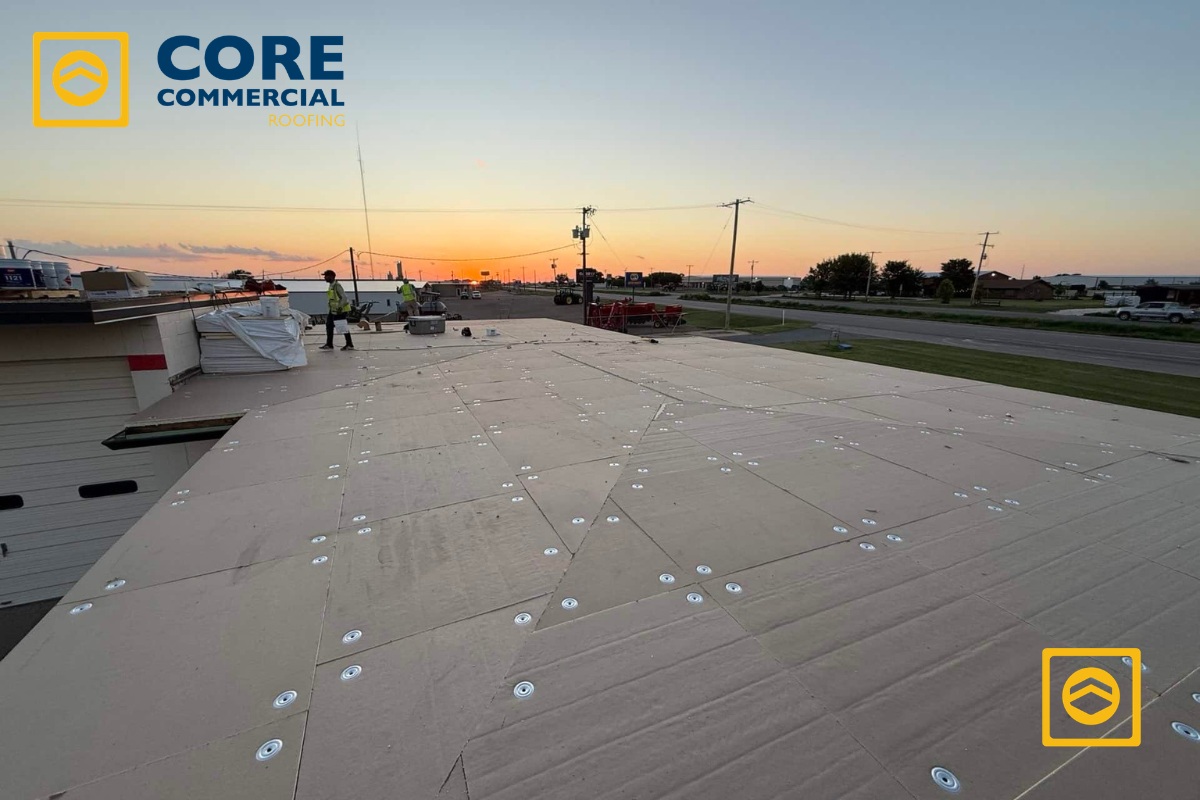
TPO is designed for flat and low-slope roofs, which describes most warehouses, retail centers, offices, and industrial buildings. Sheets are attached mechanically, with adhesive, or by induction welding, and the seams between sheets are fused with hot air rather than glued or taped. For a deeper walkthrough of the system itself, see our complete guide to TPO roofing for commercial buildings.
What are the advantages of TPO roofing?
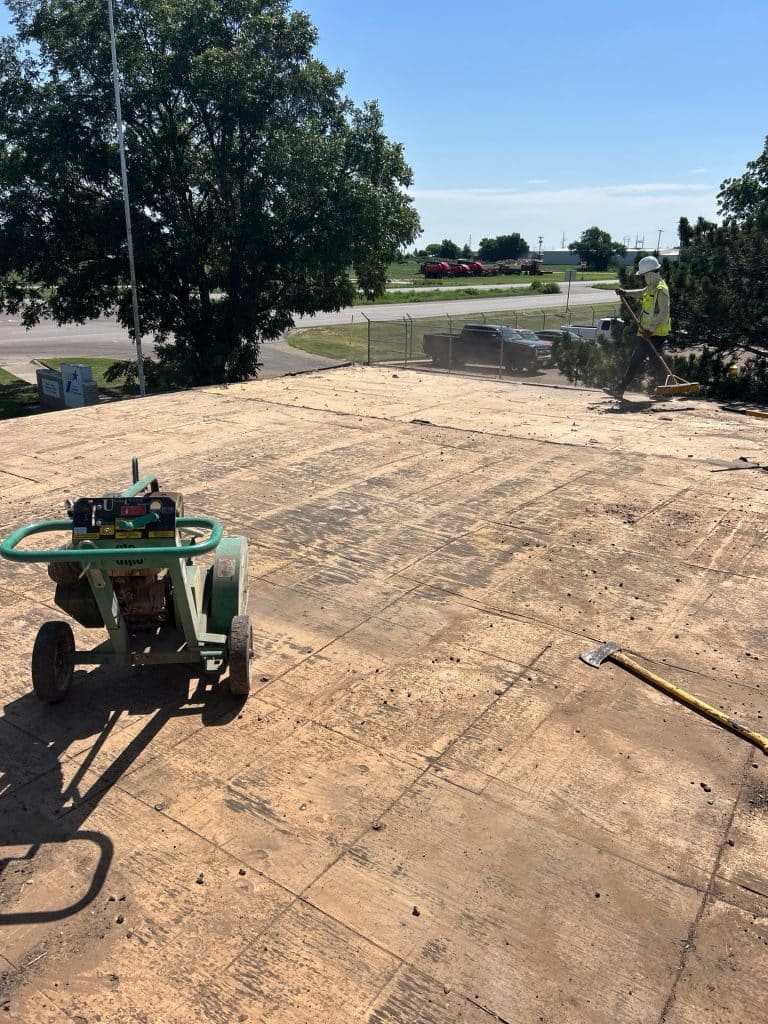
TPO’s main advantages are low installed cost, a reflective white surface that measurably cuts summer cooling loads, and heat-welded seams that are stronger than the glued or taped seams used in older systems. For most standard flat commercial roofs, it delivers the best cost-per-year of protection.
Energy efficiency you can actually measure
A white TPO membrane is a cool roof: it reflects solar energy instead of absorbing it into the building. According to the US Environmental Protection Agency’s cool roof research, reflective roofing can cut peak cooling demand by 11 to 27 percent, which lands exactly when electricity is most expensive. On a large air-conditioned building in a hot climate, that difference shows up on every summer utility bill.
Lower installed cost
TPO is consistently among the least expensive commercial membranes to buy and install. The material costs less than PVC, the lightweight rolls go down fast, and in many re-roof situations it can be installed over the existing roof without a full tear-off. If you are budgeting a project, our breakdown of commercial roof replacement cost per square foot in Texas shows where TPO sits against the alternatives.
Seams that hold up over decades
Seams are the weak point of any membrane roof, and this is where TPO’s heat welding earns its keep. A 2020 field study published by the International Institute of Building Enclosure Consultants tested 20 TPO roofs aged 12 to 18 years across the US and found the aged welds averaged about 15 percent stronger than the published averages for brand-new membrane. Properly welded TPO seams do not quietly degrade; they hold.
Installation flexibility
TPO can be mechanically attached, fully adhered, or induction welded, which means it adapts to almost any deck type, budget, and wind-uplift requirement. That flexibility also matters for repairs: the same field study confirmed new membrane welds cleanly to decade-old TPO, so aged roofs remain repairable rather than forcing early replacement.
What are the disadvantages of TPO roofing?
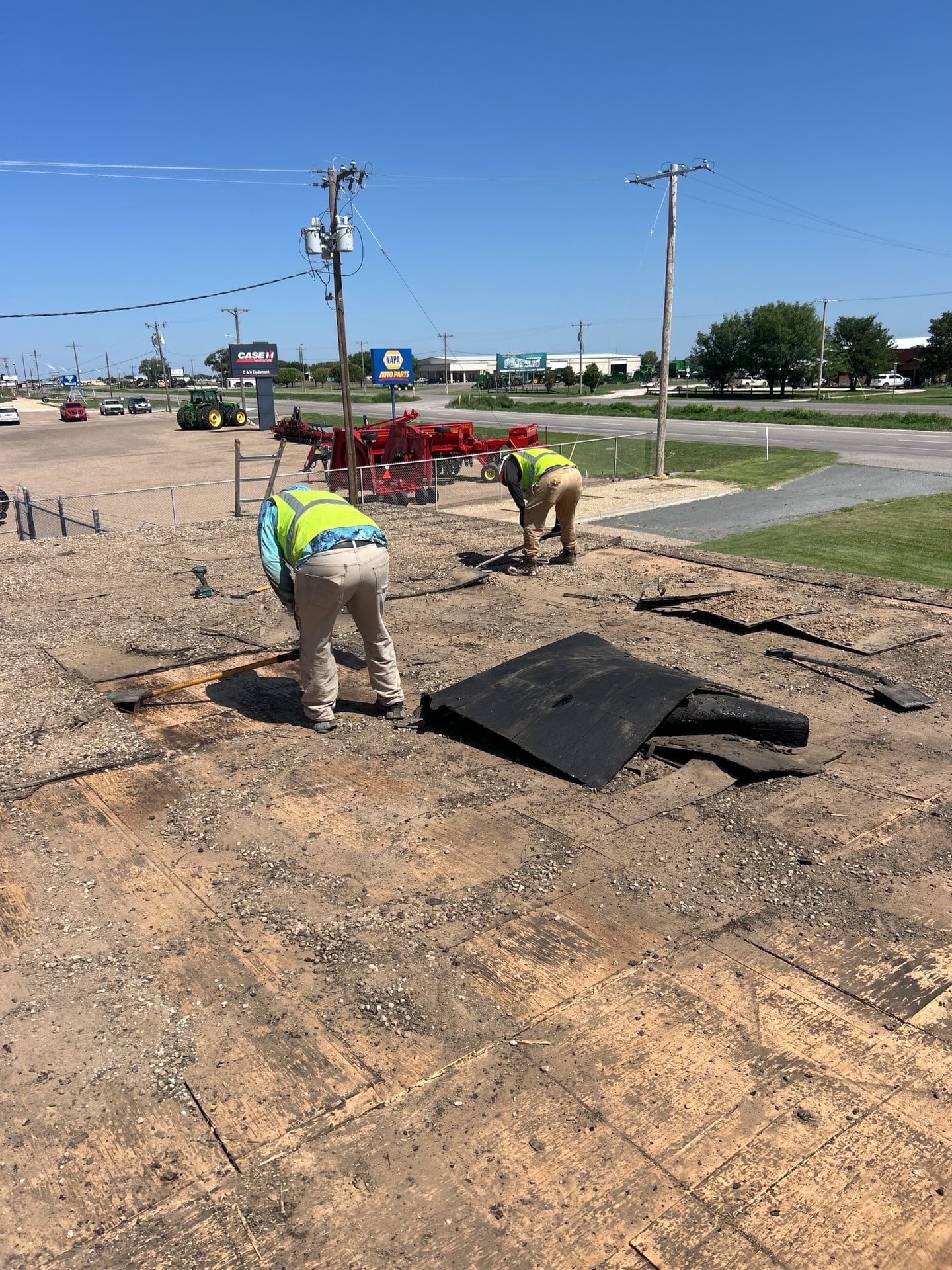
TPO’s real weaknesses are sustained heat above roughly 160 F, punctures from heavy rooftop foot traffic, and wide quality variation between manufacturers. Most reported “TPO failures” trace back to one of those three factors, or to installation workmanship rather than the membrane itself.
The heat-load ceiling
TPO handles normal sun exposure well, but research published in Professional Roofing, the National Roofing Contractors Association’s journal, documents that premature TPO failures cluster in high-heat situations: membranes next to reflective glass or metal walls, under heat-exhausting equipment, or coated in dark grime. Heat, not UV, is the failure driver. Many manufacturers cap their warranties at 160 F sustained membrane temperature for exactly this reason.
Punctures and foot traffic
A single-ply membrane is only as thick as its top layer. Dropped tools, HVAC service traffic, and hail can puncture thinner membranes, and every rooftop penetration is a potential leak point. Curb flashings around rooftop units are a frequent trouble spot; our guide to HVAC curb flashing leaks on commercial roofs covers the most common failure we get called out to fix on otherwise healthy TPO roofs.
Not all TPO is the same product
TPO formulations vary significantly between manufacturers, and heat-aging tests have shown large disparities in performance between brands. The worst-performing early formulations are no longer made, and the ASTM D6878 standard has been tightened several times since 2003, but the spec sheet you approve still matters. Two 60-mil membranes from different manufacturers are not interchangeable.
It depends heavily on the installer
In the IIBEC field study, the only two roofs with weak seams failed because of installation workmanship, not membrane quality. Heat welding requires calibrated equipment and test welds throughout the day as temperatures change. A cheap TPO install is often the most expensive roof you can buy.
How long does a TPO roof last?
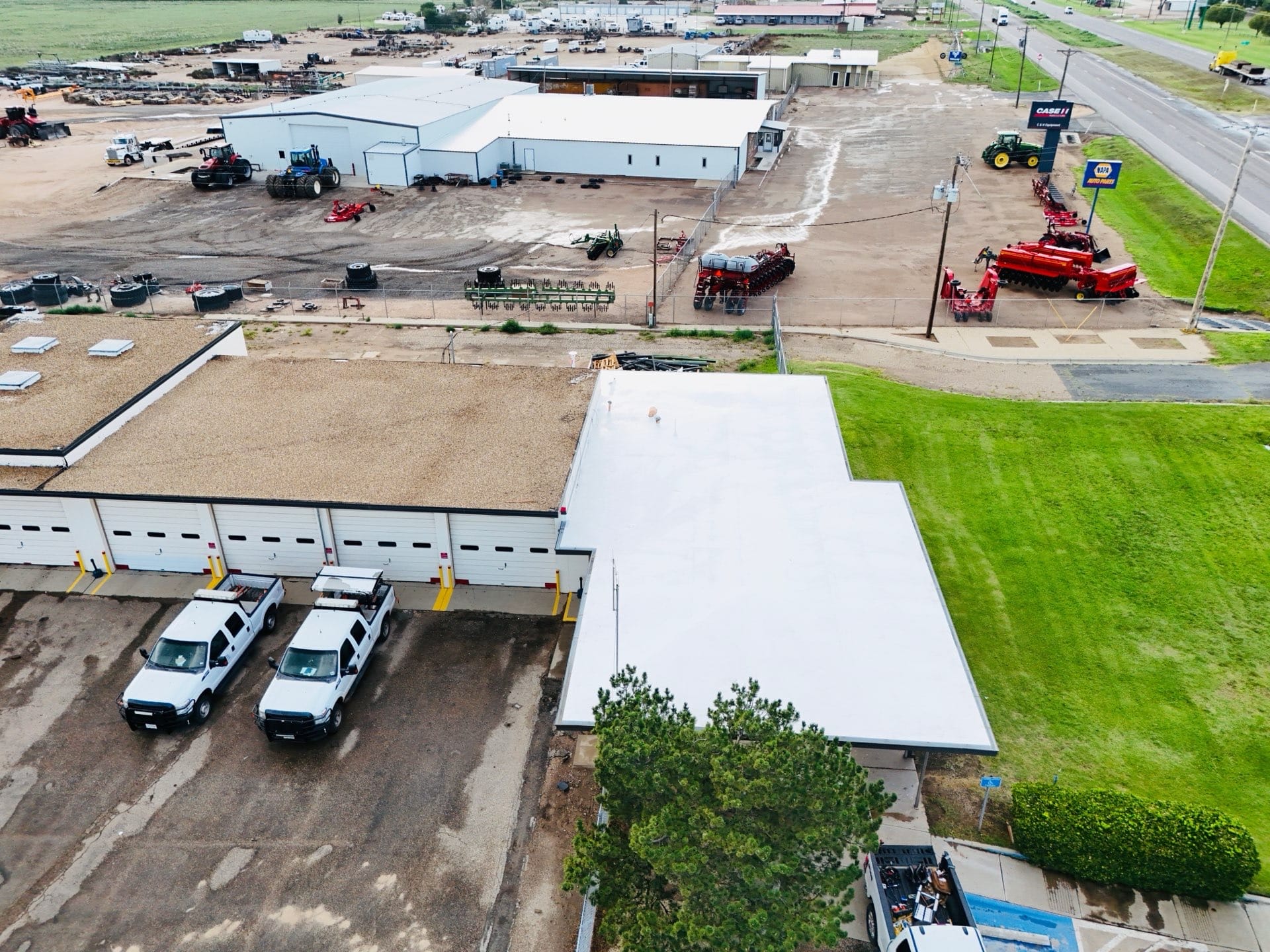
A properly installed TPO roof lasts 20 to 30 years. Field research on roofs 12 to 18 years old found no surface cracking and thickness readings above spec, with solar reflectance holding at 0.665 against a rated three-year value of 0.68.
Those numbers matter because they answer the two aging questions that decide a roof’s real service life: is the weathering layer eroding, and is the reflectivity (and therefore the energy saving) fading? On both counts, well-made TPO holds up. The membranes tested had spent well over a decade in climates from Florida humidity to Minnesota winters and were still on track for their full expected service lives.
Lifespan is not automatic, though. Membrane thickness, attachment method, drainage, rooftop traffic, and maintenance discipline all move the number, and West Texas hail adds its own variable. We wrote a dedicated local answer in how long a TPO roof lasts in Texas, including what shortens that window here specifically.
Is TPO a good choice in hot climates like West Texas?
Yes, for normal exposure. Industry temperature data shows white TPO surfaces typically stay at or below 130 F even in direct summer sun, well inside the material’s tolerance. The risk zone starts above 160 F sustained, which happens next to reflective walls, around heat-discharging equipment, and on membranes left dirty for years.
That distinction matters in Lubbock. Our summers are brutal, but ordinary solar load on an open roof field is not what kills TPO. What kills it is concentrated heat: a west-facing glass curtain wall bouncing sunlight onto the same strip of membrane every afternoon, or an exhaust vent cooking the sheet around it. Those spots need a design answer, whether that is a heat-resistant membrane grade, a sacrificial layer, or simply a different material at that detail.
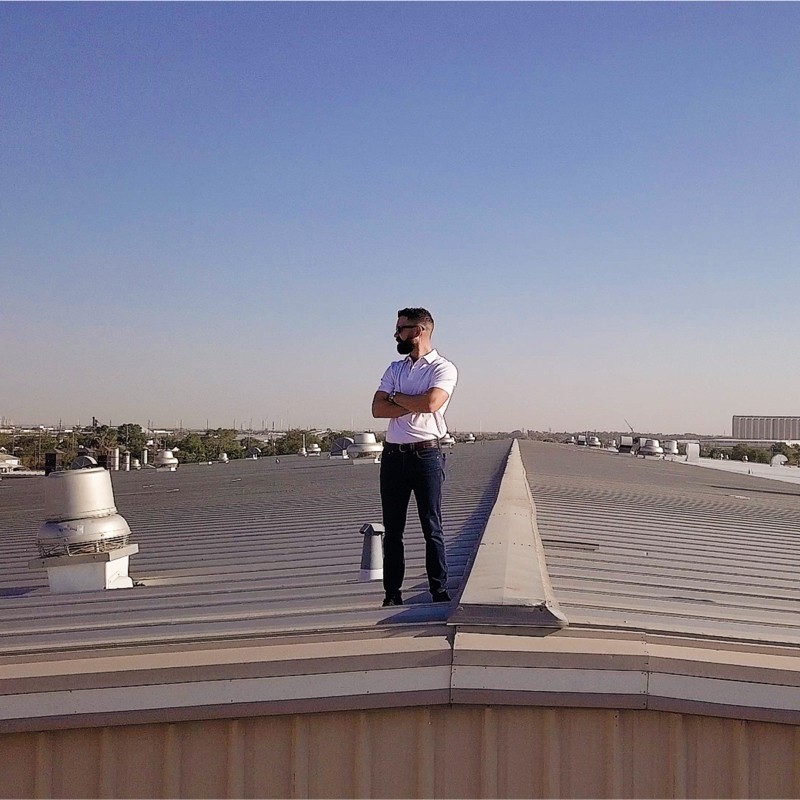
In my years running Core Commercial Roofing, the TPO horror stories we get called to look at in West Texas almost never come from the sun alone. It is nearly always a reflection zone, a dirty neglected membrane, or a bad weld from the original install. The roofs I inspect that were welded right and kept clean are boring, and boring is exactly what you want from a roof. That is why on new projects my team walks the building elevation first, specifically to flag reflective-wall and equipment-heat zones before the membrane is ever ordered.
One more hot-climate note: a white roof does not meaningfully backfire in winter. The EPA notes the winter heating penalty of reflective roofs is typically offset by summer cooling savings, and the low winter sun angle shrinks the effect further. For a Texas cooling-dominated climate, the trade is clearly in your favor. Pairing the membrane with the right details also matters against our other weather threat; see our field-tested methods to harden commercial roofs against Texas heat and hail.
TPO vs EPDM vs PVC: which is better for a commercial building?
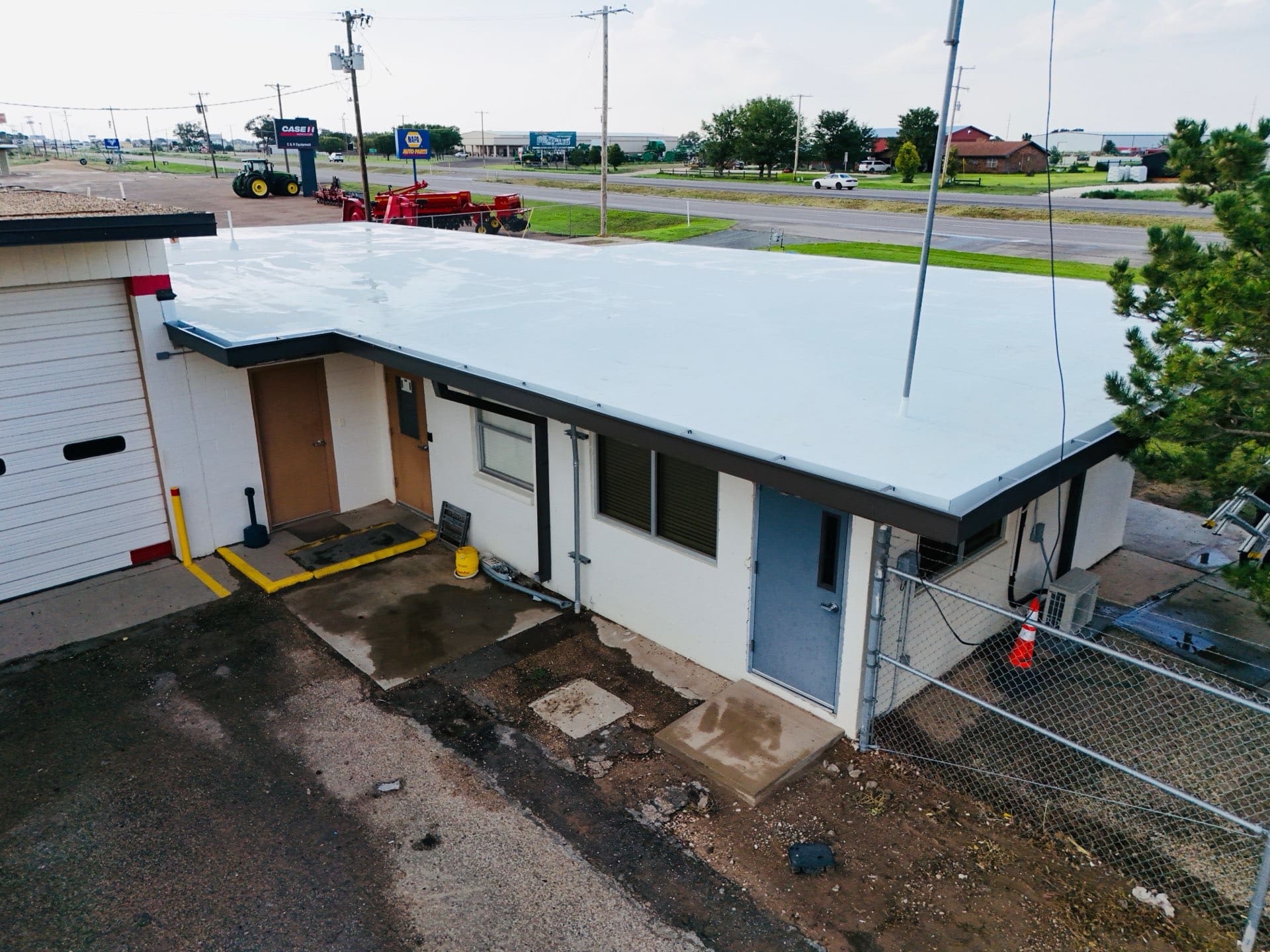
For a standard flat commercial roof, TPO usually wins on cost per year of service. PVC wins where grease or chemicals hit the roof, such as restaurants. EPDM wins on raw longevity in cooler climates, but its dark surface gives up the energy savings that matter in Texas.
| Factor | TPO | EPDM | PVC |
| Installed cost | Lowest of the three | Low to moderate | Highest |
| Typical lifespan | 20 to 30 years | 25 to 30+ years | 20 to 30 years |
| Seams | Heat-welded, strongest | Taped or glued, weakest | Heat-welded |
| Summer energy performance | Excellent (white, reflective) | Poor in black, standard version | Excellent |
| Grease and chemical resistance | Moderate | Poor | Best |
| High sustained heat tolerance | Capped around 160 F sustained | Good | Better than TPO |
| Best fit | Warehouses, retail, offices, most flat roofs | Cooler climates, ballasted systems | Restaurants, chemical exposure |
The right choice is building-specific. If you are weighing the two most common single-ply options head to head, our detailed TPO vs EPDM roofing comparison goes deeper on cost and climate fit. And single-ply is not the only game in town: for some West Texas buildings, a multi-ply system still makes more sense, which we cover in our guide to modified bitumen roofing in West Texas.
How do you make a TPO roof last longer?
Four factors do most of the work: a certified installer who performs weld quality checks throughout the install, twice-yearly professional inspections, prompt repair of small punctures and flashing gaps, and keeping the membrane clean. The field data is blunt on this point: workmanship, not membrane chemistry, is the usual failure point.
Cleanliness is more than cosmetic. Dirt buildup darkens the membrane, which raises its temperature toward the danger zone and erodes the reflectivity you are paying for. The EPA specifically lists periodic cleaning as part of maintaining a cool roof’s performance, particularly on low-slope roofs where grime accumulates.
I have watched this play out across hundreds of Lubbock-area inspections. When we get on a TPO roof that has been on a maintenance schedule, the punch list is usually small stuff, a loose termination bar, a scuffed patch near a unit. The roofs that cost owners real money are the ones nobody has walked in five years. By the time water shows up on a ceiling tile, the insulation underneath has often been wet for a long time. A twice-yearly inspection is cheap insurance against exactly that scenario.
The other high-leverage habit is controlling who walks your roof and when. Route HVAC techs along walkway pads, log every rooftop visit, and inspect after every hailstorm rather than assuming the membrane shrugged it off.
FAQ
Can TPO be installed over an existing roof?
Often yes. TPO is a lightweight membrane, so many buildings can take a recover over the old roof, avoiding tear-off cost and disruption. It depends on the condition of the existing assembly, so an inspection with moisture scanning comes first.
What TPO thickness should I choose: 45, 60, or 80 mil?
For most West Texas commercial buildings we recommend 60 mil as the balance point of cost, puncture resistance, and hail tolerance. Also ask your contractor about thickness over scrim, since the weathering layer above the mesh is what actually takes the sun and the foot traffic.
Does a white TPO roof hurt me in winter?
Not meaningfully in Texas. The small winter heating penalty of a reflective roof is typically outweighed by summer cooling savings, and the low winter sun angle reduces the effect further.
How do I know whether my aging TPO roof needs repair or replacement?
Age, seam condition, and wet insulation decide it. Localized punctures and flashing issues on a roof under 15 years old are usually repairable, while widespread seam failure, brittleness, or heavily saturated insulation on a 20-plus-year roof points to replacement or a full restoration system.
Is TPO hail-resistant enough for Lubbock?
Thicker membranes (60 and 80 mil) over a rigid cover board handle most West Texas hail events well, but no membrane is hail-proof. After any significant storm, get a professional inspection, since hail bruising can compromise the membrane without an immediately visible leak.
Why do some TPO roofs fail early when others last 25 years?
Three reasons dominate: installation workmanship (especially weld quality), concentrated heat exposure from reflective surfaces or equipment, and manufacturer formulation differences. Buildings that avoid all three routinely see full service life from TPO.
Conclusion
TPO earned its market position honestly. It is affordable, its energy savings are documented by federal research rather than marketing copy, and field studies show properly installed membranes aging gracefully past the 15-year mark with seams stronger than the day they were welded. Its weaknesses are just as real: a sustained-heat ceiling, vulnerability to punctures, and a performance range between manufacturers wide enough that brand and spec genuinely matter.
The practical takeaway for a commercial building owner is that TPO’s success or failure is mostly decided before and during installation. Choose a proven membrane at the right thickness, flag the heat-concentration zones on your specific building, insist on weld quality checks, and commit to twice-yearly inspections. Do those four things and TPO is one of the best value decisions in commercial roofing. Skip them and you become one of the horror stories.
If you are weighing TPO for a building in Lubbock or anywhere in West Texas, my team and I at Core Commercial Roofing will walk the roof, flag the heat and hail risk zones specific to your structure, and give you a straight recommendation, even when that recommendation is not TPO.