Summers here are brutal. In West Texas, temperatures regularly hit 100 degrees or more. UV levels rank among the highest in the country. Your commercial roof takes that punishment every single day, 12 months a year.
When the time comes to replace or install a flat or low-slope commercial roof, two materials come up in almost every conversation: TPO and EPDM. Both are single-ply membrane systems. Both are widely used across the region. And both can protect your building for decades when chosen and installed correctly.
But they are not the same product, and they do not perform the same way under extreme heat, hail, and high-wind conditions.
This guide breaks down everything a commercial property owner needs to know: cost, energy savings, durability, storm resistance, and most importantly, which one is the smarter choice for your building and your budget.
What Are TPO and EPDM? A Plain-English Explanation
TPO Roofing
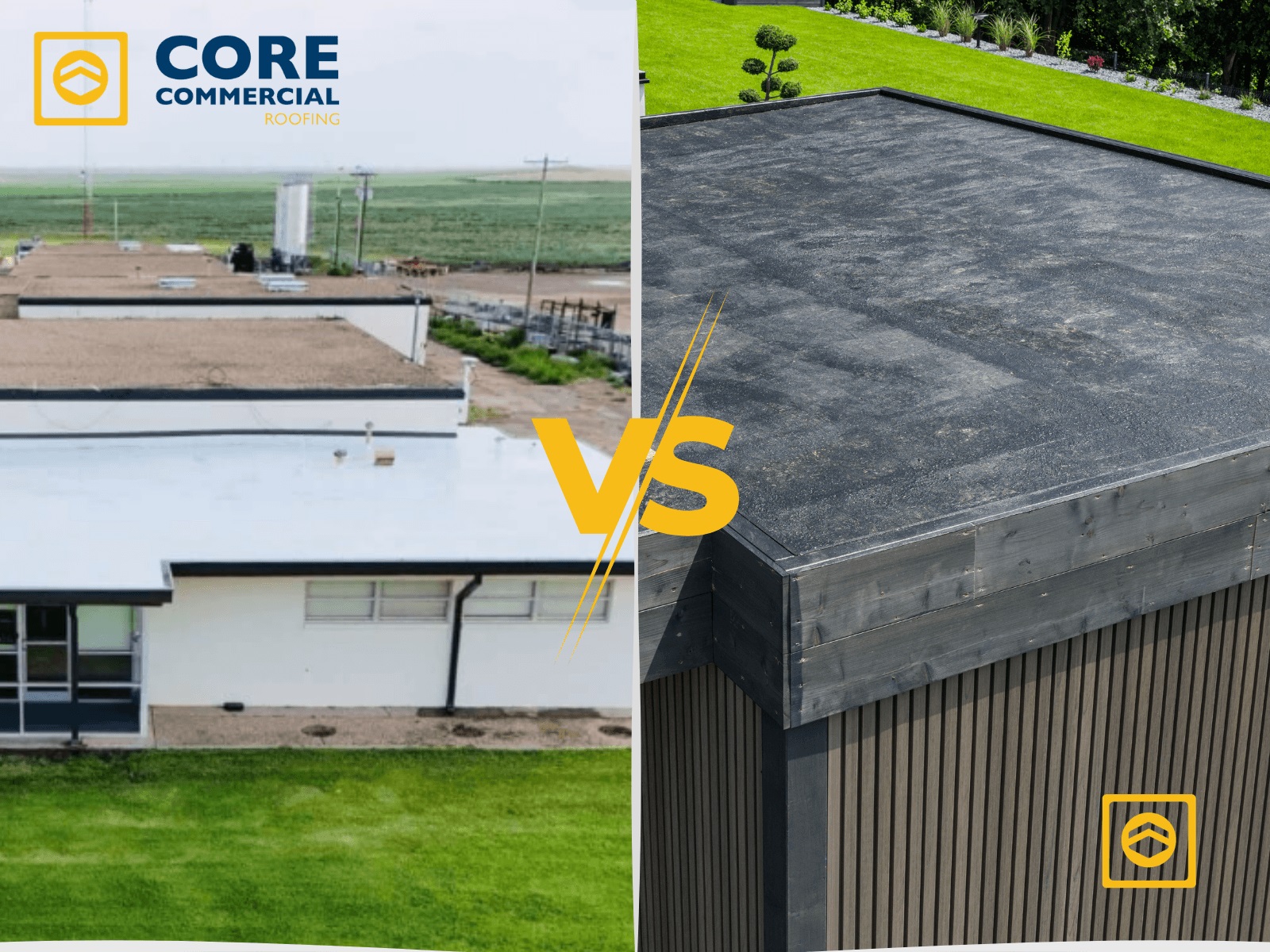
TPO stands for Thermoplastic Polyolefin. It is a white or light-colored flexible membrane that comes in large rolls and is heat-welded at the seams using a specialized hot-air machine. The seams bond together like a weld, making them extremely tight and waterproof.
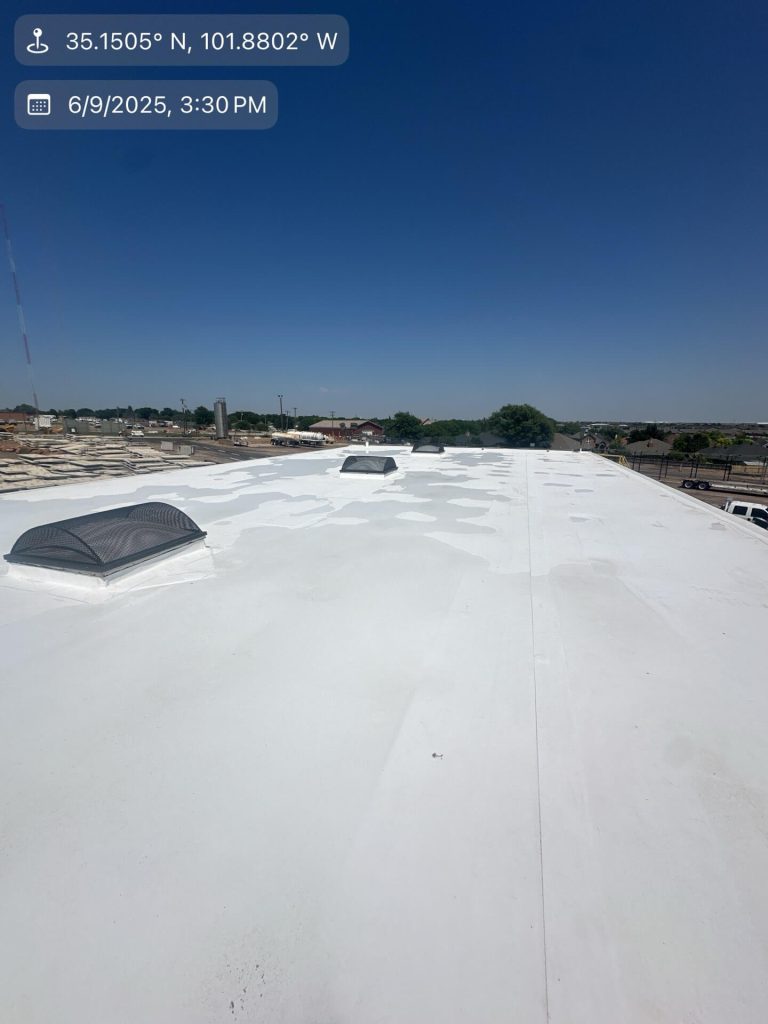
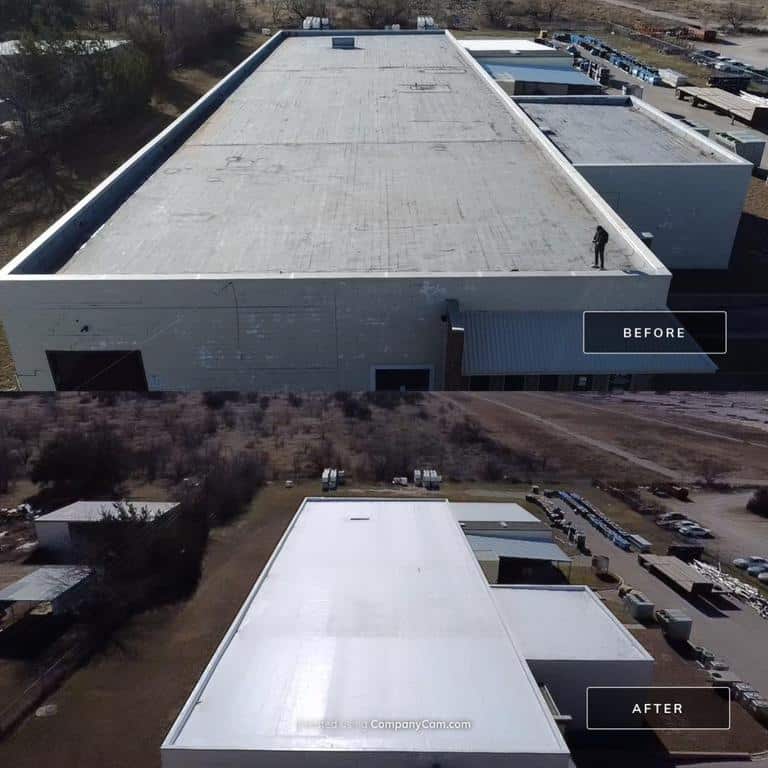
The white surface reflects sunlight rather than absorbing it. This is the single biggest reason TPO has become so popular in warm climates. It qualifies as a cool roof under the U.S. Department of Energy guidelines, which means it actively reduces the heat entering your building.
Key spec note: Never specify anything thinner than 60 mil for a commercial project in this region. The intense UV index here will cause thinner membranes to begin surface degradation within just a few years.
EPDM Roofing
EPDM stands for Ethylene Propylene Diene Monomer. Most people simply call it rubber roofing. It has been used on commercial buildings for over 60 years and has a well-documented track record.
Standard EPDM is black, which means it absorbs heat instead of reflecting it. This makes it very effective in cold climates but a potential energy liability in hot, sun-heavy regions. White EPDM exists, though it costs more and does not reflect heat as effectively as TPO.
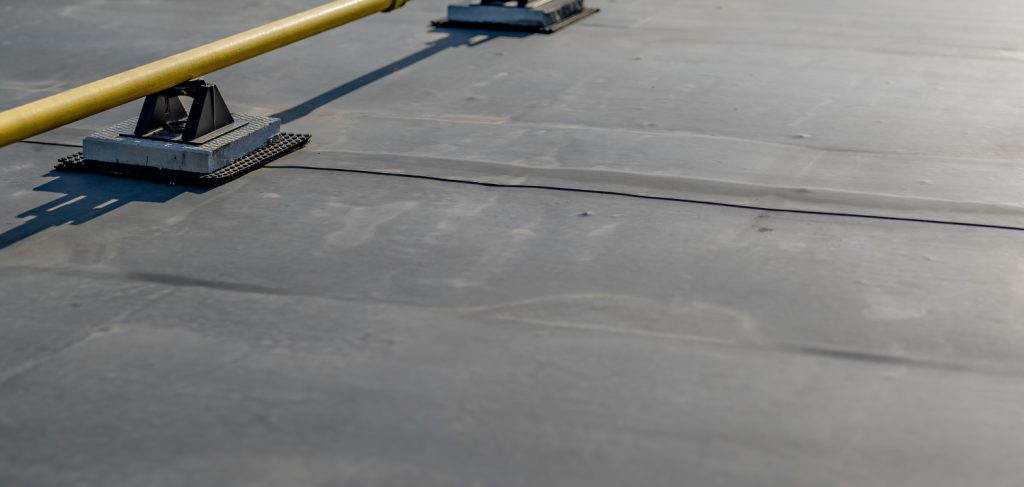
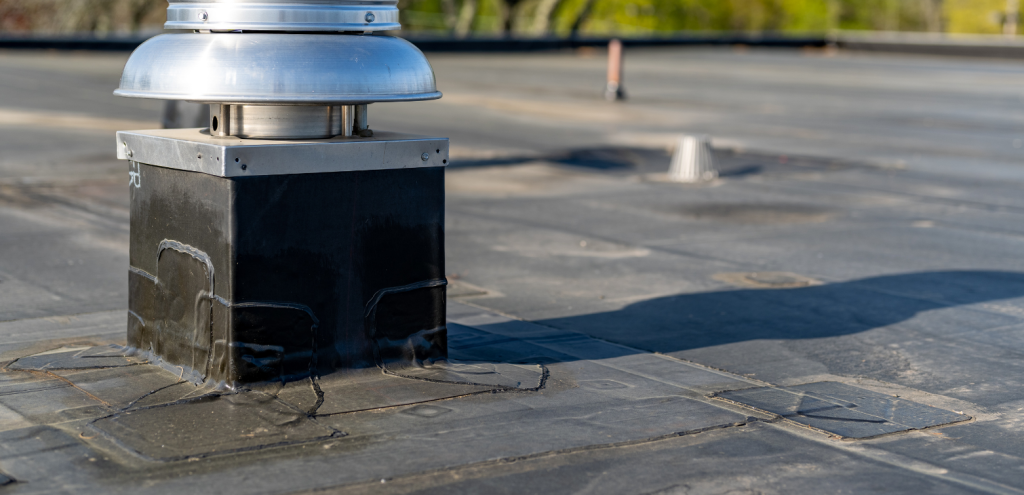
EPDM seams are bonded with adhesive tape or liquid adhesive rather than heat welding. This makes installation simpler and less expensive but creates seams that need more monitoring over time.
Why Local Climate Changes Everything
Choosing a roof material is not a generic decision. Where your building sits matters enormously. Commercial properties across West Texas face a combination of threats that most other parts of the country do not deal with at the same intensity.
- Extreme heat with UV levels of 10 to 11 during summer months
- Hailstorms that can drop golf ball-sized stones with little warning
- High winds across the Panhandle and surrounding flatlands
- Rapid temperature swings between seasons that stress roofing materials
- Periods of heavy rain followed by long dry stretches that create ponding water issues
Each of these factors affects TPO and EPDM differently. A roofing material that performs beautifully in Minnesota may fail prematurely on a warehouse roof in Lubbock. Understanding this context is what separates a good decision from a costly one.
Energy Savings: Where TPO Has a Clear Advantage
Air conditioning is one of the largest operating expenses for commercial buildings in this climate, and your roof plays a direct role in how hard your HVAC system has to work.
TPO: The Cool Roof Option
TPO’s white reflective surface bounces back 70 to 80 percent of solar energy. On a hot afternoon, a standard black roof can reach surface temperatures of 170 to 190 degrees Fahrenheit. A white TPO roof under the same conditions may stay 50 to 60 degrees cooler.
That difference translates directly into lower indoor temperatures, less strain on your cooling equipment, and reduced energy bills. Commercial buildings can cut cooling costs by up to 30 percent with a reflective TPO system compared to a dark-colored roof.
EPDM: The Heat-Absorbing Problem
Standard black EPDM absorbs heat. A black rubber roof surface can hit 180 degrees on a summer day in this region. That heat transfers into your building and forces your AC system to work harder and longer to maintain a comfortable temperature inside.
You can apply reflective coatings to EPDM to help offset this, but those coatings add cost and require reapplication over time. White EPDM is also available at a higher price point, though it still does not match TPO in raw reflectivity.
For any commercial building with significant cooling costs, TPO’s energy performance alone often justifies the slightly higher installation price.
Cost Comparison: What You Actually Pay in 2025
Both systems are among the most affordable commercial roofing options available. The cost difference is real but not dramatic. Here is what property owners are actually paying in 2025.
Material and Installation Costs
- TPO installed: approximately $8 to $16+ per square foot
- EPDM installed: approximately $7 to $14+ per square foot
These numbers include membrane, insulation, labor, edge metal, and standard flashing. Actual costs vary based on roof size, number of HVAC penetrations, whether old material needs to be removed, and whether tapered insulation is needed to improve drainage.
What Drives the Price Up
TPO requires specialized hot-air welding equipment and trained technicians. This raises labor costs by roughly 20 to 30 percent compared to a basic EPDM installation. However, those welded seams mean lower maintenance spending over the life of the roof.
EPDM has lower upfront labor costs because most experienced roofers can install it without special equipment. The long-term catch is that adhesive seams need more monitoring and occasional repair, which adds to total cost of ownership over 20 to 30 years.
The Total Cost Picture
If you only look at the installation quote, EPDM looks cheaper. When you factor in energy savings and maintenance over the full roof life, TPO often delivers better long-term value for buildings with heavy air conditioning use. Always ask for a line-item quote so you know exactly what each number covers.
TPO vs EPDM: Side-by-Side Comparison
| Feature | TPO Roofing | EPDM Roofing |
|---|---|---|
| Material Type | Thermoplastic membrane | Synthetic rubber membrane |
| Color | White or light gray | Black (white available, costs more) |
| Heat Reflection | Reflects 70-80% of sunlight | Absorbs heat (unless coated) |
| Seam Method | Hot-air welded (very strong) | Adhesive or tape (needs upkeep) |
| Installed Cost 2025 | $8-$16+ per sq ft | $7-$14+ per sq ft |
| Lifespan | 20-30 years | 20-30+ years |
| Wind Resistance | Excellent (welded seams) | Good (can lift in high winds) |
| Hail Resistance | Good (better with thicker mil) | Excellent (rubber absorbs impact) |
| Energy Efficiency | High (cool roof qualified) | Low-moderate (black absorbs heat) |
| Maintenance | Moderate (keep surface clean) | Low (durable, fewer repairs) |
| Best For | Hot, sunny, high-AC buildings | Budget-focused, shaded buildings |
Lifespan and Durability: Which One Lasts Longer?
Both TPO and EPDM carry warranties ranging from 10 to 30 years. Properly maintained, both materials can last 25 to 30 years or more. The difference is in how they hold up under specific types of stress.
TPO Durability
Modern TPO formulations are significantly better than older versions from 10 to 15 years ago. Early products had issues with brittleness and formulation inconsistency. Today’s membranes from major manufacturers offer strong puncture resistance, UV stability, and chemical resistance.
The heat-welded seams are actually stronger than the membrane itself when properly installed. Seam failures, a common leak source on other roofing systems, are rarely an issue with quality TPO work.
EPDM Durability
EPDM has over 60 years of proven field performance. Its rubber composition stays flexible even in cold temperatures and handles building movement well as structures expand and contract. It absorbs impact rather than resisting it, which gives it a natural advantage in hail events.
The weakness lies in its seams. Adhesive-bonded seams can loosen over time with repeated thermal cycling. Regular inspections and prompt seam maintenance are essential to getting full life from an EPDM system.
Wind and Hail Resistance: A Critical Factor Here
The Lubbock area and surrounding region sits in a zone where hailstorms and severe wind events are a regular threat. Your roofing material needs to hold up against both.
Wind Resistance
TPO’s hot-air welded seams create a continuous watertight surface that performs very well in high-wind conditions. Mechanically fastened TPO systems, where the membrane is secured directly to the roof deck with fasteners before seams are welded, are specifically designed to resist wind uplift in exposed locations.
EPDM can be vulnerable to wind uplift at seams and edges if the installation method is not right for the location. Ballasted EPDM systems held down with gravel are not ideal for high-wind areas because the ballast can shift. Fully adhered EPDM performs better in windy conditions.
Hail Resistance
This is where EPDM has a meaningful edge. Rubber absorbs impact energy rather than puncturing under it. Its flexibility means hailstones dent and bounce off rather than punching through the membrane.
TPO is more rigid than EPDM, and thinner membranes can puncture under sharp hail impact if the insulation layer beneath does not provide sufficient support. Specifying 60 mil or 80 mil TPO with quality insulation underneath significantly reduces this risk.
In areas where hailstorms are common, pairing 60 mil or 80 mil TPO with high-density insulation gives you both the energy benefits and meaningful hail protection.
Maintenance: What Each Roof Needs From You
Neither system is completely maintenance-free. Regular inspections, at least twice a year and after any major storm, matter for both materials.
TPO Maintenance
The white surface of TPO shows dirt and biological growth more readily than dark materials. Periodic cleaning keeps the reflective surface working at full efficiency and extends membrane life. Any punctures or tears should be addressed quickly with heat-welded patches. Standing water should not sit for more than 48 hours after rain, as prolonged ponding accelerates membrane degradation.
EPDM Maintenance
EPDM generally demands less routine maintenance than TPO. The dark surface hides surface dirt, though cleaning still helps prevent organic growth. The critical task is seam inspection. Adhesive seams can separate over time, and catching small separations early prevents them from becoming large water intrusion problems.
Which One Should You Choose? A Practical Decision Guide
There is no single correct answer for every building. The right choice depends on your building type, your energy costs, your budget, and what matters most to you as a property owner.
Choose TPO if…
- Your building has high air conditioning costs and you want to reduce energy expenses
- You value strong seam performance and lower long-term maintenance spending
- You want a roof that qualifies as energy-efficient under building codes and utility programs
- Your building sits in a sun-exposed location with minimal shade
- You are open to a slightly higher upfront cost in exchange for long-term savings
Choose EPDM if…
- Your upfront budget is tight and lower installation cost is a priority
- Your building has significant shade or cooling costs are not a major concern
- You need excellent hail impact resistance above everything else
- You prefer a proven material with decades of field history
- Your local roofing contractors have deep EPDM experience and limited TPO expertise
For most flat commercial roofs in this region, TPO is the stronger performer when energy costs are part of the equation. The team at Core Commercial Roofing and Coatings consistently finds that property owners who factor in total cost of ownership over 20 to 25 years, not just the initial installation quote, lean toward TPO for sun-exposed buildings.
No matter which material you choose, the quality of installation matters more than the material itself. A well-installed EPDM roof will outperform a poorly installed TPO every time. Always work with licensed, insured contractors who have documented experience with your chosen system.
Frequently Asked Questions
Is TPO or EPDM better for hot climates?
TPO is generally the better choice for hot climates. Its white reflective surface pushes back 70 to 80 percent of solar energy, keeping the roof surface cooler and reducing air conditioning load inside the building. Standard black EPDM absorbs heat and can become a real energy liability in high-temperature regions.
How long does a TPO roof last in West Texas?
A properly installed TPO roof typically lasts 20 to 30 years in this climate. Using a 60 mil or 80 mil membrane, keeping the surface clean, and inspecting twice per year will put you toward the upper end of that range. Thinner 45 mil membranes degrade faster under intense UV exposure and are not recommended here.
What is the main disadvantage of EPDM roofing?
The two main disadvantages for commercial buildings in this area are heat absorption and seam maintenance. Black EPDM absorbs sunlight and raises indoor temperatures, increasing cooling costs significantly. Adhesive-bonded seams also need more ongoing attention than the heat-welded seams on TPO systems.
How much does a commercial TPO roof cost?
As of 2025, fully installed commercial TPO roofing runs approximately $8 to $16 or more per square foot. The total depends on roof size, the number of HVAC penetrations, whether old material needs removal, and whether tapered insulation is included to improve drainage.
Can you put TPO over existing EPDM roofing?
In some cases, yes. If the existing EPDM and insulation are structurally sound and not waterlogged, a new TPO membrane can be installed over the top. This reduces labor costs by eliminating tearoff. A qualified roofing inspector should evaluate the existing roof condition before deciding whether an overlay is appropriate.
Which roof is easier to repair, TPO or EPDM?
Both are repairable but in different ways. EPDM repairs are simple and fast using adhesive patches, which most experienced roofers can do without special tools. TPO repairs are done by heat-welding a new piece of membrane over the damaged area, which creates a stronger and more permanent bond but requires a technician with the right equipment.
Does EPDM hold up well to hail?
Yes. EPDM’s rubber flexibility allows it to absorb hail impact rather than puncture. It is one of the stronger performers in hail events. TPO handles hail well too, particularly in thicker mil options with good insulation beneath, but EPDM has a natural advantage due to its elastic composition.
What thickness of TPO should I specify for my commercial roof?
For any commercial roof in this region, specify a minimum of 60 mil TPO. The UV index here is high enough that 45 mil membranes begin surface degradation noticeably within two to three years. For roofs with heavy foot traffic or rooftop equipment, 80 mil is worth the additional investment.
Conclusion
TPO and EPDM are both solid commercial roofing materials. Neither is universally better. The right answer depends on your specific building, your priorities, and the climate conditions your roof faces every single day.
For commercial properties with high cooling costs and significant sun exposure, TPO delivers real energy savings, excellent seam performance, and strong long-term value. For buildings where upfront cost is the primary concern or where hail resistance ranks above everything else, EPDM remains a dependable and cost-effective option.
The single most important factor in roof performance is not which material you choose. It is finding a qualified, experienced contractor who understands how to install that material correctly for your specific building and local conditions. Ask for references, verify licensing and insurance, and always get a detailed line-item quote so you know exactly what you are paying for.
Your roof is one of the most significant assets protecting your property and your business. Take the time to make this decision right.