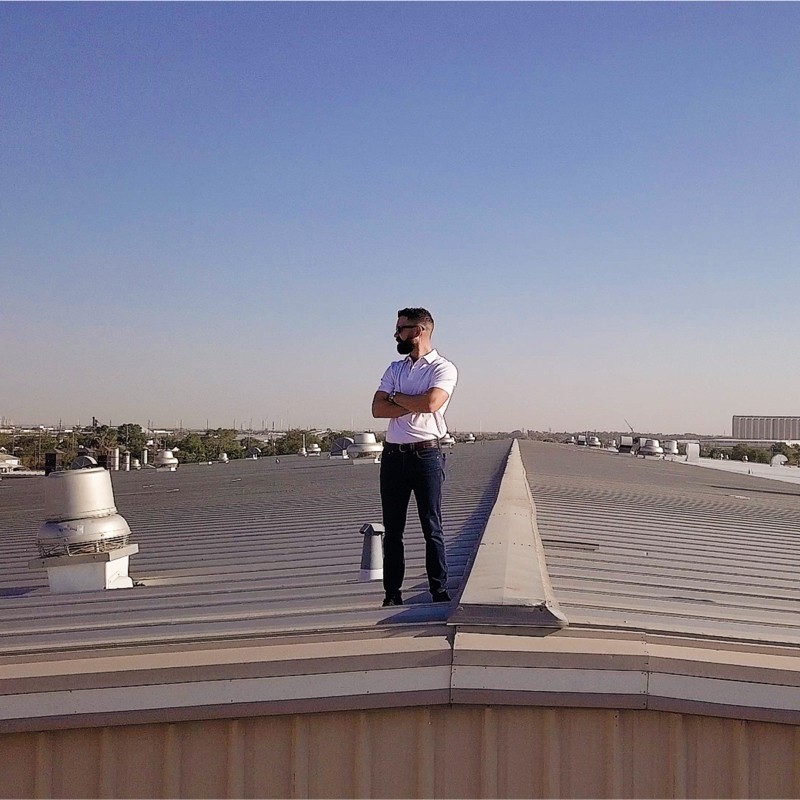

Summer in West Texas is no joke. Temperatures push past 100°F for weeks at a stretch, UV load stays brutal from June through September, and the heat does not really let up until fall. Most building owners brace for hail season and forget that the quiet months in between are when a commercial roof takes its worst beating. We are going to know how to protect roof from summer heat
Heat damage does not announce itself. It shows up as a split seam you cannot see from the ground, a flashing that has crept loose, a coating that has gone chalky, and a cooling bill that keeps climbing for no obvious reason. By the time it turns into a leak over a tenant space, the repair is never small.
The good news is that a little seasonal attention goes a long way. In this guide, we will walk you through what summer heat actually does to a commercial roof, the warning signs worth catching early, and the upgrades that pay for themselves out here.
- Why Summer Roof Maintenance Matters for Commercial Buildings
- Signs Your Commercial Roof Is Struggling in the Heat
- How Summer Heat Affects Different Commercial Roof Systems
- Our Top Summer Roof Care Steps
- Why Mid-Summer Roof Inspections Matter
- Heat-Reducing Upgrades Worth Considering
- Common Summer Roofing Mistakes to Avoid
- Energy Savings From Summer Roof Care
- When to Call a Commercial Roofer
- Final Thoughts: Keeping Your Roof Ahead of the Heat
- FAQs
Why Summer Roof Maintenance Matters for Commercial Buildings
Summer heat damages a commercial roof slowly, which is exactly why it gets missed. Thermal cycling, UV exposure, and trapped heat break down membranes, seams, and flashings for months before anything shows up as a leak.
Here is the part that surprises people. Lubbock averages roughly 10 days a year at or above 100°F, but the National Weather Service recorded 34 such days in 2022, 46 in 2023 and 28 in 2024. Look at the full record of 100-degree days at Lubbock since 1914, and the last few years stand out badly. Your roof is being asked to handle three to four times the thermal load it was historically specified against.
That load does its damage through movement. Every day the membrane, the deck and the metal edge heat up and expand at different rates, then contract again overnight. Do that a few thousand times and seams fatigue, fasteners back out, and sealant loses its grip. UV works on the surface at the same time, breaking down the top layer of the membrane and chalking away reflective coatings.
Then there is the heat that never leaves. A roof assembly with wet or compressed insulation holds heat against the underside of the membrane all night, so the material never gets a real break. That is stress from both directions, top and bottom.
Skip a summer, and nothing looks different. Skip a few, and you start seeing:
- Split or opened seams and laps
- Blisters and ridging across the field of the roof
- Lifted or fatigued flashing at curbs and parapets
- Chalking, cracking or peeling coatings
- Rooftop units running longer to hold the same setpoint
Summer roof care belongs on the building calendar right alongside your spring drain checks and fall commercial roof inspection.
Signs Your Commercial Roof Is Struggling in the Heat
The clearest signs are on the membrane surface and at the details: blisters, splits, shrinkage at the perimeter, and flashing pulling away from curbs. Inside the building, heat stress usually shows up as ceiling stains and HVAC that cannot keep up.
Your roof will not send you an alert. But summer makes certain problems easier to spot if you know where to look.
What to Look For on the Rooftop
- Split or opened seams: The first place thermal movement wins. Check laps and any seam that runs across a change in deck direction.
- Blisters and ridges: Trapped moisture or air expanding under the membrane in the heat. They grow through the summer and become puncture points.
- Shrinkage at the perimeter: Aging single-ply pulls in as it cycles, dragging flashings tight and lifting them off the substrate.
- Chalky or cracked coating: Run a hand across the surface. White residue means the coating has given up its reflectivity and is no longer protecting the membrane.
- Staining rings around drains: Ponding water leaves a mark. Standing water plus summer sun cooks the membrane in exactly the spot you least want it.
- Fastener backout on metal: Screws that have walked out a quarter inch tell you the panels have been cycling hard.
Red Flags From Inside the Building
- New ceiling stains after a summer storm: Thermal cracking opens the path, then the first hard rain finds it.
- Rooftop units running longer than they used to: Often the first measurable sign that the roof assembly has stopped doing its job.
- Uneven temperatures across a floor plate: Wet or compressed insulation in one bay conducts heat straight into the space below it.
- Musty smell near the deck line: Moisture in the assembly that is not drying out.
If you are seeing any of these in July, the roof is already under stress and waiting until fall only makes the repair bigger.
How Summer Heat Affects Different Commercial Roof Systems
Every low-slope system fails differently in the heat, so the inspection should follow the system. Single-ply fails at the seams, modified bitumen fails at the surface, metal fails at the fasteners, and foam fails wherever the topcoat has worn thin.
| Roof System | How Summer Heat Attacks It | What to Check First |
|---|---|---|
| TPO (single-ply) | Seam fatigue from daily expansion and contraction; surface weathering under sustained UV | Heat-welded seams, curb and pipe flashings, perimeter shrinkage |
| EPDM (single-ply) | Dark surface runs hot; adhesive at seams and details softens and creeps | Seam tape, corner and curb flashings, any patched areas |
| Modified bitumen and built-up | Surface granules and asphalt soften; blistering where moisture is trapped between plies | Blisters, granule loss, open laps, base flashing at walls |
| Metal panel | Panels expand along their length and back fasteners out; sealant at laps dries and cracks | Fastener seating, panel end laps, penetration boots |
| Spray polyurethane foam | UV degrades any foam left exposed once the topcoat thins or wears through | Topcoat thickness, foot-traffic paths, pinholes and bird pecking |
| Coated roofs | Coating chalks and loses reflectivity, so surface temperatures climb back up | Chalking, cracking, coating adhesion at seams and flashings |
Single-ply dominates the low-slope market for good reason, and if you are weighing systems it helps to understand what you have. Our complete guide to TPO roofing covers the material in depth, and if you are choosing between the two most common membranes, this breakdown of TPO vs EPDM roofing is the practical comparison.
Knowing your system tells you where to spend the inspection hour.
Our Top Summer Roof Care Steps
The highest-value summer tasks are clearing drainage, checking seams and flashings, and getting a professional set of eyes on the roof before the worst of the heat. None of them take long, and all of them cost less than the leak they prevent.
Whether the roof is two years old or fifteen, here is what actually moves the needle:
1. Get a Professional Inspection on the Books
Start the season with a documented walk of the roof looking for splits, soft spots, failed sealant and early blistering. A comprehensive roof report gives you photos and a condition record you can budget against, which matters when you are the one justifying the spend.
2. Clear the Drains, Scuppers and Gutters
Debris in a drain basket is a leak waiting for the next storm. Summer rain out here arrives fast and heavy, and water that cannot leave the roof sits there absorbing sun all afternoon.
3. Walk the Seams, Laps and Flashings
This is where heat does its damage first. Check every curb, pipe boot, parapet and equipment penetration. A failed pitch pan is a five-minute fix in July and a soaked insulation bay in September.
4. Control Rooftop Traffic
HVAC techs, cable crews and vendors all walk your roof, and membrane is at its softest in the afternoon heat. Add walkway pads on the routes people actually use, not the routes you wish they used.
5. Deal With Ponding Water
Water still standing 48 hours after rain is a problem, not a quirk. It accelerates membrane breakdown, adds dead load, and turns into an algae mat. Tapered insulation or an added drain solves it permanently.
6. Recoat Before the Coating Gives Up
A reflective coating is a consumable. When it starts chalking, its reflectivity is already gone. Recoating on schedule with the right commercial roof coating is far cheaper than waiting for the membrane underneath to take the damage.
Handled in July, these are maintenance line items. Handled in November, they are capital projects.
Why Mid-Summer Roof Inspections Matter
A mid-summer inspection catches heat damage while it is still cheap to fix, roughly halfway through the season that causes it. Waiting for the fall inspection means finding in October what started in June.
June through September is a long window, and a lot happens in it. Here is what a mid-summer walk is actually for:
- Catching fast damage: A single windstorm or a week of triple digits can open seams that were fine in May.
- Finding trapped moisture early: Wet insulation spreads. The bay you find in July is the section you replace in December if nobody looks.
- Beating the fall rush: Repair crews get booked solid once the weather turns. Summer work gets scheduled on your timeline.
- Protecting the warranty: Most manufacturer warranties, including FM Global approved roofing assemblies, carry maintenance and documentation obligations. A missed inspection is a denied claim later.
What We Actually Check on a Mid-Summer Walk
- Every seam and lap across the field, with probing at any suspect edge
- All flashings at curbs, parapets, pipes, drains and equipment supports
- Drains, scuppers and overflow paths, cleared and tested
- Coating condition, thickness and adhesion where a coating exists
- Blister and ridge locations, marked and tracked against the last report
- Ponding areas measured and photographed
- Fastener and termination bar condition at all terminations
- Interior deck and ceiling review for stains that have not reached the tenant yet
A sealant repair caught in July is a fraction of what the same failure costs once it has soaked the insulation and reached the deck.
Heat-Reducing Upgrades Worth Considering
If your roof is older or struggling to shed heat, reflectivity and insulation are the two upgrades with the best return in West Texas. Both cut the surface temperature that drives thermal damage in the first place.
Reflective Roof Coatings
This is the single highest-leverage upgrade for an aging low-slope roof. According to ENERGY STAR, on a typical summer afternoon, a clean white roof that reflects 80% of sunlight stays about 50°F cooler than a grey roof reflecting only 20%. Fifty degrees off the surface is fifty degrees of thermal stress your seams never have to absorb, which is why lower surface temperature slows the degradation that ages a roof. Our rundown of the top cool roof coatings for Texas heat walks through which system suits which roof.
Better Drainage Through Tapered Insulation
Tapered polyiso moves water to the drains and adds R-value at the same time. You solve the ponding problem and the heat gain problem with the same scope of work.
Upgraded Insulation at Re-Roof
If you are already tearing off, this is the moment to bring the assembly up to current code R-value. Doing it later means doing it twice. A commercial re-roof is the cheapest time to fix an underinsulated deck.
A Cool Membrane on the Next Replacement
When the roof is due, a reflective single-ply is the default choice out here rather than an upgrade. Worth knowing what the labels actually mean before you specify, which we cover in our piece on Energy Star roof certification in Texas.
Walkway Pads and Equipment Support
Cheap, unglamorous, and it prevents the punctures that soft summer membrane collects from foot traffic and dropped tools.
For a wider look at what pays back, see our list of energy-efficient upgrades for commercial roofs.
Common Summer Roofing Mistakes to Avoid
Most summer roof damage we get called out for was made worse by a well-meaning fix. Wrong material, wrong time of day, or the wrong person on the roof.
- Walking a hot membrane: Single-ply and modified bitumen soften badly in the afternoon. Foot traffic at 2 pm leaves scuffs and thin spots that show up as leaks later.
- Pressure washing the roof: High pressure strips granules, drives water into seams, and can lift a coating clean off. Low-pressure cleaning only, and only when the system allows it.
- Patching with whatever is in the truck: Incompatible sealant on a TPO seam is not a repair, it is a future failure with a warranty problem attached. Materials have to match the system.
- Letting vendors self-manage rooftop access: HVAC and telecom crews cut, drill, and drop things. Nobody reports it. Control access and document it.
- Treating a small blister as cosmetic: Blisters grow through the summer and pop under foot traffic. That is an open hole above your tenant’s ceiling.
- Waiting for the fall budget cycle: Heat damage compounds. The scope you defer in July is a bigger number in October.
It is not just what you do, it is how and when you do it. If damage has already happened, our guide to emergency solutions for commercial roof damage covers the first moves.
Energy Savings From Summer Roof Care
A roof in good condition lowers your cooling load, because every degree the roof surface does not absorb is a degree your rooftop units do not have to remove. Reflectivity and dry insulation do most of that work.
The mechanism is straightforward:
- A reflective surface sends sunlight back before it becomes heat
- Dry insulation keeps its rated R-value, while wet insulation loses most of it
- Lower surface temperatures reduce heat driven into the plenum through the day
- Rooftop units run shorter cycles and hold setpoint with less strain
ENERGY STAR notes that cool roofs deliver their largest savings in hot, sunny climates on buildings with low roof insulation, which describes a good portion of the commercial stock across the South Plains. For more on the specifics, see our guide on how to reduce heat in a commercial property roof and these cost-saving maintenance tips to extend your roof’s lifespan.
The savings are real, but the bigger number is the replacement you pushed out by several years.
When to Call a Commercial Roofer
Call a professional the moment you see active water, a soft or spongy deck, or a flashing that has separated. Those three are not maintenance items, and they do not wait for a better quarter.
Get a roofer on site if you notice:
- Soft or spongy areas underfoot, which usually means wet insulation or a compromised deck
- Open seams, splits or tears anywhere in the field
- Flashing separated from a curb, parapet or penetration
- Water entering during storms, even intermittently
- Ceiling stains that are spreading week to week
- Ponding that has not drained two days after rain
- Cooling costs climbing with no change in occupancy or equipment
Our commercial roof repair team works across Lubbock, Amarillo and the wider West Texas region, and we handle multi-tenant and multi-family roofing properties as well. If the question is whether to repair, restore, or replace, our breakdown of commercial roof coating vs replacement lays out how to decide.
Getting expert help early is the best way to avoid needing an emergency repair later.
Final Thoughts: Keeping Your Roof Ahead of the Heat
Summer is the season that ages a commercial roof fastest, and it does it quietly. The membrane moves a little more each day, the seams work a little looser, the coating gives up a little more reflectivity, and none of it announces itself until water finds its way into a tenant space.
The steps that prevent it are not complicated. Clear the drains, walk the seams, keep traffic controlled, recoat before the coating fails, and get a documented inspection while there is still time to act on it. Do those and the roof handles the heat instead of losing to it.
If you want to protect the asset, hold down your cooling costs, and avoid an unplanned capital expense, Core Commercial Roofing is here to help. We work across West Texas, and you can see the kind of work we do on our commercial roofing projects. Start now, before the next stretch of triple digits.
FAQs
How do I protect a commercial roof from summer heat?
Keep drainage clear, inspect seams and flashings, control rooftop traffic, and maintain a reflective coating so the surface stays cooler. A documented mid-summer inspection catches heat damage while the repair is still small.
How does summer heat damage a flat commercial roof?
Daily expansion and contraction fatigues seams and backs out fasteners, while UV breaks down the membrane surface and any coating on it. Trapped heat in wet insulation adds stress from underneath at the same time.
When should I schedule a mid-summer roof inspection?
Roughly halfway through the season, and again after any heatwave or significant storm. That timing catches damage from the first half of summer while there is still time to repair it before fall.
Do reflective roof coatings really lower roof temperature?
Yes. A clean white reflective surface runs dramatically cooler than a dark one under the same sun, which reduces the thermal stress that fatigues seams and flashings. That lower surface temperature is also what slows the aging of the membrane underneath.
Why does ponding water matter more in summer?
Standing water combined with sustained sun accelerates membrane breakdown in exactly the areas that already drain poorly. It also adds dead load and encourages algae growth that holds moisture against the surface.
Can I pressure wash my commercial roof?
Not with high pressure. It strips granules, drives water into seams, and can lift a coating off the membrane. Use low-pressure cleaning methods approved for your specific roof system.
What are the first signs a commercial roof is overheating?
Look for blisters, split or opened seams, chalking coatings, and flashing pulling away from curbs. Inside the building, rooftop units running longer than usual often show up before any visible leak.