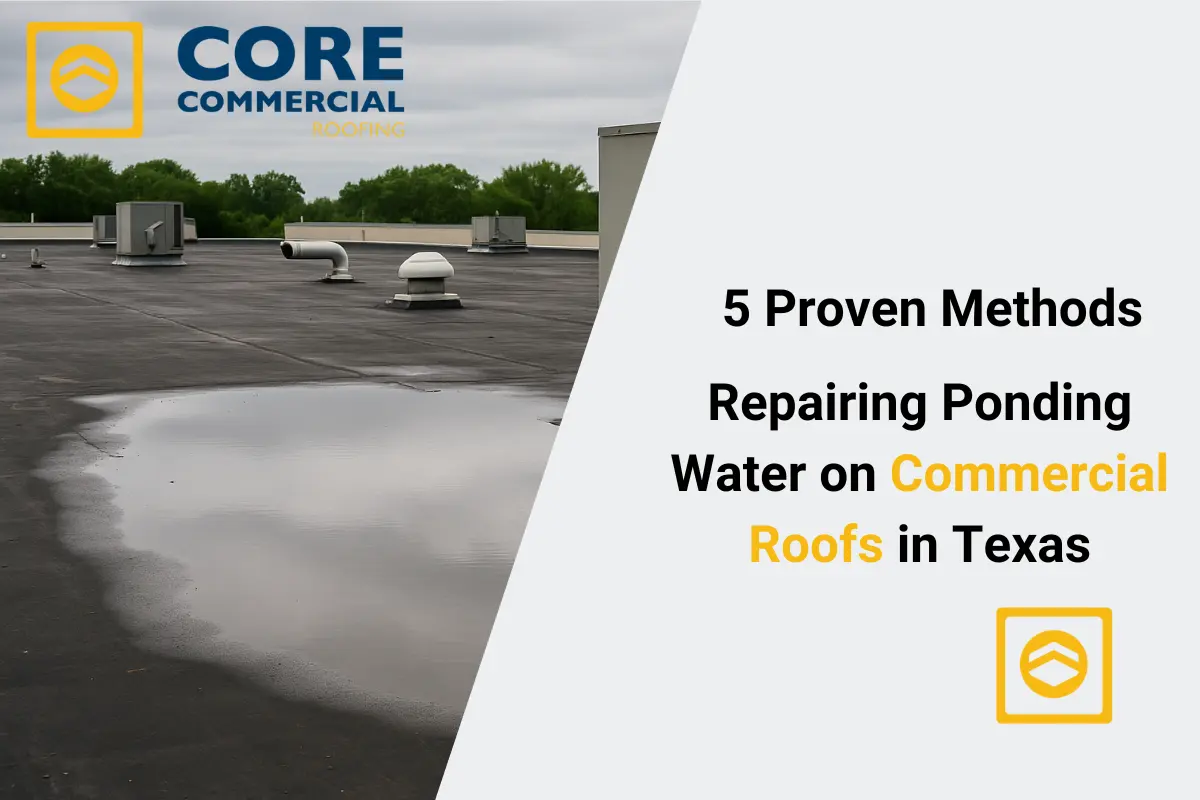
If water is still sitting on your commercial roof 48 hours after the rain stops, you have a ponding water problem. In Texas, where heavy storms roll in fast and the summer sun bakes everything that stays wet, this is one of the most damaging issues a flat roof can face.
Knowing how to deal with ponding water early can save your building from leaks, mold, and costly structural damage. The longer it sits, the worse it gets.
Below are the 5 methods commercial roofers actually use to clear standing water for good, plus how to tell which one fits your roof.
What Is Ponding Water, and Why It Is a Big Deal in Texas
Ponding water is any water still sitting on your flat commercial roof more than 48 hours after the rain ends. On a Texas low-slope roof, that standing water is the warning sign, not the problem itself.
The 48-hour mark is not arbitrary. It is the same criterion the National Roofing Contractors Association uses to judge whether a roof drains properly, and most building codes call for a minimum quarter-inch-per-foot slope for positive drainage so water clears before it can do damage. Beyond that window, the water starts working against the roof.
Left untreated, ponding water leads to:
- Leaks and water stains on interior ceilings
- Mold and mildew growth
- Roof deck deterioration
- A shortened roof lifespan
- Higher maintenance and energy costs
There is also a weight problem most owners never think about. Water is heavy, roughly 5 pounds per square foot for every inch of depth, so a wide pond puts real load on the deck. Because so many Texas commercial buildings sit on flat or low-slope roofs, ponding is a common issue here. The good news: it is fixable, with the right approach and a proper comprehensive roof report to pinpoint the low spots.
Which fix fits your roof
| If you are seeing this | The fix that usually fits | Relative cost | How lasting |
|---|---|---|---|
| Slope is okay, but drains get overwhelmed in storms | Add drains or scuppers | Moderate | Long-term |
| Ponding spread across large areas, roof has lost its slope | Tapered insulation | Higher | Long-term, best during a re-roof |
| Shallow, isolated pooling on an otherwise sound roof | Ponding-rated coating | Lower | Roughly 10 to 15 years |
| Water trapped behind AC units, curbs, or skylights | Cricket or saddle | Low | Long-term and targeted |
| Large pools with cracking or soft, spongy spots | Rebuild or reinforce the deck | Highest | Permanent, fixes the root cause |
1. Improve Roof Drainage With Additional Drains or Scuppers
The fastest fix for most ponding is getting water off the roof quicker, and that means adding or upgrading drains and scuppers. If your roof floods faster than it drains during a storm, this is usually where you start.
Why it works:
Poor drainage is the top reason for ponding. Adding new roof drains, scuppers (wall openings that let water flow off the edge), or upgrading existing ones lets water exit the roof faster instead of soaking into the roofing layers.
How it helps Texas businesses:
Texas roofs can take on several inches of rain in a single heavy storm. Better drainage keeps that water from sitting and working into the membrane, which prevents future leaks and reduces stress on the building structure.
What is involved:
- A roofer assesses the roof’s slope and drainage pattern
- New drains or scuppers are installed at the low spots
- Downspouts are cleaned or redirected to handle more flow
Pros:
- Long-term solution
- Works for most roof types
- Low visual impact
Cons:
- Requires professional installation
- May involve cutting into the existing roof membrane, which is why it is best paired with scheduled commercial roof repairs
2. Use Tapered Insulation to Create Proper Roof Slope
Tapered insulation rebuilds the slope your flat roof lost, guiding water toward the drains instead of into low spots. It is the go-to fix when the ponding is spread across the roof rather than stuck in one corner.
Why it works:
Flat roofs are never truly flat. They need a slight, built-in slope to move water to the drains. If your roof sags or was never designed with enough pitch, sloped rigid insulation boards restore the fall the roof needs.
How it helps Texas buildings:
Tapered insulation is a strong fix during a re-roof or retrofit. Years of Texas sun can warp roof materials and create new low spots, and a tapered system resets proper water flow while improving energy efficiency at the same time.
What is involved:
- The roofing team maps out the ponding zones
- Sloped rigid insulation boards are installed to build the pitch
- The roof membrane is reapplied over the new slope
Pros:
- Great for fixing multiple ponding areas at once
- Adds insulation value and can help increase your commercial property value
- Works with many roofing materials
Cons:
- Higher upfront cost
- Best applied during a commercial re-roof or major repair
3. Apply a Roof Coating Designed to Handle Ponding Water
A ponding-rated roof coating seals the surface and buys you time on shallow, isolated ponding without a full tear-off. It will not correct a slope problem, but for minor pooling it is the cheapest way to protect the membrane.
Why it works:
Some coatings are engineered to resist standing water and the intense UV that comes with a Texas summer. Reflective silicone or polyurethane coatings go over your current roof, seal small ponding areas, and stay flexible enough to resist cracking as the roof expands and contracts with the heat.
How it helps your roof:
These coatings form a water-resistant barrier and reflect heat off the surface, which is exactly what a baking flat roof needs. A project like our silicone roof coating job shows how well a properly prepped surface holds up to standing water.
What is involved:
- Cleaning the entire roof surface
- Repairing any damage beforehand
- Applying the coating in multiple layers for durability
Pros:
- Can extend roof life by 10 to 15 years
- Reduces energy bills by reflecting sunlight
- Cost-effective next to a full replacement, with commercial roof coatings often costing a fraction of a tear-off
Cons:
- Not a structural fix, so it will not correct slope issues
- Needs reapplication after a decade or so
4. Install a Cricket System to Redirect Water Away From Problem Areas
A cricket is a small sloped structure that steers water around the things it gets stuck behind, like your rooftop AC units. It is the targeted fix when the ponding shows up in the same few spots after every storm.
Why it works:
Crickets and saddles are triangle-shaped builds added to push water around obstacles such as HVAC units, skylights, and curbs, rerouting it toward the drains. Roofing standards specifically call for them on the high sides of roof curbs to keep water moving toward drainage points.
Texas-specific use case:
Plenty of Texas commercial roofs have AC units sitting right on the surface. Those units create low spots around their base that trap water, and a cricket guides that water away before it can pool and damage the membrane.
What is involved:
- Locating the problem areas where water stands
- Installing foam or wood crickets under the roofing membrane
- Sealing and integrating them into the roof system
Pros:
- Targets specific ponding spots
- Cost-effective and quick to install
- Works with most roofing types
Cons:
- Not ideal for widespread ponding
- Must be customized for each roof layout
5. Rebuild or Reinforce Roof Areas With Structural Issues
When the deck itself is sagging or soft, no surface fix will hold, and the affected area has to be rebuilt or reinforced. This is the fix for ponding that comes with cracking, large pools, or spots that feel spongy underfoot.
Why it works:
Sometimes ponding points to a bigger structural problem, like deck warping or poor construction. Standing water only makes it worse: the extra weight increases deck deflection, which creates deeper low spots that collect even more water. GAF’s own technical guidance warns that ponding can lead to structural load and deck deflection, and roof failure if it is left unaddressed. At that point, surface fixes are not enough.
When it is critical:
If you see large ponding areas, cracking, or places that feel soft when walked on, the roof’s structure may be compromised. Years of Texas storms, hail, and poor original design can all weaken the decking over time.
What is involved:
- A roof inspection and moisture scan
- Removing the damaged materials
- Replacing decking and framing as needed
- Installing new waterproof layers
Pros:
- Fixes the root cause of the ponding
- Improves building safety
- Sets the roof up for a longer, better-performing life
Cons:
- The most expensive option
- Disruptive during installation
Bonus Tip: Keep Gutters and Drains Clean Year-Round
Even a perfect repair fails if the drains stay clogged, so keep them clear year-round. In Texas that means clearing debris after every big storm, hail event, and dust storm before it blocks the flow.
Simple habits that keep water moving:
- Schedule seasonal cleanings, especially before spring storms and after the fall leaves drop
- Inspect the roof after any major Texas weather event
- Add leaf guards and drain filters where debris is a recurring issue
Final Thoughts: Choose the Right Fix for Lasting Results
Ponding water on your commercial roof is not just a minor annoyance. It is a warning that your building could be facing costly problems soon. Whether you run a retail plaza, a warehouse, or an office, dealing with standing water early saves money and extends the life of the roof.
Here is a recap of the 5 methods:
- Add more drains or scuppers
- Install tapered insulation
- Apply a water-resistant roof coating
- Use crickets to redirect the flow
- Rebuild structurally damaged roof sections
Each method solves ponding differently, and the right one depends on your roof’s condition, budget, and goals. If you are weighing a quick seal against a bigger investment, our breakdown of roof coating versus a full replacement walks through how to decide. Above all, working with a qualified commercial roofer is what gets the job done right the first time.
FAQs
What causes ponding water on flat roofs in Texas?
Ponding water on Texas flat roofs usually comes down to poor drainage, clogged gutters or scuppers, or an uneven roof surface that has lost its slope. Heavy rainstorms make it worse, leaving standing water that damages the roof over time.
How can I stop ponding water on my commercial roof?
Make sure the roof has a slight slope, keep drains and gutters clear of debris, and add drains or tapered insulation to guide water off the roof. Which combination you need depends on whether the ponding is isolated or spread across the roof.
Is ponding water harmful to my building’s roof?
Yes. Standing water weakens roofing materials, causes leaks, and encourages mold growth. Over time it can compromise the roof’s structure and shorten its lifespan, and the added weight puts extra load on the deck.
How often should I check my commercial roof?
Inspect your commercial roof at least twice a year, ideally before and after the rainy season, so you catch drainage issues early. A quick check within 48 hours of a major storm helps you spot ponding while it is still easy to fix.
What are the best drainage solutions for flat roofs?
Effective options include internal drains, scuppers, and gutters, often paired with tapered insulation to build a slope that directs water toward the drains. The best mix depends on your roof’s existing slope and where the water collects.
Can roof coatings help prevent water pooling?
Yes. A waterproof coating such as silicone or acrylic seals the surface and makes it more resistant to standing water, which helps with shallow, isolated pooling. It will not fix a slope problem, so it is not a substitute for proper drainage.
What are the signs of drainage problems on a roof?
Watch for visible standing water 48 hours after rain, water stains inside, mold or algae growth, and sagging or soft areas on the roof surface.
How does Texas weather affect flat roof drainage?
Texas sees heavy rains and fast-moving storms that can overwhelm a flat roof’s drainage system, leading to pooling if the roof is not properly sloped and maintained. Sun and hail add wear that creates new low spots over time.
Why is regular roof maintenance important?
Regular maintenance catches small issues before they turn into major problems, keeping the roof watertight and extending its service life. It also keeps your drains working the way they should when the next storm hits.
When should I call a professional for ponding water issues?
If you notice persistent standing water, active leaks, or any structural damage, bring in a professional roofer to assess and fix the problem before it spreads.