Do You Need a Permit to Build a Commercial Porch Roof?
Yes, and not just a residential-style permit. Commercial work falls under the International Building Code, which means engineering documentation, load calculations, and stamped architectural drawings filed before a single footing gets dug.
The IBC is more performance-based than the residential IRC, so the bar is higher from the start. The 2024 edition also introduced tornado loading provisions for higher-risk buildings, something West Texas property owners need to factor in when sizing structural columns and anchor connections.
At Core Commercial, we handle the permitting process for our clients. If you’re managing a property yourself, contact your city building department first. Work-stoppage orders on an unpermitted commercial addition are expensive and embarrassing.
Step 1: Structural Engineering and Load Calculations
Your structural engineer runs two numbers before anything else: dead load and live load. Get either one wrong and you’re building something that looks solid until the first real weather event.
Dead load is the fixed weight of the structure itself: the steel or lumber framing, the plywood or corrugated decking, and the roofing membrane on top. Live load covers everything dynamic, including accumulated snow, maintenance crews walking the surface, and, in West Texas, wind uplift from storms that can push past 100 mph gusts.
Pitch gets calculated here too. The rise and run of your canopy determines how fast stormwater moves into the gutters and away from your building’s foundation and front door. A flat-looking portico still needs a minimum pitch. Code and physics both require it.
Zoning and setbacks. Before you finalize the footprint, pull your property’s zoning records. Commercial setbacks regulate exactly how close a permanent structure can extend toward a parking lot, easement, or public sidewalk. ADA compliance is non-negotiable: any column placement has to hold the minimum accessible pathway widths and cannot obstruct wheelchair ramp navigation.
Step 2: Selecting Your Commercial Materials
The right material comes down to two factors: the roof slope and whether the canopy is visible from the street. Flat and hidden usually means a membrane, while pitched and on display usually means metal.
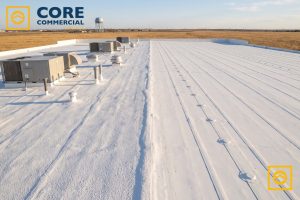
Flat or low-slope canopy: TPO (Thermoplastic Polyolefin) and EPDM membranes are the standard choices for flat portico designs. Both integrate cleanly with a building’s existing flat roof system and hold a watertight seal at a lower material cost than metal. If you’re weighing the two for a flat canopy, our breakdown of TPO vs EPDM roofing covers how they perform in Texas heat. When the canopy isn’t visible from the ground, a common setup on rear entries or loading docks, a membrane is usually the most cost-effective call.
Pitched or visible canopy: Standing seam metal panels are the top choice when the portico is a visible architectural feature. The lifespan can run 40 to 50 years with proper installation, and the panel profile sheds ice and debris cleanly without needing regular maintenance. It’s also the look that moves a building’s perceived class upward, a detail that matters in retail and multi-tenant office settings.
Support columns: In any commercial application with vehicle exposure, including parking lots, drive-throughs, and loading areas, structural steel or reinforced concrete columns are required. Decorative wood columns aren’t rated for vehicular impact. If you’re in a tight parking zone, plan for steel bollards around the column bases.
| Surface | Best membrane | Best for |
|---|---|---|
| Flat / low-slope | TPO or EPDM | Rear entries, loading, budget builds |
| Pitched / visible | Standing seam metal | Main entrances, retail, class upgrades |
| Hybrid (flat deck, pitched fascia) | TPO deck + metal fascia trim | Large commercial footprints with curb appeal |
Step 3: Anchoring the Ledger Board
The ledger board ties your new portico into the existing building, and it’s the one anchor every other step depends on. Get this wrong and everything above it is built on a bad foundation.
Crews remove the exterior facade layer, whether that’s stucco, brick veneer, or aluminum cladding, to expose the structural studs or concrete masonry unit (CMU) wall behind it. The ledger is then secured directly into that structural substrate using galvanized lag bolts at engineer-specified intervals. After the lag bolts are set, self-adhering flashing tape goes over the entire ledger-to-wall connection. This is the step that prevents hidden moisture infiltration behind the facade. Skipping or rushing the flashing here is one of the most common causes of interior water damage on commercial additions.
Step 4: Excavating Footings and Setting Columns
Ground-level support starts below grade. Crews excavate to frost depth, the point at which soil no longer freezes and thaws seasonally, and pour steel-reinforced concrete footings sized by the structural engineer to the column load above.
In commercial parking areas, install steel bollards around each column base once the footings cure. Delivery trucks and forklifts will eventually contact those columns, and a bollard is far cheaper than a column repair mid-project.
Step 5: Framing the Canopy
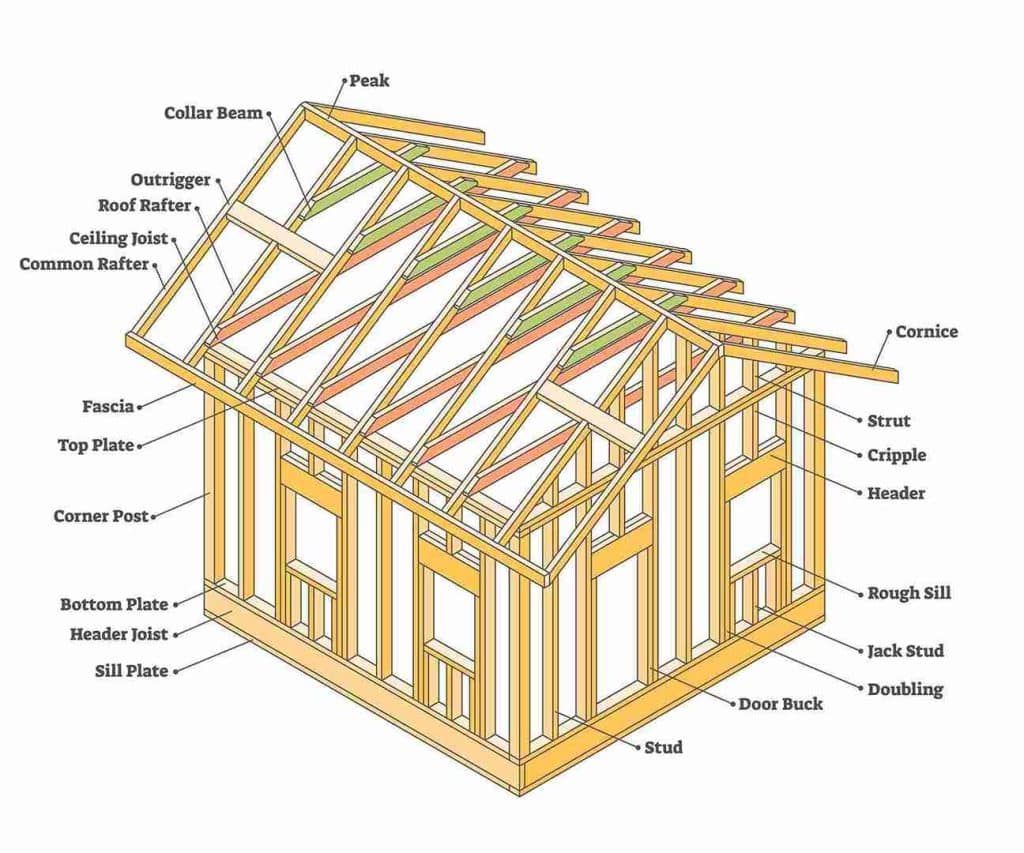
With the footings cured and columns set, framing begins on the overhead structure. A heavy-duty engineered header beam spans the front columns, and wooden rafters or prefabricated steel trusses set the slope.
The rafters install perpendicular to the ledger board, creating the structural bay that carries the decking and membrane above. Rafter spacing is determined by the deck load and the span, and your engineer’s drawings spec it exactly. Don’t improvise spacing to save material cost. It affects the roof slope performance and your ability to pass final inspection.
Step 6: Installing Roof Decking and Waterproofing
Decking goes over the rafters, then the waterproofing. That sequence, and the wall tie-in detail, is what separates a durable commercial canopy from a maintenance headache.
Structural plywood or corrugated steel decking goes over the rafter network, fastened to spec. For a pitched surface, an ice-and-water shield underlayment covers the full deck before the standing seam panels go on. For a flat TPO installation, the membrane is either fully adhered or mechanically attached, and the critical detail is the tie-in overlap where the canopy meets the primary building wall. That seam needs to be properly lapped, sealed, and flashed. It’s the most leak-prone point on the entire structure, and the first place a commercial roof repair crew looks when water shows up inside. If you’ve had a fully adhered TPO system installed on your main roof, the same installation standards apply here.
Step 7: Installing Box Gutters, Fascia, and Soffit
Box gutters, fascia, and soffit finish the build and handle drainage. Size the gutters to the roof’s drainage area or they’ll overflow and route water straight onto your front door threshold and foundation.
Box gutters mount to the fascia board at the perimeter, and high-capacity downspouts carry runoff away from pedestrian walkways. That matters most in cold-weather markets, where puddled water freezes into a slip-and-fall liability overnight. Vented soffit panels go underneath the rafters to promote the air circulation that prevents condensation buildup on the underside of the decking. Most commercial canopy designs also integrate recessed LED lighting into the soffit at this stage, both for security and for the tenant experience at night.
Conclusion
A commercial porch roof is one of the few property improvements that earns its cost on multiple fronts at once. It protects tenants and foot traffic from weather, reduces slip-and-fall liability at your front entrance, and signals to prospective tenants that the property is maintained to a higher standard. Built correctly, it’s also one of the most durable additions you can make. A standing seam metal portico installed today should still be performing in 40 years with minimal intervention.
The sequence matters: permits and engineering before footings, footings before framing, and waterproofing before fascia. Skip or rush any phase, and you’re trading a short-term shortcut for a long-term water intrusion problem. Get it right, and you’ve added a permanent asset to the building.
If you’re weighing materials, comparing flat versus pitched options, or need someone to pull the permits and manage the build from start to finish, Core Commercial Roofing & Coatings handles commercial canopy work across West Texas. Reach out, and we’ll walk you through what the project looks like for your specific building.