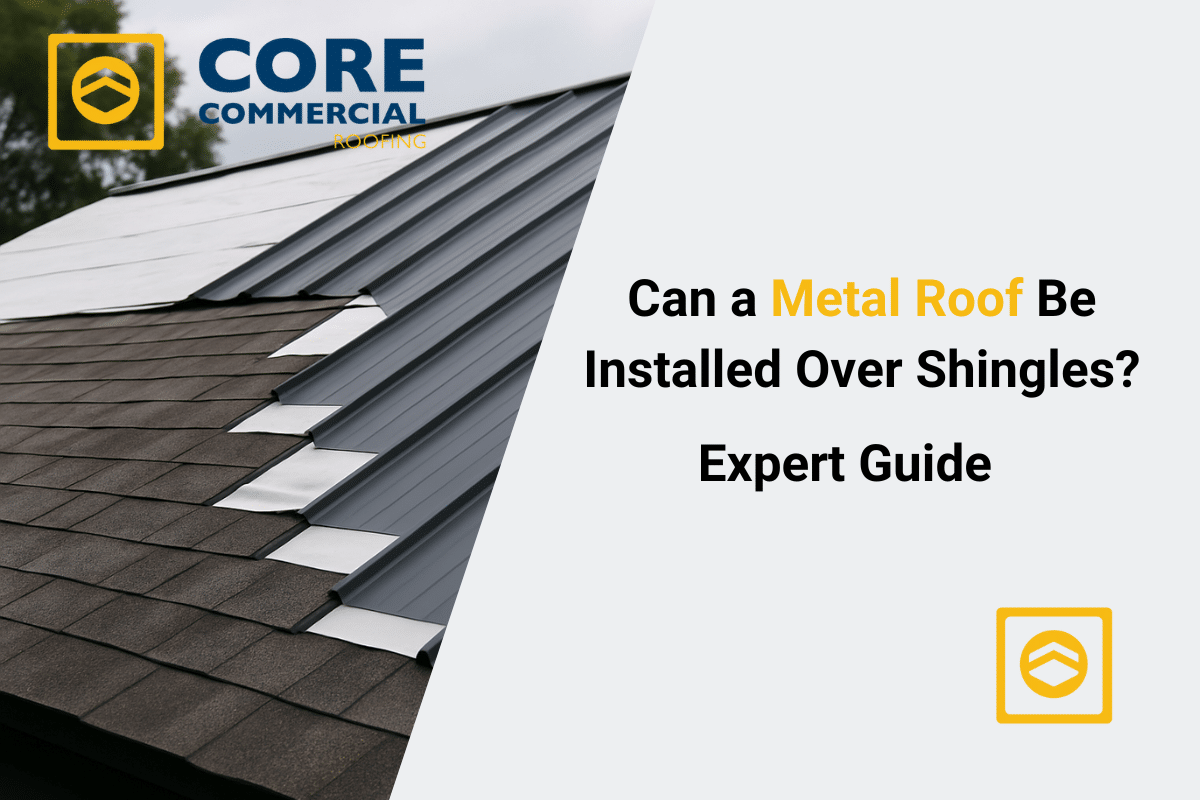
Can You Put a Metal Roof Over Shingles?
Yes, in most cases you can install a metal roof over existing shingles, as long as there is only one layer up there, the deck underneath is dry and solid, and your local code and the panel manufacturer both sign off. Miss any one of those, and you are building a problem into the roof.
Thinking about upgrading to metal but unsure whether you need to rip off the old shingles first? You are not alone. It is one of the most common questions we get in Lubbock, and the honest answer has more conditions attached than most guides admit. Here is what actually decides it.
Table of Contents
What Does the Building Code Actually Say About Roofing Over Shingles?
The code allows a recover over one existing layer and flatly prohibits it over two. That is the opposite of what a lot of articles claim, so it is worth getting straight before you call anyone for a quote.
Texas cities follow the International Residential Code for residential work. The relevant rule is section R908.3.1, and the residential re-roof requirements published by a Texas building inspections department reproduce it in full. A recover is permitted when the new covering goes on per the manufacturer’s approved instructions. It is not permitted under three conditions:
- The existing roof is water soaked or deteriorated to the point that it is not an adequate base for additional roofing.
- The existing covering is slate, clay, cement, or asbestos-cement tile.
- The roof already has two or more applications of any type of roof covering.
Read that third one carefully, because it gets repeated backwards all over the internet. Two layers already on the deck is the disqualifier, not the allowance. If someone already covered your original shingles once, you are past the limit and you are looking at a full tear-off.
Pro Tip: Count layers at the rake edge or the eave before you get a quote. If you can see two distinct shingle courses stacked, the recover conversation is over and you can stop shopping for it.
The Standing Seam Exception Almost Nobody Mentions
Here is the part the rest of the search results leave out entirely. The same code section says that complete and separate roofing systems, such as standing-seam metal roof systems, that are designed to transmit the roof loads directly to the building’s structural system and do not rely on existing roofs and roof coverings for support, do not require removal of existing roof coverings.
Translated: a properly engineered standing seam system carried on its own attachment does not lean on your old shingles, so the code treats it differently than a screw-down panel laid straight over the top. That distinction is worth real money on the right building, and it is a big reason the panel type you pick matters before the tear-off question is even settled. If you are still comparing systems, our breakdown of commercial roofing systems covers where each one fits.
Why Do Property Owners Consider a Metal Roof-Over?
Most people land here because their asphalt shingles are aging, curling, or leaking, and the tear-off quote came back higher than expected. Tearing off is messy, slow, and expensive. So the question becomes: can we just cover it up instead?
The usual motivations look like this:
- Cost: removing shingles adds labor hours and dumpster fees to every quote.
- Speed: fewer days of an open roof means fewer days of weather exposure.
- Less waste: shingles are not exactly eco-friendly, and leaving them in place keeps them out of the landfill.
- Reflectivity: metal bounces solar heat instead of soaking it up, which matters in a Panhandle August.
- Longevity: metal outlasts asphalt by decades when it is installed correctly.
On that last point, the Metal Construction Association’s service life study of unpainted 55 percent aluminum-zinc standing seam roofs concluded the expected service life exceeds 60 years in a wide range of environments. Painted residential panels vary by gauge and coating, so treat 40 to 70 years as a range rather than a promise, and read the specific warranty you are being sold.
What Are the Real Advantages of Installing Metal Over Shingles?
Skipping the tear-off saves you labor, disposal fees, and days on the schedule, and it keeps a few tons of asphalt out of the landfill. The savings are real, but they are smaller than the internet claims once flashing and trim are priced in.
- Lower labor cost. Tear-off is hours of hand work before a single new panel goes down. Removing that phase is where most of the savings live.
- Shorter schedule. Crews can move to panel layout on day one instead of day three, which shrinks your weather exposure window.
- Less disruption. No dumpster in the drive, no debris in the yard, no leftover nails to step on.
- A bit more insulation and sound damping. The old shingle layer adds mass, which takes some of the edge off rain and hail noise.
- Better environmental math. Fewer shingles in the landfill = a smaller footprint, and metal is fully recyclable at the end of its own service life.
What Are the Risks You Should Not Ignore?
The biggest risk is not weight. It is what you cannot see. Covering shingles means covering whatever the shingles were hiding, and moisture that gets trapped between the layers has nowhere to go.
1. Trapped Moisture and Condensation
This is the failure everyone names and almost nobody explains. Metal panels get cold fast at night. When warm, humid air from the attic reaches the underside of a cold panel and hits the dew point, it condenses. Without a vented airspace above the old shingles, that water sits in the assembly and slowly works on the decking. It is not the rain that rots the deck. It is the condensation.
2. Granule Abrasion on the Panel Backside
Asphalt shingles are covered in hard mineral granules. Metal expands and contracts with every temperature swing, and West Texas gives you a lot of those in a single day. Lay a panel directly on granules and you get thousands of tiny scrubbing cycles against the panel’s protective coating. A proper underlayment or furring strip layer is what keeps that from becoming corrosion in year twelve.
3. An Uneven Substrate
Curled or wavy shingles telegraph straight through a metal panel. On a standing seam roof, that shows up as visible oil canning across every flat.
4. Hidden Structural Damage
If you never lift the shingles, you never see the soft decking, the rotted rafter tail, or the old leak that was quietly staining the sheathing. A recover buries that information for the next forty years.
5. Weight and Warranty
Metal is light, but adding any layer adds load, and marginal decking or undersized rafters do not care that the addition was small. Separately, some manufacturers void warranty coverage on recover installations unless very specific underlayment and attachment requirements are met. Get that in writing before the panels are ordered, not after.
How Does West Texas Hail Change the Decision?
Hail is the deciding factor out here, and it cuts both ways. Metal shrugs off impacts that would destroy asphalt, but it dents, and your carrier may want you to sign away cosmetic coverage before it hands over the discount.
Roofing materials are impact tested and classified Class 1 through Class 4, with Class 4 being the toughest. Most quality metal systems land at Class 4. The Texas Department of Insurance guidance on impact-resistant roofing credits is clear on two points that get misreported constantly:
- The discount amount is set company by company. There is no fixed statewide percentage, despite what you will read elsewhere. Each carrier decides its own credit, which test criteria it accepts, and what paperwork it wants from you and your contractor.
- Labeling matters. Material that meets the impact standard but is not labeled correctly can be rejected for the credit anyway.
Now the part that decides this for a lot of Caprock buildings. Metal takes a hail hit and keeps shedding water, but it holds the dent. Many Texas carriers attach a cosmetic damage exclusion to the impact-resistant credit, which means the dents are yours to live with. If the look of the roof in year five matters to you, ask your agent for that endorsement language before you commit, not after the storm.
Pro Tip: After any significant storm, document the roof whether or not you plan to file. Our guide to a post-storm roof inspection in Lubbock walks through what an adjuster will actually be looking for.
Is Your Existing Roof a Good Candidate?
Your roof is a candidate if it has one layer of flat, well-fastened shingles over dry decking with no leak history. If any one of those is off, tear it off and start clean.
Run this list before you commit:
- Are the shingles flat and secure, or curling, buckling, and loose?
- Is the decking underneath still solid and dry everywhere, including at the valleys?
- Has there been any leak or water staining inside the attic, ever?
- Are you inside the one-layer limit the code sets?
- Does the panel manufacturer’s warranty permit a recover on your specific product?
Pro Tip: Walk your attic before anyone walks your roof. Dark stains on the sheathing, soft spots, or a musty smell are all signs you should not skip the tear-off. This is the single cheapest inspection you can do yourself.
If you would rather have the condition documented properly, that is exactly what a comprehensive roof report is for.
Which Metal Roof Systems Work Over Shingles?
Standing seam, metal shingles, and R-panel all go over an existing shingle roof, but standing seam is the only one the code specifically singles out. Your panel choice drives your prep work more than anything else on this page.
Standing Seam
Hidden fasteners, raised interlocking seams, and the cleanest long-term performance of the three. It is also the system the code names in the load-transfer exception, and the one most likely to be approved for a recover by the manufacturer. Expect the highest material cost and the tightest installation tolerances.
Metal Shingles
These mimic asphalt, slate, or wood shake, interlock with each other, and are light enough to go over an existing layer with minimal structural concern. Good option when appearance matters and you want the profile to stay close to what is there now.
R-Panel
The workhorse across rural West Texas. Cost effective and fast, but exposed fasteners need periodic attention, and it almost always wants furring strips or a substantial underlayment to sit flat over an old shingle surface. For a wider comparison against everything else available locally, see our rundown of roofing materials for Texas commercial buildings.
How Does the Installation Actually Work?
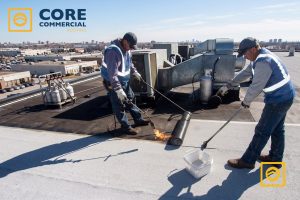
A recover runs six steps: inspect, underlay, furring strips if needed, panels, flashing, final check. The prep work is where the job is won, and prep is the first thing a rushed crew cuts.
- Inspection. Layer count, shingle condition, decking soundness, and confirmation that code and the manufacturer both allow the recover on this roof.
- Underlayment. A synthetic underlayment or foam layer separates the panels from the granules and manages condensation. This is not optional, whatever the quote says.
- Furring strips. Also called purlins. They flatten an uneven surface and, just as importantly, create the vented airspace that keeps condensation from sitting against the deck.
- Panels. Interlocking panels or metal shingles are set and fastened to the manufacturer’s spec, including their fastener pattern and torque, not the installer’s habits.
- Flashing and trim. Eaves, valleys, sidewalls, and every penetration get flashed. Almost every leak in a metal roof happens at a detail, not in the middle of a panel.
- Final inspection. Fasteners, overlaps, seams, and edges get checked before the crew leaves.
If you want the full sequence with tools and materials, our step-by-step guide to metal roofing installation covers each phase in detail.
Does Any of This Apply to a Flat Commercial Roof?
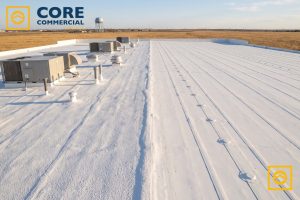
Not directly. A low-slope commercial recover is a different animal that needs an engineered retrofit sub-framing system, and none of the residential overlay logic transfers to it cleanly.
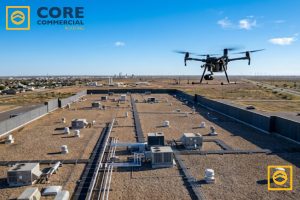
Most commercial buildings across West Texas are low slope, carrying a membrane or a built-up system rather than shingles. Putting metal over one of those means building a sloped sub-structure above the existing roof, which is an engineered assembly with its own load calculations, not a weekend overlay. Rooftop equipment complicates it further, and HVAC curb flashing is where those retrofits most often go wrong.
In a lot of cases the better question for a commercial building is not metal versus tear-off at all. It is whether a restoration coating buys you fifteen more years for a fraction of the cost, which we break down in commercial roof coating vs replacement. If the spec has to satisfy an insurer, FM Global approved roofing is the standard you will be measured against. And if you are still deciding what shape the roof should be, our comparison of flat slope roofs versus gable roofs is a useful starting point.
What Mistakes Make a Roof-Over Fail?
Almost every failed recover traces back to one of five things, and four of them are decisions made before a single panel goes down.
- Skipping underlayment. Saves a few hundred dollars, costs you the deck.
- No vented airspace. The condensation has to be able to dry somewhere. Sealed assemblies over old shingles are the most common cause of hidden rot.
- Going over damaged shingles. Sagging, curling, and soft spots do not fix themselves under a panel. They get worse in the dark.
- Fastening by habit instead of by spec. Wrong pattern, wrong torque, or screws through the ridge instead of the flat, and you have both leaks and a void warranty.
- Skipping the permit. An unpermitted recover can mean fines, a forced tear-off, and a fight with your insurer after the next storm.
Tear-Off vs. Roof-Over: What Does Each Cost?
A recover typically runs a few thousand dollars less than a tear-off on the same building, and nearly all of that gap is labor and disposal. The gap shrinks fast if the deck turns out to need work anyway.
| Item | Full Tear-Off | Metal Over Shingles |
|---|---|---|
| Labor | Higher, includes removal hours | Lower, removal phase eliminated |
| Dumpster and disposal | Required | None or minimal |
| Time on site | Roughly 5 to 7 days | Roughly 2 to 4 days |
| Deck inspection | Full visibility | Limited, deck stays covered |
| Underlayment and furring | Standard | Often more material required |
| Risk of surprise costs | Found and priced up front | Discovered later, at higher cost |
| Warranty flexibility | Widest manufacturer options | Restricted, product dependent |
Treat published dollar figures with suspicion. Pitch, access, panel gauge, trim complexity, and how many penetrations you have will swing a West Texas quote more than the tear-off decision itself does. A written scope from a licensed contractor is the only number that means anything.
Final Tip: If your shingles or deck are already compromised, the tear-off is not the more expensive option. It is the cheaper one, you just pay for it now instead of in year six.
Bottom Line: Should You Do It?
A metal roof over shingles can be a smart move. It saves real money, cuts the schedule, keeps waste out of the landfill, and gets you decades of service life out of a roof you were already going to spend money on.
But it is conditional, and the conditions are not negotiable. One layer, dry solid decking, no leak history, a manufacturer who permits it in writing, and a code official who signs the permit. Out here you have one more question on top of that: how you want to handle hail, dents, and whatever your carrier’s cosmetic damage language says.
Bottom line: if the roof qualifies on every count, a recover is a genuinely efficient choice. If it fails even one, covering it up just buys you a more expensive version of the same problem.
Not sure which side of that line your building falls on? We handle commercial re-roofs and multi-family and residential roofing throughout the region, and we will tell you when a tear-off is the better call even though it is the smaller job. Call (806) 404-1250 or find us wherever you are across West Texas, including commercial roofing in Anton, Texas.
FAQs
Can you put a metal roof over shingles without removing them?
Yes, provided there is only one existing layer, the decking is dry and structurally sound, and both your local building department and the panel manufacturer allow it. The code specifically prohibits a recover over a roof that already has two or more applications of any covering.
Do I need underlayment when installing a metal roof over shingles?
Yes, and it is the step most worth defending in a quote. Underlayment separates the panels from abrasive shingle granules and manages condensation, which is the mechanism that actually rots decking under a recover.
Will a metal roof over shingles be noisy during rain and hail?
Less than you expect. The retained shingle layer plus underlayment adds mass and damping, so a properly built assembly is not meaningfully louder indoors than a shingle roof.
Can I install a metal roof over two layers of shingles?
No. A roof recover is not permitted where the existing roof already has two or more applications of any type of roof covering. At that point removal and full replacement is the only compliant path.
Does a metal roof lower my insurance in Texas?
It often can, because impact-resistant roofing qualifies for carrier credits, but there is no fixed statewide discount. Each insurance company sets its own credit amount and its own documentation requirements, and many attach a cosmetic damage exclusion to it.
Do I need a permit to install a metal roof over shingles?
In almost every Texas municipality, yes. Skipping it risks fines, a forced tear-off, and complications with an insurance claim later, so confirm requirements with your local building department before work starts.