The Life Cycle of a Commercial Roof: How to Maximize Longevity
A commercial roof is more than a structural necessity. It is a long-term investment in the protection of your business, employees, and assets. In a state like Texas, where intense UV exposure, hailstorms, and extreme temperature swings are a daily reality, understanding the life cycle of a commercial roof is not optional. It is essential.
By knowing what to expect at each stage and implementing the right maintenance strategies, you can significantly extend the life of your roof and avoid the costly surprises that come with neglect.
This guide covers everything you need to know: material lifespans, manufacturer warranty requirements, proactive maintenance tips, signs it is time for replacement, and how to make the most informed decision for your building.
How Long Do Commercial Roofs Last?
The lifespan of a commercial roof depends on the material used, the quality of installation, and how consistently the roof is maintained. Here is a breakdown of the most common commercial roofing materials and what you can realistically expect from each.
EPDM (Ethylene Propylene Diene Monomer): 20 to 30 Years
EPDM, commonly called rubber roofing, is one of the most durable single-ply membrane options available. It holds up well against UV radiation and weathering. However, it is susceptible to punctures from foot traffic or falling debris, which is why routine inspections are critical.
TPO (Thermoplastic Polyolefin): 15 to 25 Years
TPO is highly popular in Texas because of its reflective surface, which bounces solar heat away from the building and helps reduce cooling costs. Its biggest vulnerability is seam failure, especially in areas that experience rapid temperature fluctuations. Consistent maintenance extends its lifespan considerably.
PVC (Polyvinyl Chloride): 20 to 30 Years
PVC roofs offer excellent chemical resistance, making them ideal for restaurants, food processing facilities, and buildings where grease or chemical exposure is a concern. With proper drainage management and periodic inspections, PVC systems can reach or exceed the top of their expected lifespan.
Metal Roofing: 40 to 50 Years
Metal roofing is the longest-lasting commercial option. It is highly resistant to fire, impact, and wind. The main maintenance concerns are rust prevention and ensuring fasteners and sealants remain watertight over time. When properly maintained, metal roofs can outlast the buildings beneath them.
Built-Up Roofing (BUR): 20 to 30 Years
BUR systems consist of multiple layers of asphalt and reinforcing felt, topped with a gravel or mineral surface. They perform well in Texas climates but require proper drainage to prevent ponding water, which is one of the leading causes of accelerated deterioration in flat-roof buildings.
Commercial Roofing Material Lifespans
| Material | Expected Lifespan | Best For | Key Maintenance Need |
|---|---|---|---|
| EPDM | 20 to 30 years | General commercial buildings | Puncture and seam inspection |
| TPO | 15 to 25 years | Energy-efficient buildings | Seam welding integrity |
| PVC | 20 to 30 years | Chemical/grease exposure | Drainage management |
| Metal | 40 to 50 years | Long-term investment | Rust and sealant checks |
| BUR | 20 to 30 years | High-traffic flat roofs | Drainage and layer integrity |
The 3 Key Stages in the Life Cycle of a Commercial Roof
Understanding where your roof sits in its life cycle helps you make smarter decisions about maintenance versus replacement.
Stage 1: Early Life (Years 1 to 7)
In the first years after installation, your roof should perform close to peak condition. The primary focus during this stage is establishing a maintenance routine and ensuring your warranty remains intact. Small issues like minor punctures or flashing gaps, if caught early, are inexpensive to fix and prevent larger problems down the line.
This is the ideal time to schedule your first Comprehensive Roof Report to document baseline conditions and identify any installation-related issues while they are still covered.
Stage 2: Mid-Life (Years 8 to 20)
By the mid-life stage, your roof has been exposed to years of thermal cycling, UV radiation, and weather events. Seams may begin to show stress, drainage systems may develop partial blockages, and surface coatings may start to degrade.
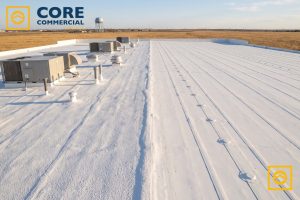
This is when commercial roof coatings become one of the most cost-effective tools available. Applying a fluid-applied reflective coating can restore waterproofing, reduce heat absorption, and extend the roof’s useful life by 10 to 15 years at a fraction of the cost of full replacement.
Stage 3: Late Life (Years 20 and Beyond)
In the final stage of the life cycle of a commercial roof, maintenance becomes more frequent and repair costs begin to climb. If your roof is approaching or has surpassed its expected lifespan, a professional assessment is essential. At this point, the decision typically comes down to whether a commercial re-roof makes more financial sense than continued patching.
Manufacturer Requirements for Warranty Upkeep
Most commercial roofing manufacturers offer substantial warranties, some up to 30 years, but these come with strict maintenance obligations. Failing to meet them can void your coverage and leave you fully responsible for repair or replacement costs.
Here is what manufacturers typically require to keep your warranty valid.
Biannual Professional Inspections
Manufacturers generally require inspections twice per year, ideally in spring and fall. Inspections must also be performed after major weather events such as hailstorms or high-wind episodes. These inspections must be documented.
Certified Contractor Work Only
All maintenance, inspections, and repairs must be performed by a manufacturer-certified or approved contractor. Work done by an uncertified roofer can void your warranty regardless of the quality of the repair. At Core Commercial Roofing, we are manufacturer-certified, which means our work protects rather than jeopardizes your coverage.
Approved Materials for All Repairs
Only manufacturer-approved materials may be used. For example, applying asphalt-based products on a TPO membrane will cause chemical incompatibility issues and immediately void your warranty.
Debris and Drainage Management
Roofs must remain clear of debris, organic growth, and anything that can obstruct drainage. Standing water accelerates membrane degradation and is specifically excluded from most warranty claims.
Pre-Approval for Roof Alterations
Adding HVAC equipment, solar panels, or any other rooftop installation requires written pre-approval from the manufacturer. Unauthorized alterations are one of the most common reasons warranties are voided.
Restricted and Documented Roof Access
Manufacturers often require that walkway pads be installed on roofs with regular foot traffic, and that a log be kept of who accessed the roof and why.
For a full picture of your current warranty status and compliance gaps, a Comprehensive Roof Report gives you the documentation and professional assessment needed to stay protected.
Tips to Maximize the Life Cycle of a Commercial Roof in Texas
Texas roofs face unique challenges: intense summer heat, UV radiation, sudden hailstorms, and dramatic temperature swings between seasons. Here are the most effective strategies for extending your roof’s life in this climate.
Schedule Biannual Inspections Every Spring and Fall
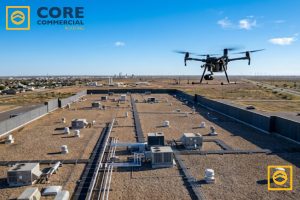
Do not wait for a leak to tell you something is wrong. A professional roofing contractor can identify and address early-stage issues such as loose flashing, minor membrane separations, and clogged drains before they grow into major repairs. Every inspection should be documented with photos and a written report.
Apply Reflective Roof Coatings
Reflective coatings are one of the highest-ROI investments for Texas commercial buildings. By reflecting solar radiation instead of absorbing it, these coatings reduce rooftop temperatures by up to 50 to 80 degrees Fahrenheit, which directly lowers your air conditioning load and slows the thermal degradation of your membrane. They also restore waterproofing and can be applied over most existing roof systems without a tear-off. Learn more about commercial roof coatings and whether your building qualifies.
Keep Drains and Gutters Clear
Ponding water is one of the leading causes of premature roof failure. After any significant rainfall or wind event, check that drains, scuppers, and gutters are free of leaves, debris, and sediment. Even a few inches of standing water can add thousands of pounds of weight to a flat roof and degrade the membrane in as little as 48 hours.
Address Minor Repairs Immediately
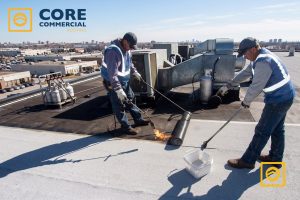
Small punctures, blistering, or cracked seams may seem harmless at first glance. Left unaddressed, they allow moisture to infiltrate the insulation layer beneath the membrane, where damage is far more extensive and expensive to fix. Fast, targeted commercial roof repairs are always more cost-effective than delayed action.
Upgrade or Improve Rooftop Insulation
Proper insulation reduces thermal cycling, which is the expansion and contraction of roofing materials as temperatures change throughout the day. In Texas, where temperature swings of 40 to 50 degrees between day and night are common during spring and fall, insulation quality has a measurable impact on how long your membrane lasts.
Document Everything
Maintain a complete roof file including inspection reports, repair invoices, product data sheets, photos, and warranty documents. This documentation protects you in warranty claims and provides critical data when planning your budget for future repairs or replacement. According to the National Roofing Contractors Association (NRCA), buildings with documented maintenance histories experience significantly fewer premature roof failures.
When Is It Time to Replace Your Commercial Roof?
Even the best-maintained roof reaches the end of its useful life. Recognizing the signs early gives you the advantage of planning replacement on your schedule rather than in response to an emergency.
Frequent or Recurring Leaks
If your roofing contractor is making repeated visits for leaks that keep coming back, the membrane’s integrity has been compromised. At some point, patching is no longer cost-effective compared to replacement.
Visible Structural Damage
Sagging roof sections, widespread membrane cracking, corroded or separated flashing, and deteriorated seams are signs that the system is failing structurally and not just cosmetically.
Rising Energy Bills Without Other Explanation
A degraded roof loses its insulating and reflective properties. If your utility costs have climbed steadily without changes in operations or equipment, your roof may be the culprit.
Approaching or Exceeding Expected Lifespan
If your TPO roof is 22 years old or your BUR system is 28 years old, do not wait for visible failure. Proactively planning a commercial re-roof before the system fails prevents the far more costly scenario of interior water damage, disrupted operations, and emergency repair premiums.
Repair Costs Exceeding 25 to 30 Percent of Replacement Cost
If repairs in a single year are approaching a third of what a new roof would cost, replacement typically delivers better long-term value.
Frequently Asked Questions About the Life Cycle of a Commercial Roof
How often should a commercial roof be inspected in Texas?
At minimum, twice per year in spring and fall, plus after any significant weather event. Texas hailstorms and high-wind episodes can cause damage that is not immediately visible from the ground.
Can I extend my roof’s life without a full replacement?
Yes. Commercial roof coatings can restore waterproofing, improve energy efficiency, and add 10 to 15 years to an existing roof system at roughly 25 to 50 percent of replacement cost. This is one of the most effective options for mid-life roofs in good structural condition.
What voids a commercial roof warranty?
The most common causes are using non-approved repair materials, having work done by uncertified contractors, making unauthorized roof alterations such as adding HVAC units, and failing to maintain documented inspection records.
What is the difference between a repair, a coating, and a re-roof?
Repairs address specific damaged areas. Coatings are applied across the entire surface to restore waterproofing and reflectivity. A re-roof replaces the entire system, typically when the roof is beyond economical repair.
The Bottom Line
Your commercial roof is one of the largest capital investments in your facility. Whether you own a warehouse, office building, multi-tenant retail center, or institutional property in West Texas, a proactive approach to maintenance pays dividends at every stage of the life cycle of a commercial roof.
The formula is straightforward: inspect consistently, address problems early, meet your warranty obligations, and plan for coating or replacement before failure forces your hand.
Ready to know exactly where your roof stands? Contact Core Commercial Roofing and Coatings to schedule a professional inspection or request your Comprehensive Roof Report. Our manufacturer-certified team serves businesses across Lubbock, Amarillo, and the surrounding West Texas region with honest assessments backed by photographic evidence and no high-pressure sales tactics.
Call us today at (806) 404-1250 or visit our services page to learn more.