West Texas summers routinely push daytime highs past 95°F, and in Lubbock, Midland, Odessa, and Amarillo it is common to sit in the triple digits for days at a stretch. For commercial building owners, that heat drives up air conditioning bills and strains HVAC systems. A cool roof answers it by reflecting more sunlight and releasing absorbed heat instead of soaking it into your building. The result is a roof surface that runs dramatically cooler, an AC that cycles less, and an interior that stays comfortable.
Below are eight benefits of cool roofing for West Texas commercial buildings, with the real mechanisms behind the savings, the maintenance and lifespan advantages, the environmental upside, and the incentives worth chasing. There are also bonus tips on picking the right material and keeping it performing for decades.

Benefit 1: Slashed Energy Bills for Your Building
A cool roof lowers your cooling bill by keeping the roof surface cooler, so less heat ever reaches the space your AC has to fight. According to Energy Star, a clean white roof with high solar reflectance stays about 50°F cooler on a summer afternoon than a dark roof that reflects little sunlight.
Understanding Cooling Loads in West Texas
Commercial air conditioning often accounts for a large share of a building’s summer energy use in West Texas. During July and August, facilities in Lubbock and Odessa run rooftop units almost nonstop through the hottest stretch of the afternoon. All that runtime turns straight into kilowatt-hour charges on your monthly utility bill.
How Cool Roofs Cut Peak Demand
Cool roofing materials combine high solar reflectance with high thermal emittance. Reflectance, also called albedo, measures how much sunlight the surface bounces back. Thermal emittance gauges how fast it sheds the heat it does absorb. Together they keep the roof surface well below what a dark membrane reaches in the same sun.
-
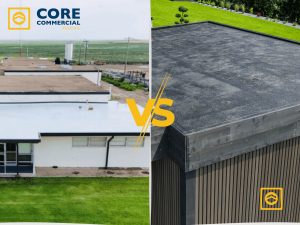
Lower roof surface temperatures: A white or light membrane can sit far below a black modified bitumen roof, which can climb past 150°F in full West Texas sun.
-
Reduced heat transfer: A cooler surface means less heat driving down through your insulation and into the building.
What the Savings Actually Look Like
Cool roofs typically trim peak cooling demand by 10 to 15%, and in hot, sunny climates like West Texas, total cooling energy savings of around 20% are realistic for buildings with modest roof insulation. The numbers scale with roof size: the bigger the footprint and the longer your cooling season, the more a reflective surface returns each summer. For a portfolio carrying a large combined electric bill, even a 15% cooling reduction compounds into meaningful annual savings.
Benefit 2: Fewer Repairs and Lower Maintenance
A cool roof ages slower because it runs cooler, and a roof that runs cooler simply breaks down less. That means fewer emergency calls and longer gaps between commercial roof repairs.
Why Heat Ages Your Roof
Dark roofs absorb solar energy and swing through wide daily temperature changes, expanding under the afternoon sun and contracting overnight. Over time that thermal cycling leads to:
-
Material fatigue: Cracks in membranes and shingles.
-
Seal failures: Breakdown around fasteners, vents, and skylight edges.
-
Ponding water issues: Warped surfaces that trap rainwater.
Crews then scramble to patch leaks, re-seal seams, and replace damaged sections, often during the busiest, hottest part of the year.
Cool Roofing and Maintenance Savings
By holding the surface cooler, a cool roof reduces the stress that creates those failures:
-
Reduced thermal stress: Fewer expansion and contraction cycles, so materials stay intact longer.
-
Longer-lasting coatings: Reflective commercial roof coatings can stretch recoating intervals out by years.
-
Lower labor costs: Fewer emergency calls and fewer overnight work orders.
The Maintenance Payoff
A reflective surface shifts your roof spend from reactive to routine. Instead of repeated summer leak repairs, the bulk of a cool roof’s upkeep is scheduled inspection, gutter clearing, and the occasional reseal. Over a 20-year lifespan, cutting two emergency repairs a year down to planned maintenance adds up to real money and far less downtime for the people working under that roof.
Benefit 3: Roofs That Last Decades Longer
Cool roofs last longer because reflectance shields the roof from the two things that kill it fastest: UV and heat. Less heat means less oxidation and less brittleness, which is why a planned commercial re-roof with a reflective system buys you more years before the next replacement.
The True Cost of Replacement
Replacing a commercial roof is not a cost any facility manager wants to repeat each decade. On a large footprint, a full tear-off and replacement runs well into six figures, so every additional year of service life you can squeeze out of the existing system is money kept in the building’s budget.
Cool Roof Longevity
Reflective coatings and high-albedo membranes protect the substrate from:
-
UV radiation: Slows material breakdown and brittleness.
-
Heat-induced oxidation: Keeps waterproofing layers from hardening and cracking.
Manufacturers often back cool roofing systems with longer warranties than dark built-up roofing, which reflects how much slower these systems degrade in the sun.
Lifecycle Cost Comparison
The figures below are illustrative industry ranges, not a quote, but they show why annualized cost matters more than sticker price:
| Roof Type | Initial Cost (per ft²) | Warranty Length | Expected Lifespan | Annualized Cost (30 yrs) |
|---|---|---|---|---|
| Dark Built-Up Roofing | $4.50 | 10 years | 12 to 15 years | $0.30 to $0.38 |
| Cool Single-Ply Membrane | $5.50 | 25 years | 25 to 30 years | $0.18 to $0.22 |
| Reflective Metal Roofing | $6.50 | 20 years | 20 to 25 years | $0.26 to $0.32 |
Annualized cost = initial cost divided by expected lifespan
Across three decades, the cool single-ply membrane carries the lowest cost per year, before you even add the energy and maintenance savings from the sections above.
Benefit 4: Happier Tenants with Steadier Temperatures
A cool roof keeps the top of your building from becoming a heat source, so the rooms right under the roof stay closer to the rest of the floor. Steadier ceiling temperatures mean fewer hot-spot complaints and a more comfortable space overall.
Comfort Starts at the Top
The hottest part of any building tends to hug the ceiling. When a dark roof surface bakes in the afternoon, that heat radiates downward and creates hot pockets in top-floor offices, hallways, and conference rooms.
Cool Roof Impact on Indoor Climate
-
Even ceiling temperatures: Ceilings stay cooler, which evens out indoor air temperature.
-
Fewer hot-spot complaints: Facilities teams field fewer “it’s too hot up here” service calls after a cool roof goes on.
-
Steadier humidity: More consistent AC runtimes help hold indoor humidity in a comfortable range.
Comfort Supports the Bottom Line
Comfortable people work better and stay longer. In offices, steadier temperatures cut the friction of constant thermostat battles. In retail and hospitality, customers linger when they are not distracted by sticky heat, and that shows up in how long they stay and what they spend.
Benefit 5: A Cooler Footprint Starts on Your Roof
A cool roof shrinks your building’s environmental footprint two ways at once: it cuts the cooling electricity you draw from the grid, and it sends less heat back into the air around you. For owners with sustainability targets, that is a measurable win.
Easing the Urban Heat Island
Dense clusters of dark pavement and rooftops trap heat and keep developed areas warmer, especially overnight. Reflective roofs push some of that solar energy back to the sky instead of holding it. Spread across an industrial park or a downtown block, that effect nudges local temperatures down and eases heat stress on the surrounding area.
Cutting Carbon Emissions
Every kilowatt-hour you do not spend on cooling is generation the grid does not have to produce. On a Texas grid fed by natural gas, wind, and solar, a sustained cut in cooling load trims real emissions from each building over a full cooling season.
Supporting Corporate Sustainability
Cool roofing helps companies move toward Environmental, Social, and Governance goals by:
-
Reducing purchased-electricity emissions: Lower cooling draw means lower Scope 2 emissions.
-
Earning green building credits: Many LEED and local green-building programs award points for high-reflectance roofs.
-
Showing community leadership: A documented cool roof project is concrete proof of an environmental commitment.
Benefit 6: Grab Rebates, Incentives, and Tax Perks
Cool roofs can qualify for utility incentives and a federal tax deduction, which shortens the payback period on the install. The biggest of these is the federal Section 179D deduction, but local utility programs are worth checking too.
Utility Incentives in West Texas
Utilities that serve West Texas, including Xcel Energy’s Southwestern Public Service, periodically run commercial energy-efficiency incentive programs that can apply to reflective roof upgrades. Program terms and dollar amounts change year to year, so the move is to confirm the current offer with your provider before you scope the job, and to keep your product reflectance documentation for the application.
The Federal 179D Deduction
The Section 179D tax deduction lets commercial building owners deduct the cost of qualifying energy-efficient property, including building-envelope upgrades, in the year it is placed in service. One timing note matters right now: under the One Big Beautiful Bill Act, 179D does not apply to property whose construction begins after June 30, 2026, so any project counting on this deduction needs to start before that cutoff. Confirm eligibility and current per-square-foot amounts with your tax advisor.
State and Local Programs
Beyond utility and federal incentives, some city and county programs in Texas support commercial energy efficiency from time to time. These come and go, so it is worth a quick check with your municipality before installation rather than after.
Benefit 7: Cooler Campuses, Not Just Cooler Buildings
One cool roof helps one building. Reflective roofs across a campus, a business park, or a cluster of public buildings help the whole area, which is why municipalities and school districts are good candidates for coordinated upgrades.
Why Community-Scale Cooling Matters
When many roofs in one area go reflective instead of dark, the benefit compounds:
-
Lower local temperatures: Sidewalks, parking lots, and outdoor areas feel cooler.
-
Cooler stormwater runoff: Cooler surfaces send cooler runoff into storm drains and waterways.
Public Buildings Are Prime Candidates
Schools, community centers, and libraries sit empty through the hottest summer months yet still cost money to keep cool when in use. Reflective roofs on these buildings cut that cooling load and make adjacent outdoor spaces more usable, which is exactly the kind of work public works commercial roofing is built around.
Benefit 8: Boosted Property Value, Sell or Lease Faster
A cool roof improves the operating numbers buyers and lenders actually look at. Lower utility and maintenance costs lift net operating income, and a higher NOI lifts both appraised value and what tenants will pay.
Energy Efficiency Sells
Commercial investors value property on net operating income, so anything that permanently lowers utility and maintenance spend flows straight into the building’s worth.
-
Higher rents: Tenants pay a premium for space with predictable, lower energy bills.
-
Longer leases: Comfortable occupants with stable operating costs renew more often.
Green Certifications Add Premiums
Green-certified buildings tend to command stronger rents and resale values than comparable non-certified properties, and cool roofing often helps secure points toward those certifications.
Financing Benefits
Some lenders offer better terms for green-certified buildings or properties with documented operating-cost reductions. Backed by energy-savings data, a cool roof can support stronger projected cash flows, which is what lenders price their terms against.
Bonus Tips: Choosing and Caring for Your Cool Roof
-
Check the Solar Reflectance Index (SRI): Aim for an SRI of 75 or higher for the strongest cooling performance.
-
Match the material to the building: Single-ply membranes, reflective metal panels, and elastomeric coatings each carry different cost and durability profiles.
-
Hire accredited contractors: Look for crews familiar with Cool Roof Rating Council (CRRC) rated products and proper West Texas installation practices.
-
Schedule regular inspections: Even a cool roof needs gutters cleared, drainage checked, and seams resealed. A scheduled comprehensive roof report keeps small issues from becoming summer emergencies.
-
Combine with insulation upgrades: Adding or replacing roof insulation amplifies both the energy savings and the comfort gains.
Conclusion: Next Steps for West Texas Building Owners
Cool roofing turns the West Texas sun from a roofing enemy into an ally. By reflecting more sunlight and releasing heat instead of storing it, the right system cuts energy bills, lowers maintenance, extends roof life, steadies tenant comfort, and lifts property value, all while easing the heat load on the surrounding area.
Ready to move?
-
Get a free site assessment from a West Texas commercial roofing team that knows Lubbock, Midland, Odessa, and Amarillo conditions.
-
Compare membranes, coatings, and metal systems by reflectance, emittance, warranty, and cost.
-
Check current utility incentives and confirm your Section 179D timing before the construction-start cutoff.
-
Schedule installation in spring or early fall to stay ahead of peak summer heat.
Temperatures keep climbing each season. Putting a reflective roof on now means your building, your tenants, and your bottom line stay cooler for decades.
FAQ
How much does cool roof installation cost in West Texas?
Cool roofing cost depends on roof size, material, and complexity, so the realistic move is a site assessment rather than a flat number. Reflective coatings are usually the most affordable route on a sound existing roof, while single-ply membranes and reflective metal cost more upfront but carry longer service life.
Do West Texas utilities offer cool roof rebates?
Some do, on and off. Providers serving West Texas, including Xcel Energy’s Southwestern Public Service, periodically run commercial energy-efficiency incentives that can apply to reflective roofs. Confirm the current program and keep your product reflectance documentation for the application.
How much energy can a cool roof save in West Texas?
Cool roofs commonly cut peak cooling demand by 10 to 15%, and in a hot, sunny climate, total cooling energy savings of around 20% are realistic for buildings with modest roof insulation.
How long do cool roofs last in Texas?
With proper maintenance, quality cool roof systems regularly last 20 to 30 years, and reflective surfaces tend to outlast dark roofing because they run cooler and resist UV and heat-driven breakdown.
What maintenance does a cool roof need?
Plan on routine cleaning to remove debris, periodic inspections for cracks or blisters, reapplying reflective coatings as they wear, and keeping gutters and drains clear so water does not pond.
What are the best cool roof materials for Texas businesses?
Single-ply membranes, reflective metal roofing, and elastomeric reflective coatings are the common choices, selected for high reflectance and durability in intense sun.
Can an existing roof be retrofitted into a cool roof?
Yes. Many existing commercial roofs can be upgraded by applying a reflective coating or membrane, which is often a cost-effective alternative to a full replacement when the underlying roof is still sound.
Is the Section 179D tax deduction still available?
Section 179D still applies, but with a deadline. Under the One Big Beautiful Bill Act, it does not apply to property whose construction begins after June 30, 2026, so any project counting on it needs to begin before that cutoff. Confirm specifics with your tax advisor.