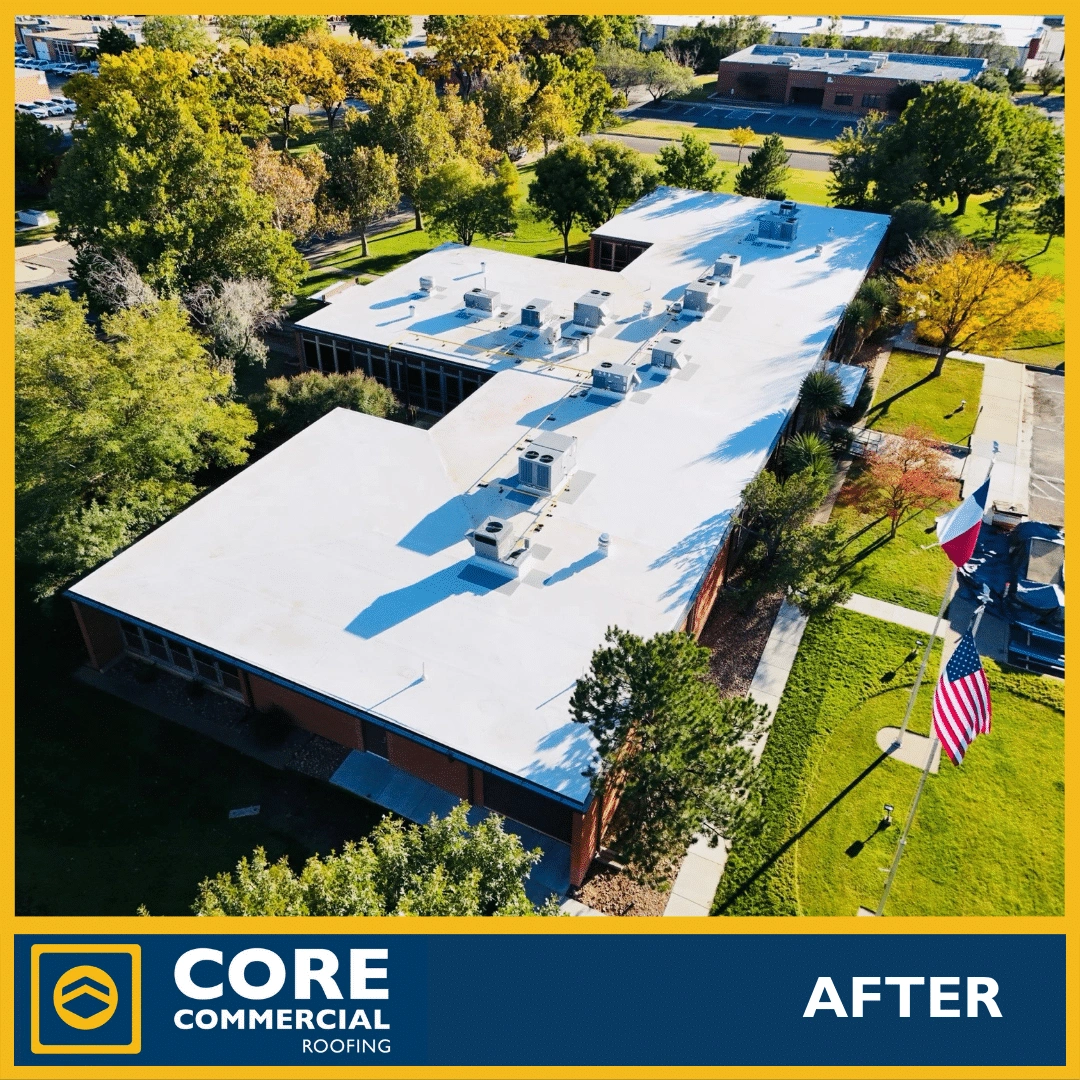
Texas weather throws everything at a flat roof: blistering heat, heavy rain, and sudden hail. That sounds like a recipe for early failure, but here’s the truth most building owners miss. Roofs rarely fail from weather alone. They fail from neglect. The good news? You can get ahead of that with simple, proactive care. Of all the strategies on this list, our favorite is routine roof inspections, because they catch problems early, save on repairs, and add years to your roof without a major investment. Below are ten practical, affordable ways to protect your building for the long haul. If you want fewer leaks, lower costs, and a roof that lasts, these steps will change how you maintain the property.
Table of Contents
1. Keep Your Roof Clean and Free of Debris
The cheapest way to add years to a flat roof is to keep it clean. Dust, leaves, trash, and standing water don’t just look bad, they trap moisture and break the surface down faster than the sun does.
It’s also one of the most overlooked steps. In windy West Texas, a single storm can dump debris across an entire flat roof. When that buildup sits, it clogs drains, causes ponding, and opens the door to leaks. Make it a habit to clear the roof every few months. You don’t need fancy tools, just a broom, a hose, or a maintenance crew with a checklist. A clean roof drains better and lasts longer.
Benefit to you: Prevents water damage, avoids costly leaks, and stops mold before it starts, all for a small time investment.

2. Schedule Routine Roof Inspections (Spring & Fall)
Have your roof inspected at least twice a year, once in spring after winter and once in fall before the cold sets in, plus a quick check after any major storm. Most failures start as small problems a trained eye spots months before they ever leak.
Think of it like a yearly check-up at the doctor. You don’t wait for chest pain to start eating right. Your roof works the same way. In storm-prone areas like Lubbock and the surrounding plains, those spring and fall checks catch hail bruising and flashing damage before they turn into ceiling stains.
A good inspection flags:
- Loose or cracked seams
- Damaged flashing
- Soft spots or blisters
- Drainage problems
- Early signs of membrane wear
Don’t wait until a leak ruins your ceiling tiles or shuts down operations. Catching these early saves thousands over the life of the roof, and a simple inspection checklist keeps every visit consistent.
Benefit to you: Early detection means lower repair costs, a longer roof lifespan, and peace of mind.
3. Fix Minor Problems Before They Grow
Patch small roof problems the week you find them, not next quarter. A cracked seam or popped fastener looks harmless today, but when the next thunderstorm hits, that weak spot can turn into a major leak in minutes.
In this climate, little issues don’t stay little. UV and moisture break materials down fast, and even minor damage lets water under the membrane, leading to rot, mold, and ruined insulation. Build fast fixes into your maintenance routine. Waiting always costs more than acting early.
Benefit to you: Avoid emergency repairs, protect the building interior, and stop leaks before they cause structural damage.
4. Install Proper Drainage to Prevent Ponding Water
Get water off the roof fast, because standing water is one of the quickest ways to destroy a flat roof. The industry defines ponding water as any accumulation that lingers 48 hours after rain, and the longer it sits, the more it ages the membrane, adds dead weight to the deck, and feeds algae growth.
If you’ve ever walked the roof after a storm and found puddles that hang around for days, you have a problem. Where heavy rain falls in short, hard bursts, poor drainage is a leading cause of roof failure.
Make sure your roof has:
- Clear scuppers and downspouts
- Sloped areas to guide water
- Working internal drains (where applicable)
If your roof holds water regularly, talk to a roofing pro about re-sloping or adding tapered insulation.
Benefit to you: Prevents premature aging, lowers the risk of structural stress, and keeps your warranty intact.
5. Trim Overhanging Trees Around Your Roof
Keep tree limbs cut well back from the roofline. Branches scratch and puncture the surface, drop leaves that clog drains, and throw shade that keeps the roof damp and friendly to mold.
Older commercial areas often have mature trees right up against the building, and those oak limbs become a real liability. During storms, they snap and tear through even strong roof systems. Trimming them back protects the surface, improves airflow, and lets the roof dry out and stay clean.
Benefit to you: Reduces physical damage, helps materials dry faster, and keeps pests like squirrels and raccoons away.
6. Make Sure HVAC Units Are Properly Sealed
The leak you can’t find is usually around a rooftop HVAC unit. Cracked curbs, rusted pans, and failing sealant at those penetrations are among the top causes of water getting into a commercial roof system.
In hot, humid stretches, these leaks often get blamed on condensation, when the real culprit is a gap or crack in the roof around the equipment. Have your HVAC tech and your roofer coordinate. Any time a unit is serviced or swapped, the seal around it should be rechecked and resealed if needed.
Benefit to you: Stops sneaky leaks that usually go unnoticed until major water damage shows up inside.
7. Use Reflective Coatings to Beat the Texas Heat
A reflective coating is one of the smartest dollars you can spend on a roof here. According to ENERGY STAR, a roof that reflects about 80% of sunlight stays roughly 50°F cooler than a dark roof reflecting only 20%, and the program notes these coatings pay off most in hot, sunny Southern climates, exactly like ours.
Summers here are brutal, with surface temperatures climbing day after day and wearing materials down. A bright, reflective coating bounces that heat instead of soaking it up.
That lower temperature:
- Slows membrane wear
- Reduces thermal expansion and contraction
- Cuts cooling costs
There are several coating types, including silicone and acrylic. A professional roofer can match the right coating to your system.
Benefit to you: Extends roof life, lowers energy bills, and keeps the building cooler without a full roof replacement.
8. Stay Ahead of Hail Damage with Fast Assessments
After any real hailstorm, get the roof looked at within days, not months. Hail damage loves to hide. A bruised membrane or weakened seam may not leak now, but it shortens the roof’s life and gets harder to claim on insurance the longer you wait.
If you sit on it too long, the damage spreads, and your carrier may deny the claim. A good roofer documents the damage, helps you file if needed, and seals things up before water works its way in.
Benefit to you: Protects the roof and your finances by catching hidden damage early and documenting it properly for insurance.
9. Keep Detailed Roof Maintenance Records
Keep a paper trail for every inspection, repair, cleaning, and recoat. Dated notes and before-and-after photos protect your warranty, speed up insurance claims, and tell the next contractor exactly what your roof has been through.
Documentation sounds boring, but it quietly extends your roof’s life.
It helps in three big ways:
- Proves you kept up with maintenance (required by many warranties).
- Gives contractors the roof’s history for better service.
- Provides evidence during insurance claims or a building sale.
A spreadsheet, a folder, or cloud storage all work. Just keep it organized.
Benefit to you: Protects your warranty, speeds up claims, and keeps maintenance efficient and accurate.
10. Hire a Trusted Local Commercial Roofing Expert
Not every roofing company understands what buildings in this region go through. From relentless UV to fast-moving hailstorms, local conditions matter, and a contractor who works here every day knows that.
A strong local roofer brings experience with:
- Regional weather patterns
- Local building codes
- Insurance claim requirements
- The materials that actually hold up here
More importantly, they’ll be there when you need them, not flying in after a storm chasing claims. When you partner with a reliable local commercial roofing contractor, you get more than repairs. You get long-term protection for your investment.
Benefit to you: Saves money over time, reduces emergency risk, and means you always have help when the weather turns.
Final Thoughts: Protect Your Roof, Protect Your Business
Your commercial roof guards far more than the building. It protects your equipment, your staff, your tenants, and your revenue. Replacement is one of the most expensive capital costs a property owner ever faces, and most premature failures are avoidable.
Stay proactive with inspections, drainage, sealing, and cleaning, and you stay in control of the roof’s health. Add reflective coatings and solid records on top of that, and you save money and stress while squeezing years more out of the system.
Take these ten steps seriously. They aren’t gimmicks. They’re the foundation of smarter property management, and your business will thank you for it.
Frequently Asked Questions (FAQ)
How often should I inspect my commercial roof in Texas?
You should inspect your commercial roof at least twice a year: once in the spring (after winter weather) and again in the fall (before the cooler, wetter season arrives). You also need an immediate check after any major weather event, like a bad hailstorm or high winds, because damage isn’t always obvious from the ground. Catching a small tear in the membrane or loose flashing early on can prevent a $10,000 leak later. Core Commercial Roofing & Coatings can set up a custom, routine inspection schedule so you never miss a check-up, catching issues like subtle blistering or early signs of seam failure before they become expensive disasters.
What are the best commercial roof maintenance tips for Texas properties?
The best tips focus on two main enemies: water and heat. First, keep the roof surface clean of leaves, dust, and debris so water can drain properly and not breed mold. Second, fix any minor issues (like small cracks or lifted seams) right away don’t wait! Third, use a reflective coating to fight the intense Texas sun. Core Commercial Roofing & Coatings recommends and applies high-quality silicone reflective coatings that can lower your roof temperature by up to $60^\circ$F, dramatically slowing the aging process of the underlying membrane and saving you money on air conditioning bills.
How can I prepare my commercial roof for severe Texas weather?
Focus heavily on drainage and sealing. Before severe rain or hail seasons, make sure all gutters, scuppers, and internal drains are completely clear to handle heavy water flow without backing up. Check all seals around rooftop equipment (like HVAC units, vents, and pipes) to ensure the flashing and sealants are not cracked or peeling. Even a small 1-inch gap can allow gallons of water inside. If a major storm is expected, secure or remove any loose items on the roof that could become projectiles and cause tears in the surface.
What roofing materials work best for commercial properties in Texas?
For Texas’s intense UV rays, heat, and sudden storms, you need materials that are strong, flexible, and highly reflective. TPO (Thermoplastic Polyolefin) is popular because it’s naturally light-colored and welded at the seams, but it can age and become brittle over time. Silicone restoration systems are often the smartest investment. They fully restore an existing, failing roof system, offer superior waterproofing, and provide the best UV protection available. You can rely on Core Commercial Roofing & Coatings to help you choose the ideal, durable material or coating that specifically meets your building’s location and budget.
Why is keeping gutters clean important for my Texas commercial roof?
Clean gutters and drains are critical because standing water (or ponding water) is the fastest way to destroy your roof. Water that sits for more than 48 hours breaks down roofing membranes, especially where the water pools. Clogged drains prevent rain from escaping. This extra weight also puts stress on the building structure. Making sure your roof drains and perimeter gutters are constantly clear is a cheap and simple maintenance task that prevents much more expensive structural and leak damage.
How do protective roof coatings benefit a commercial roof in Texas?
Protective coatings, especially white or bright colors like silicone, are an extremely smart investment in Texas. They work by reflecting up to 90% of the sun’s harsh UV rays and heat, rather than absorbing it like a dark roof does. This reflection keeps the actual roof membrane beneath the coating much cooler, which prevents it from constantly expanding and contracting. This thermal movement is a major cause of roof failure. By reducing this stress, the coating extends the roof’s life and significantly cuts your cooling costs.
Can improving ventilation and insulation extend the lifespan of my commercial roof in Texas?
Yes, absolutely! Ventilation and insulation work together to protect the roof deck. Good insulation helps keep the roof system at a stable, consistent temperature, which reduces the constant thermal shock (rapid heating and cooling) that breaks down materials. Proper ventilation prevents moisture from getting trapped under the roof, which can cause mold, rot in the deck, and lead to blisters or bubbles in the roof membrane. Core Commercial Roofing & Coatings assesses your roof’s entire system, including insulation and ventilation, during an inspection to recommend system improvements that maximize the roof’s durability and lifespan.
What routine cleaning schedule should I follow for my commercial roof?
For basic cleaning, have a maintenance crew clear off large debris like leaves, dirt, and trash every three to four months. It is most important to clear debris from drains and around the HVAC units, as these areas are prone to clogging. Use a soft-bristle broom or a low-pressure hose never use a sharp object to scrape the roof. If you see signs of biological growth like algae or mold, consider a professional, roof-safe chemical wash to prevent the growth from feeding on the roof materials.
How do I manage repairs and warranty claims for my Texas commercial roof?
The most important thing is keeping detailed, organized records of every inspection, repair, and cleaning date, along with photos. A good warranty requires you to follow a specific maintenance schedule. If damage occurs (especially from hail), call your roofer immediately for a full damage assessment and documentation before you call the insurance company. Core Commercial Roofing & Coatings specializes in handling insurance claims and providing the necessary engineering and repair documentation to ensure your claim is processed quickly and fairly, protecting your investment.
Are reflective roofing systems a good choice for Texas commercial buildings?
Yes, reflective roofing systems are one of the most effective and financially sound choices for commercial buildings across all parts of Texas. Beyond energy savings, they directly extend the life of your building’s biggest asset. This is because they drastically reduce the operating temperature of the membrane, which is the main factor in premature aging. Core Commercial Roofing & Coatings offers advanced reflective coating solutions that save you money on energy while fully restoring your roof, which is often a much more affordable, non-disruptive option than a complete tear-off and replacement.