A roof doesn’t fail on a convenient Tuesday afternoon. It leaks during your busiest season, right after a Texas hailstorm, or right when you’re trying to close a lease. And when you finally call a contractor for a quote, the number you get back ($50,000? $120,000?) can feel like it came from nowhere.
The truth is, commercial roof replacement cost per square foot in Texas typically runs between $4 and $23, depending on material, building size, location, and how much damage is hiding under your existing roof. That’s a wide range. This guide is here to make it narrow and to help you understand exactly what you’re paying for so you don’t overpay or get surprised.
Whether you own a retail strip, a warehouse, an office building, or a multi-tenant property anywhere in Texas, you’ll find clear, honest numbers and practical guidance below.
Table of Contents
What Does Commercial Roof Replacement Actually Cost in Texas?
Let’s start with the numbers most people search for. In Texas, commercial roof replacement costs range from $4 to $23 per square foot for the full job: materials, labor, and standard installation included. The national average sits around $5 to $15 per square foot, and Texas generally falls within that range, with regional differences based on city, climate zone, and contractor availability.
For a 10,000 square foot commercial roof (a common size for a small warehouse or retail space) that translates to roughly $40,000 to $230,000 total. Most projects for standard flat or low-slope roofs land between $50,000 and $150,000.
Quick Budget Snapshot
- 10,000 sq ft roof with TPO at $7/sq ft = $70,000.
- Same roof with standing seam metal at $16/sq ft = $160,000.
- Material choice is your single biggest cost lever.
Cost by Material: The Numbers You Need
Here is a full breakdown of the most common commercial roofing materials used in Texas, with 2026 installed cost ranges (materials + labor):
| Roofing Material | Cost / Sq Ft (TX 2026) | Lifespan | TX Climate Rating |
| TPO (Single-Ply Membrane) | $5.75 – $13.80 | 15–30 yrs | ★★★★★ (TX Best) |
| EPDM (Rubber Membrane) | $4.60 – $11.50 | 20–35 yrs | ★★★★☆ |
| PVC (Single-Ply Membrane) | $6.90 – $14.50 | 15–30 yrs | ★★★★☆ |
| Modified Bitumen | $6.90 – $17.25 | 20–30 yrs | ★★★★☆ |
| Built-Up Roofing (BUR) | $5.75 – $13.80 | 20–30 yrs | ★★★☆☆ |
| Metal (Standing Seam) | $11.50 – $23.00 | 40–60 yrs | ★★★★★ |
| Asphalt Shingles | $4.60 – $9.20 | 15–25 yrs | ★★★☆☆ |
Note: These are installed costs, meaning materials and labor are included. Tear-off of the old roof, permit fees, and deck repairs are typically quoted separately.
How Texas Location Changes Your Price
Where your building sits in Texas matters, sometimes by $2 to $5 per square foot. Here’s what you can realistically expect across the state:
| TX Region | Cost / Sq Ft | Key Notes |
| Houston / SE Texas | $4 – $14 | High heat + hurricane risk; TWIA compliance required |
| Dallas / Fort Worth | $5 – $16 | Hail zone; strict building codes in many municipalities |
| San Antonio | $5 – $15 | Similar to DFW; heat-reflective materials recommended |
| Austin | $6 – $17 | Urban labor premium; energy code upgrades common |
| West Texas / Rural | $4 – $12 | Lower labor cost; possible delivery surcharge on materials |
Cities like Houston and Austin carry higher labor costs because demand is high and qualified crews are busy. Coastal areas near the Gulf also require materials rated for high-wind and hurricane conditions, which adds to the base price. Contractors in these areas also navigate Texas Windstorm Insurance Association (TWIA) standards, which can affect both material selection and installation methods.
Rural areas often cost less per square foot for labor but may face material delivery surcharges, especially for specialty products like standing seam metal panels.
The Hidden Costs Most Quotes Don’t Mention
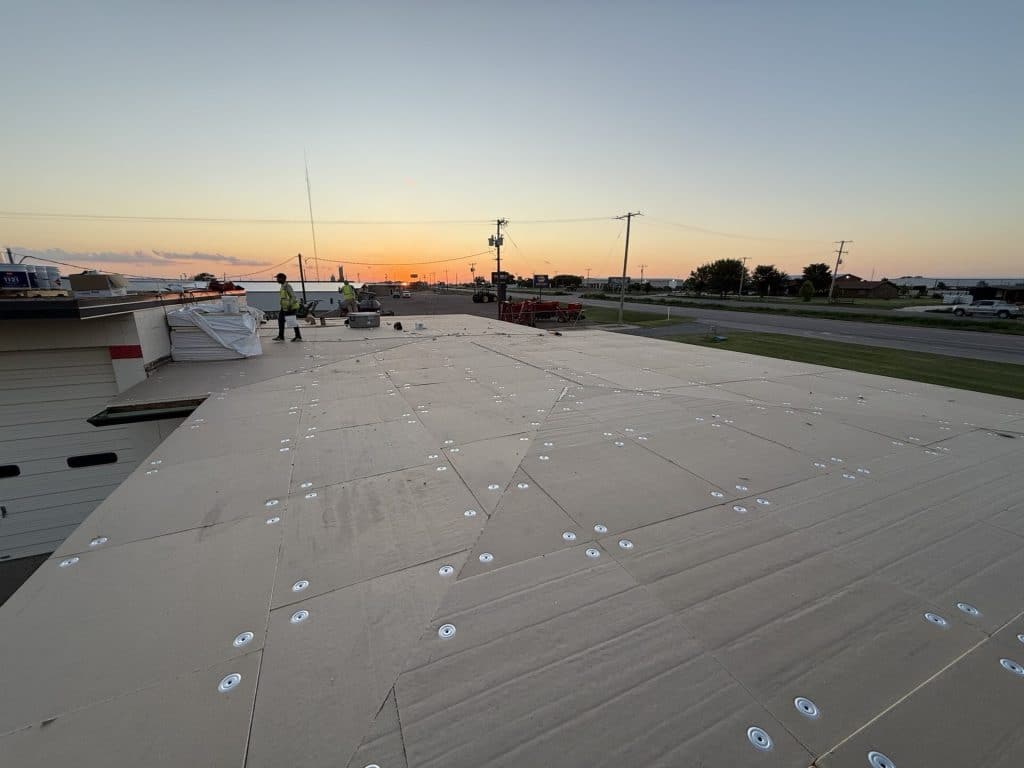
This is where property owners get surprised. A base quote of $7 per square foot sounds manageable until the crew pulls off the old roof and finds three inches of soaked insulation, rotted decking, and a drain that hasn’t worked properly in years. Suddenly you’re looking at an extra $30,000.
These “add-ons” are not contractor tricks; they’re real costs that can’t be known until the old roof comes off. Knowing them in advance means you can budget for them before they become emergencies.
| Hidden Cost Item | Typical Range | What to Watch For |
| Tear-Off & Disposal | $1.00 – $3.00 / sq ft | Add if not in base quote; ask upfront |
| Decking Replacement | $1.50 – $3.00 / sq ft | Only known after tear-off reveals damage |
| Permit Fees | $200 – $2,000+ | Varies by TX city/county; contractor should pull |
| Insulation Upgrade | $1.00 – $3.50 / sq ft | Energy code may require R-value upgrade |
| HVAC Curb Flashing | $200 – $800 each | Every rooftop HVAC unit needs new flashing |
| Roof Drain / Scupper Work | $300 – $1,500 | Flat roofs need working drainage or water pools |
| Asbestos Abatement | $2 – $10 / sq ft | Older buildings built before 1980: test first |
Pro Tip: Always set aside an extra 10–15% of your total quoted cost as a contingency budget for hidden damage. For a $100,000 project, that means keeping $10,000–$15,000 in reserve. Contractors who find no additional damage will simply not charge it but if they do find problems, you’ll be ready.
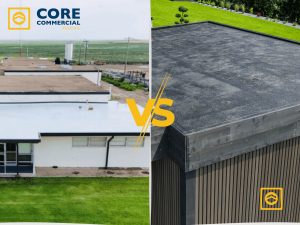
TPO vs. EPDM vs. Metal: Which One Makes Sense in Texas?
Texas is one of the harshest environments a commercial roof can face. Summer surface temperatures regularly exceed 160°F. Hailstorms hit Dallas and the Panhandle hard every spring. Hurricane-season winds test Gulf Coast properties from June through November. The material you choose needs to survive all of it.
TPO: The Texas Workhorse
TPO (Thermoplastic Polyolefin) is the most popular commercial roofing membrane in the U.S., holding roughly 40% of the market according to the National Roofing Contractors Association. In Texas, it’s especially well-suited because its white reflective surface bounces back UV radiation and keeps cooling costs down: a big deal when July electric bills for a large commercial building can run thousands of dollars.
TPO seams are heat-welded, which creates a strong watertight bond. It works well on flat and low-slope roofs, which are the most common commercial roof types in Texas. Cost runs $5.75 to $13.80 per square foot installed, making it one of the best values for most Texas property owners.
One thing to watch: TPO installation quality varies. A poorly welded seam on a TPO roof is a future leak waiting to happen. Always hire a contractor certified by the membrane manufacturer.
EPDM: The Long-Lasting Rubber Option
EPDM (Ethylene Propylene Diene Monomer) has been around for over 60 years and has an excellent durability track record. It’s flexible, which makes it forgiving when buildings shift or expand in heat. Lifespan can reach 35 years with proper maintenance.
The downside in Texas: EPDM’s standard black color absorbs heat rather than reflecting it, which raises cooling costs in warm climates. White-coated EPDM is available and solves this problem, though at extra cost. Seam repairs on EPDM are simpler than TPO: no welding equipment needed: which can lower long-term maintenance costs.
Metal Roofing: The Premium Long-Term Play
Standing seam metal roofing costs the most upfront ($11.50 to $23.00 per square foot) but lasts the longest: 40 to 60 years with minimal maintenance. For a building you plan to own for decades, the math often works out favorably over multiple replacement cycles of a cheaper membrane system.
Metal also performs well in both hail and high-wind events: two of the biggest Texas threats: and carries excellent fire ratings. It’s increasingly popular for industrial and agricultural buildings across Texas.
PVC: Best for Restaurants and Chemical Exposure
PVC roofing is the premium choice when rooftop grease, chemical exposure, or fire resistance is a concern. Restaurants, food processing facilities, hospitals, and manufacturing plants often choose PVC for exactly this reason. It’s the most expensive single-ply option at $6.90 to $14.50 per square foot, but for the right building, it’s the only practical choice.
Repair vs. Replace: How to Know Which One You Actually Need
Not every leaking or aging commercial roof needs full replacement. A smart assessment can save you tens of thousands of dollars: or confirm that a replacement is the right call before a bad decision gets worse.
Here’s a simple way to think about it:
- If your roof is under 15 years old and damage is localized, repair is almost always the smarter financial move. Patching TPO seams or applying a silicone coating can extend roof life by 10 to 20 years at a fraction of replacement cost.
- If your roof is over 20 years old, has widespread membrane failure, or has multiple layers already installed (which adds structural load), replacement is usually the better investment.
- If you’ve had repeated leaks in different areas over the past few years, you’re likely spending repair money on borrowed time. A full replacement stops the cycle.
- A roof coating system (silicone or elastomeric applied over an existing membrane) costs $3 to $9 per square foot: 20 to 70% less than replacement: and can add 10 to 15 years to a roof that’s otherwise in decent structural shape.
Money-Saving Option
Infrared thermography and core sampling can identify wet insulation and hidden damage before you commit to a full replacement. Ask any reputable Texas commercial roofing contractor for a detailed inspection report before signing a replacement contract. Some offer drone inspections that cover the full roof in an hour.
What Texas Building Code Says About Commercial Roofs
Texas municipalities each adopt and amend the International Building Code (IBC) independently, so requirements vary by city and county. There is no single statewide commercial roofing license requirement: contractor qualification is enforced at the local level, which is one reason why the Texas roofing market has a wide range of quality.
What this means for you as a property owner:
- Your contractor must pull permits in most Texas cities for a full commercial roof replacement. Unpermitted work can cause problems with insurance claims, building resale, and occupancy compliance.
- Energy codes under Texas’s adopted version of the IECC (International Energy Conservation Code) may require insulation R-value upgrades during replacement, particularly in Climate Zone 3 (Houston, San Antonio, Austin) and Zone 2 (Brownsville, Corpus Christi).
- In hurricane-prone coastal areas, the Texas Windstorm Insurance Association (TWIA) has specific wind uplift and installation standards. Using FM Global-rated roofing systems in these areas can qualify your property for insurance discounts of 5 to 20%.
- Harris County (Houston), Dallas County, and Bexar County (San Antonio) each have active building departments with inspection requirements. Always confirm permit and inspection requirements before work begins.
How to Get an Accurate Quote: and Avoid Overpaying
The biggest pricing mistakes happen when property owners compare quotes that aren’t comparing the same thing. One contractor includes tear-off, another doesn’t. One specifies a 60-mil TPO membrane, another quotes 45-mil. These differences can represent $20,000 or more on a mid-size building.
Here’s how to get quotes you can actually compare:
- Get at least three bids from licensed, insured Texas roofing contractors. Look for NRCA membership or manufacturer certification as a baseline quality signal.
- Ask for fully itemized quotes. Every proposal should break down: materials (type, thickness, and brand), labor, tear-off and disposal, permits, insulation, and any allowances for potential deck damage.
- Ask specifically: ‘Does this quote include tear-off and disposal?’ Many base quotes exclude this, making the price look lower than it is.
- Ask: ‘What happens if you find decking damage?’ Get a per-sheet price for plywood or OSB replacement before you sign, not after the roof is open.
- Confirm the warranty. Manufacturer warranties on commercial membranes typically run 15 to 30 years. Labor warranties from the contractor usually run 5 to 10 years. Get both in writing.
- Verify licensing and insurance. Texas has no statewide roofing contractor license, but your city may have local requirements. At minimum, confirm general liability and workers’ compensation coverage.
Red Flag to Watch
A contractor who offers to ‘eat your deductible’ or skip the permit process is putting you at legal and financial risk. Both actions are considered fraud in Texas. Walk away from any contractor who suggests either.

Does Insurance Cover Commercial Roof Replacement in Texas?
Texas commercial property insurance policies typically cover sudden storm damage: hail, wind, and tornado damage are the most common claims filed across the state. What insurance generally does not cover is wear and tear, aging, or maintenance neglect.
After major hail events (like the 2023 Dallas hail outbreaks or 2024’s Hurricane Beryl in SE Texas), insurance claims for commercial roofs surge. Here’s what you need to know:
- Document damage immediately after a storm. Photos, dates, and written contractor inspections are your evidence for an insurance adjuster.
- If a contractor finds additional damage during tear-off (like wet insulation or damaged decking caused by the original storm), they can file a supplement claim with your insurer to cover those costs. This is normal and legitimate.
- Your policy’s deductible: often 1 to 2% of the insured building value on Texas commercial policies: is your financial responsibility. No legitimate contractor can legally waive it.
- After a major storm, get your inspection done promptly. Waiting too long can weaken your claim, as insurers may argue that subsequent damage was caused by delayed maintenance rather than the storm.
- In coastal Texas, TWIA is the insurer of last resort for wind and hail. TWIA has specific documentation and installation requirements that affect what replacements qualify for coverage.
Frequently Asked Questions:
How long does a commercial roof replacement take in Texas?
Most commercial roof replacements take between 3 days and 6 weeks depending on roof size, material, and whether the building stays occupied during work. A 5,000 sq ft TPO re-roof on an unoccupied building can be done in 3 to 5 days. A 50,000 sq ft phased project on an occupied retail center may take several weeks. Your contractor should give you a realistic schedule before work begins.
Can a commercial flat roof be repaired instead of replaced?
Yes, in many cases. If your flat roof is structurally sound and damage is limited to seams, flashing, or localized membrane failure, targeted repairs or a roof coating system can add years of life at a fraction of replacement cost. A professional infrared inspection can determine how much of your roof has wet insulation or hidden damage, helping you make an informed repair-vs-replace decision.
What is the best commercial roofing material for Texas heat?
For most Texas commercial buildings, TPO is the top recommendation because its white reflective surface significantly reduces cooling costs in the Texas heat. It also meets energy code requirements for solar reflectance in all major Texas climate zones. Metal roofing with a reflective Kynar finish is another excellent choice for buildings where longevity and low maintenance are the priority.
How much does it cost to replace a 10,000 sq ft commercial roof in Texas?
For a 10,000 sq ft commercial flat roof in Texas, expect to pay roughly $57,500 to $138,000 for most membrane systems (TPO, EPDM, or modified bitumen), installed. Metal roofing on the same footprint can run $115,000 to $230,000. These ranges include materials and labor but not tear-off or potential deck repairs, which should be quoted separately.
Does Texas require a permit for commercial roof replacement?
Most Texas cities with active building departments require permits for commercial roof replacement, especially when changing materials or making structural alterations. Contractors are typically responsible for pulling the permit. Unpermitted commercial roofing work can affect insurance coverage, property resale, and occupancy compliance. Always confirm requirements with your local building department or ask your contractor to handle it.
How do I know if my commercial roof needs full replacement or just repairs?
The key indicators that point toward replacement rather than repair include: the roof is over 20 years old, you’ve had recurring leaks in multiple locations, a core sample reveals saturated insulation across more than 25% of the roof area, or the existing membrane has widespread cracking, blistering, or shrinkage. A reputable contractor will offer an infrared inspection or core sampling report before recommending replacement. Be cautious of contractors who recommend replacement based on a quick visual walk-through alone.
Conclusion: What You Should Take Away
Commercial roof replacement in Texas is a significant investment: and it should be. A well-installed roof protects everything inside your building: inventory, equipment, tenants, and your long-term property value.
The per-square-foot cost range in Texas ($4 to $23) is wide because the variables are real. Material quality, building size, city location, hidden deck damage, and energy code requirements all move the number. The goal of this guide is to make sure none of those variables surprise you when you’re already mid-project.
Here’s what smart Texas property owners do before they sign a roofing contract:
- Get a professional inspection: not just a visual, but an infrared scan or core sample if the roof is older than 15 years.
- Collect at least three fully itemized quotes that include tear-off, disposal, permits, and a per-sheet rate for potential deck repairs.
- Choose a material matched to your climate zone and building use: not just the cheapest option.
- Verify insurance and licensing, confirm the warranty in writing, and make sure permits are part of the scope.
- Budget 10 to 15% above the base quote for contingency. The best outcome is not needing it.
A commercial roof done right the first time doesn’t need to be replaced for 20 to 40 years. Done poorly to save money upfront, it can cost you far more in repairs, claims, and business disruption before you ever get there.
Take the time to do it right. Your building is counting on it.
All cost ranges reflect 2026 Texas market conditions. Prices may vary based on local labor rates, material availability, building-specific conditions, and contractor qualifications. Always obtain multiple itemized quotes from licensed, insured contractors before making any roofing decision.