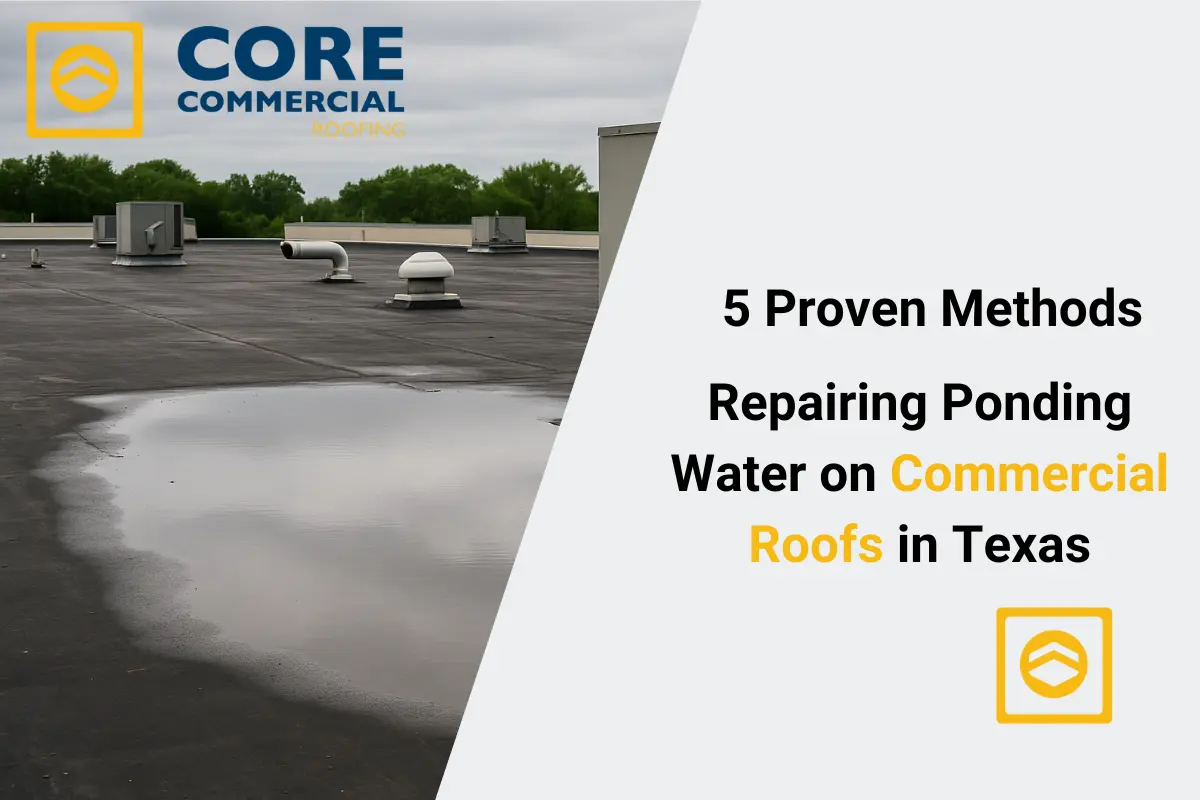
Ponding water on a commercial roof in Texas isn’t just a cosmetic problem—it’s a silent threat that can lead to leaks, roof damage, mold growth, and even building structural issues. In a state known for extreme weather swings from blazing sun to violent storms, standing water can quickly shorten the lifespan of your roof if not addressed. This article outlines five proven and practical methods for Repairing Ponding Water problems on commercial flat or low-slope roofs in Texas. Each method is explained clearly, with easy-to-understand steps, pros and cons, and a strong focus on long-term results and roof health.
Table of Contents
What Is Ponding Water and Why It’s a Big Deal in Texas
Before diving into solutions, it’s important to understand what ponding water is. Ponding water occurs when water sits on a roof surface for more than 48 hours after rainfall. While this might not seem urgent, in Texas, where summer heat and seasonal downpours are common, standing water can stress roofing materials, lead to UV damage, and cause cracks or blisters.
Left untreated, ponding water leads to:
- Leaks and water stains on the ceilings
- Growth of mold and mildew
- Roof deck deterioration
- Shortened roof lifespan
- Higher maintenance and energy costs
Because many commercial buildings in Texas have flat or low-slope roofs, ponding is a frequent issue. But it’s fixable—with the right approach.
1. Improve Roof Drainage with Additional Drains or Scuppers
Why it works:
Poor drainage is the top reason for ponding. Adding new roof drains, scuppers (wall openings that let water flow off the edge), or upgrading existing ones allows water to exit the roof faster.
How it helps Texas businesses:
Texas roofs can accumulate several inches of rain quickly during heavy storms or hail. Better drainage ensures water doesn’t sit and soak into roofing layers. This prevents future leaks and reduces stress on the building structure.
What’s involved:
- A roofing expert assesses the roof’s slope and drainage pattern
- New drains or scuppers are installed in low spots
- Downspouts are cleaned or redirected to handle more flow
Pros:
- Long-term solution
- Works for most roof types
- Low visual impact
Cons:
- Requires professional installation
- May involve cutting into the existing roof membrane
2. Use Tapered Insulation to Create Proper Roof Slope
Why it works:
Flat roofs are never truly flat—they need a slight slope to guide water to drains. If your roof sags or wasn’t designed with enough slope, tapered insulation can be installed to create the right pitch.
How it helps Texas buildings:
Tapered insulation is a great fix during a re-roof or retrofit. In Texas, sun exposure can cause roof materials to warp over time, creating low spots. Tapered systems restore proper water flow and improve energy efficiency.
What’s involved:
- Roofing team maps out water ponding zones
- Sloped rigid insulation boards are installed
- The roof membrane is reapplied over the new slope
Pros:
- Great for fixing multiple ponding areas
- Improves roof insulation
- Works with many roofing materials
Cons:
- Higher cost
- Best applied during roof replacement or major repair
3. Apply a Roof Coating Designed to Handle Ponding Water
Why it works:
Some roof coatings are engineered to resist standing water and extreme UV exposure. In Texas, where summer temperatures bake roof surfaces, coatings help reflect heat and form a water-resistant barrier.
How it helps your roof:
Reflective silicone or polyurethane coatings can be applied over your current roof to seal small ponding areas. These coatings are flexible and resist cracking, ideal for commercial roofs that expand and contract with heat.
What’s involved:
- Cleaning the entire roof surface
- Repairing any damage beforehand
- Applying the coating in multiple layers for maximum durability
Pros:
- Can extend roof life by 10–15 years
- Reduces energy bills by reflecting sunlight
- Cost-effective vs. full replacement
Cons:
- Not a structural fix (won’t correct slope issues)
- Requires reapplication after a decade or so
4. Install a Cricket System to Redirect Water Away from Problem Areas
Why it works:
Crickets are small, triangle-shaped structures added to a roof to push water around obstacles like HVAC units, skylights, or drains. They help reroute ponding water toward drainage points.
Texas-specific use case:
Many commercial roofs in Texas have AC units installed on the surface. These units create low spots around their base, trapping water. Crickets guide water away from these zones to prevent damage.
What’s involved:
- Locating problem areas with standing water
- Installing foam or wood crickets under the roofing membrane
- Sealing and integrating them into the roof system
Pros:
- Targets specific ponding spots
- Cost-effective and quick to install
- Works with most roofing types
Cons:
- Not ideal for widespread ponding
- Must be customized for each roof layout
5. Rebuild or Reinforce Roof Areas with Structural Issues
Why it works:
Sometimes, ponding water points to bigger structural problems, like deck warping or poor construction. In these cases, surface fixes aren’t enough. Reinforcing or rebuilding the roof area becomes necessary.
When it’s critical:
If you notice large ponding areas, cracking, or places that feel soft when walked on, your roof’s structure may be compromised. Texas storms, snow events, or poor roof design may have weakened the decking.
What’s involved:
- Roof inspection and moisture scan
- Removing damaged materials
- Replacing decking and framing as needed
- Installing new waterproof layers
Pros:
- Fixes the root cause of ponding
- Improves building safety
- Prepares the roof for longer life and better performance
Cons:
- Most expensive option
- Disruptive during installation
Bonus Tip: Keep Gutters and Drains Clean Year-Round
Even the best repair won’t last if your drainage system stays clogged. Texas weather means fallen leaves, hail, and dust storms can clog drains quickly. Regular maintenance is essential.
User advice:
- Schedule seasonal cleanings (especially before spring storms and after fall leaves)
- Inspect the roof after major Texas weather events
- Use leaf guards and drain filters if needed
Final Thoughts: Choose the Right Fix for Lasting Results
Ponding water on your commercial roof isn’t just a minor annoyance—it’s a warning sign that your building could face costly problems soon. Whether you own a retail plaza in Houston, a warehouse in Dallas, or an office in Austin, addressing ponding water early saves money and extends roof life.
Here’s a recap of the 5 best methods:
- Add more drains or scuppers
- Install tapered insulation
- Apply a water-resistant roof coating
- Use crickets to redirect the flow
- Rebuild structurally damaged roof sections
Each method solves ponding differently. The best solution depends on your roof’s current condition, budget, and long-term goals. Most importantly, working with a qualified commercial roofing professional ensures the job is done right the first time.
FAQs
What causes ponding water on flat roofs in Texas?
Ponding water on flat roofs in Texas is often due to poor drainage, clogged gutters, or an uneven roof surface. Heavy rainstorms can worsen this, leading to standing water that may damage the roof over time.
How can I stop ponding water on my commercial roof?
To prevent ponding, ensure your roof has a slight slope, keep drains and gutters clear of debris, and consider installing additional drains or tapered insulation to guide water off the roof.
Is ponding water harmful to my building’s roof?
Yes, standing water can weaken roofing materials, cause leaks, and lead to mold growth. Over time, this can compromise the roof’s structure and shorten its lifespan.
How often should I check my commercial roof?
It’s recommended to inspect your commercial roof at least twice a year, especially before and after the rainy season, to catch and address drainage issues early.
What are the best drainage solutions for flat roofs?
Effective drainage solutions include installing internal drains, scuppers, or gutters, and using tapered insulation to create a slope that directs water away from the roof.
Can roof coatings help prevent water pooling?
Yes, applying waterproof roof coatings like silicone or acrylic can seal the surface, making it more resistant to water and helping to prevent pooling.
What are the signs of drainage problems on a roof?
Signs include visible standing water after 48 hours, water stains, mold or algae growth, and sagging areas on the roof surface.
How does Texas weather affect flat roof drainage?
Texas experiences heavy rains and storms, which can overwhelm drainage systems on flat roofs, leading to water pooling if the roof isn’t properly maintained.
Why is regular roof maintenance important?
Regular maintenance helps identify and fix small issues before they become major problems, ensuring your roof remains watertight and extends its service life.
When should I call a professional for ponding water issues?
If you notice persistent standing water, leaks, or structural damage, it’s best to consult a professional roofer to assess and address the problem effectively.