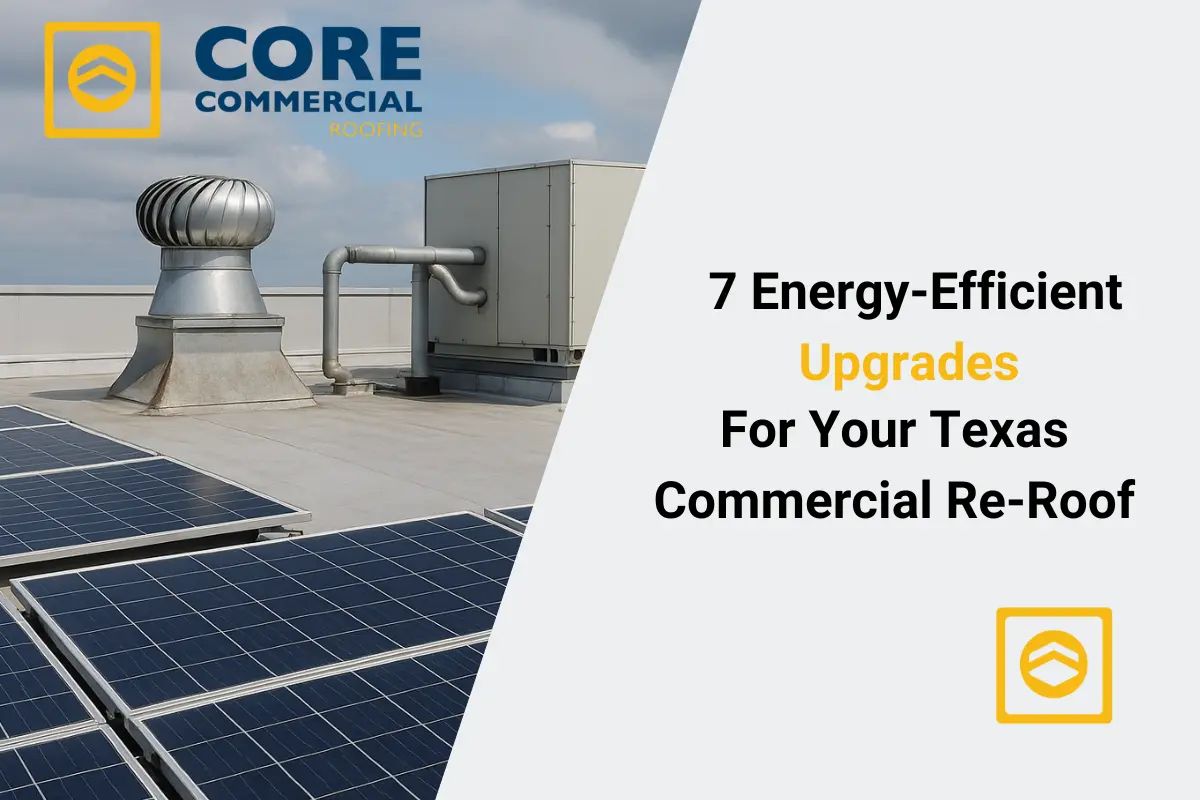
If you’re planning a commercial re-roof in Texas, now is the perfect time to make your building more energy-efficient. With the state’s intense heat, long summers, and rising energy costs, upgrading your roofing system can lead to significant savings and comfort for years to come. This article outlines seven smart energy-saving upgrades you can implement during a commercial re-roofing project, specifically tailored to the Texas climate. These improvements go beyond basic materials and deliver real-world benefits from lower electric bills to better indoor temperature control and a stronger environmental footprint.If you want to learn more, you may check the roofing inspection checklist
Table of Contents
1. Why Energy Efficiency Matters for Texas Roofs
Texas experiences extreme heat, especially in the summer when roof temperatures can easily exceed 150°F. Without proper energy-efficient upgrades, your building’s HVAC system has to work overtime just to maintain a comfortable indoor environment. That means higher electric bills and more wear and tear on your air conditioning system.
Energy-efficient upgrades aren’t just about saving money—they also enhance indoor comfort, prolong the life of your roofing materials, and make your building more environmentally responsible. Businesses that upgrade during a re-roofing project typically enjoy lower maintenance costs, improved tenant satisfaction, and a more attractive property value.
2. Cool Roof Coatings: Reflect Heat, Save Energy
A cool roof coating reflects more sunlight and absorbs less heat than a standard roof. These coatings, typically white or light-colored, are applied over your roofing material and can reduce roof surface temperatures by up to 50°F. This results in cooler indoor temperatures and significantly lower cooling costs.
Benefits:
- Lowers rooftop heat gain
- Reduces air conditioning load
- Helps extend roof life by reducing thermal expansion and contraction
Real-world impact:
In Texas cities like Dallas, Houston, and San Antonio, businesses using cool roofs have reported energy savings of 10% to 20% during peak cooling months.
3. Insulation Upgrades: Keep Cool Air In, Hot Air Out
If you’re already replacing your roof, it’s the ideal time to evaluate and upgrade the insulation. Many older commercial buildings have outdated or insufficient insulation that allows cool air to escape and hot air to seep in.
Recommended insulation types:
- Polyiso (polyisocyanurate): Offers high R-value per inch, ideal for Texas roofs.
- Spray foam insulation: Great for sealing air gaps and improving building envelope performance.
Why it matters:
Upgrading insulation directly reduces the workload on your HVAC system. That translates to lower utility bills, fewer HVAC repairs, and a more comfortable building year-round.
4. Radiant Barriers: Deflect Texas Sunlight
Radiant barriers are a reflective material typically installed under the roof deck to reduce radiant heat transfer into the building. While commonly used in residential buildings, they’re highly effective in commercial settings as well—especially in metal-roofed structures common in Texas.
How they work:
These barriers reflect up to 97% of the sun’s radiant heat, keeping attics and upper floors significantly cooler.
Who benefits:
Warehouse-style buildings, retail locations, and office parks with large open roof spans stand to gain the most from this low-cost, high-impact upgrade.
5. Roof Ventilation Enhancements
Proper roof ventilation helps regulate attic temperatures and moisture levels. In the Texas climate, where summer heat is extreme, ventilation is often overlooked but critical.
Upgrade options:
- Turbine vents: Use wind to pull hot air out.
- Ridge vents with soffit vents: Allow hot air to rise and escape while pulling in cooler air from outside.
Why it works:
By ventilating hot air out of your attic or roof space, you reduce indoor temperatures and prevent moisture damage that can shorten the roof’s lifespan.
6. Energy-Efficient Roofing Materials
Roofing materials have come a long way in terms of energy performance. When planning your commercial re-roof, consider replacing outdated materials with options designed for thermal performance.
Top energy-efficient roofing materials for Texas:
- TPO (Thermoplastic Polyolefin): Highly reflective and resistant to UV rays.
- Metal roofs with cool coatings: Extremely durable and heat-reflective.
- Green roofs: Living roofs that provide natural insulation and reduce the urban heat island effect.
Cost vs. value:
While energy-efficient materials might have a higher upfront cost, they often pay for themselves in energy savings and reduced maintenance over 5 to 10 years.
7. Solar Panel Integration: Turn Your Roof into a Power Plant
Texas is one of the best states for solar power due to abundant sunshine and supportive rebate programs. A commercial re-roof is the perfect time to consider installing solar panels or at least prepare your roof for a future installation.
Options:
- Full solar system installation
- Solar-ready roofing: Structural enhancements and conduit planning for later installs
Long-term benefits:
- Reduces electricity bills substantially
- May qualify for federal tax credits and Texas-specific incentives
- Enhances property appeal for eco-conscious tenants or buyers
8. Smart Roofing Systems and Sensors
Modern roofing upgrades can include smart technology that monitors performance in real-time. This is especially helpful in Texas, where the weather can change rapidly and leak detection or energy efficiency tracking can be critical.
Smart upgrades include:
- Leak detection systems
- Temperature and humidity sensors
- Remote monitoring dashboards
What this means for you:
Proactive maintenance, energy optimization, and fast issue detection—leading to lower long-term costs and improved building reliability.
9. Final Thoughts: A Roof That Pays You Back
Re-roofing a commercial building in Texas isn’t just about replacing what’s old—it’s an opportunity to create a better-performing, more cost-efficient building, also a big steps to prevent roof leaks. The upgrades discussed here—cool coatings, insulation, radiant barriers, ventilation, solar, and smart sensors—are strategic, tested, and proven to deliver real benefits.
By investing in energy-efficient improvements during your re-roof, you position your business for:
- Long-term savings on energy costs
- Improved indoor comfort and tenant satisfaction
- Enhanced building value and marketability
- A reduced environmental footprint
What to do next:
If you’re planning a commercial re-roof, talk to your contractor about incorporating these energy-efficient strategies into your project. Prioritize based on your budget, building type, and long-term operational goals. Even implementing just a few of these ideas can make a big difference.
FAQs
How can cool roof coatings reduce energy bills in Texas?
Cool roof coatings reflect more sunlight and absorb less heat than standard roofs, significantly lowering roof surface temperatures. This leads to reduced indoor cooling needs, resulting in energy savings of up to 20% during peak summer months in Texas.
What is the best insulation for commercial roofs in Texas?
Polyisocyanurate (Polyiso) insulation is highly recommended for Texas commercial roofs due to its high R-value per inch, providing excellent thermal resistance. Upgrading to Polyiso can enhance energy efficiency and help meet Texas building code requirements.
Are radiant barriers effective for Texas commercial buildings?
Yes, radiant barriers are effective in Texas’s hot climate. They reflect up to 97% of radiant heat, reducing heat transfer into the building and lowering cooling costs, especially beneficial for large commercial spaces with expansive roof areas.
Why is roof ventilation important for Texas commercial buildings?
Proper roof ventilation helps expel hot air and moisture from the attic or roof space, preventing heat buildup and reducing the strain on HVAC systems. This leads to improved energy efficiency and extends the lifespan of roofing materials.
Which roofing materials are energy-efficient for Texas businesses?
Energy-efficient roofing materials suitable for Texas include TPO (Thermoplastic Polyolefin) membranes, metal roofs with reflective coatings, and green roofs. These materials offer high reflectivity and durability, helping to reduce cooling costs.
Can I install solar panels during a commercial re-roof in Texas?
Absolutely. A commercial re-roof is an ideal time to integrate solar panels. Texas’s abundant sunshine makes solar energy a viable option, and installing panels during re-roofing ensures proper structural support and maximizes energy generation potential.
What are smart roofing systems, and how do they help?
Smart roofing systems incorporate sensors and monitoring technology to detect issues like leaks or structural stress in real-time. This proactive approach allows for timely maintenance, preventing costly repairs and enhancing overall roof performance.
Do energy-efficient roofing upgrades qualify for incentives in Texas?
Yes, many energy-efficient roofing upgrades, such as installing cool roofs or solar panels, may qualify for federal tax credits and local utility rebates in Texas. These incentives can offset initial costs and improve return on investment.
How long do energy-efficient roofing materials last in Texas?
Energy-efficient roofing materials like metal roofs and TPO membranes are known for their durability, often lasting 20 to 50 years with proper maintenance. Their longevity makes them a cost-effective choice for Texas commercial properties.
What is the ROI of energy-efficient re-roofing for Texas businesses?
Investing in energy-efficient re-roofing can yield significant returns through reduced energy bills, lower maintenance costs, and potential tax incentives. Over time, these savings can offset the initial investment, making it a financially sound decision.